
Samsung's chip production fell by 58% due to labor shortages
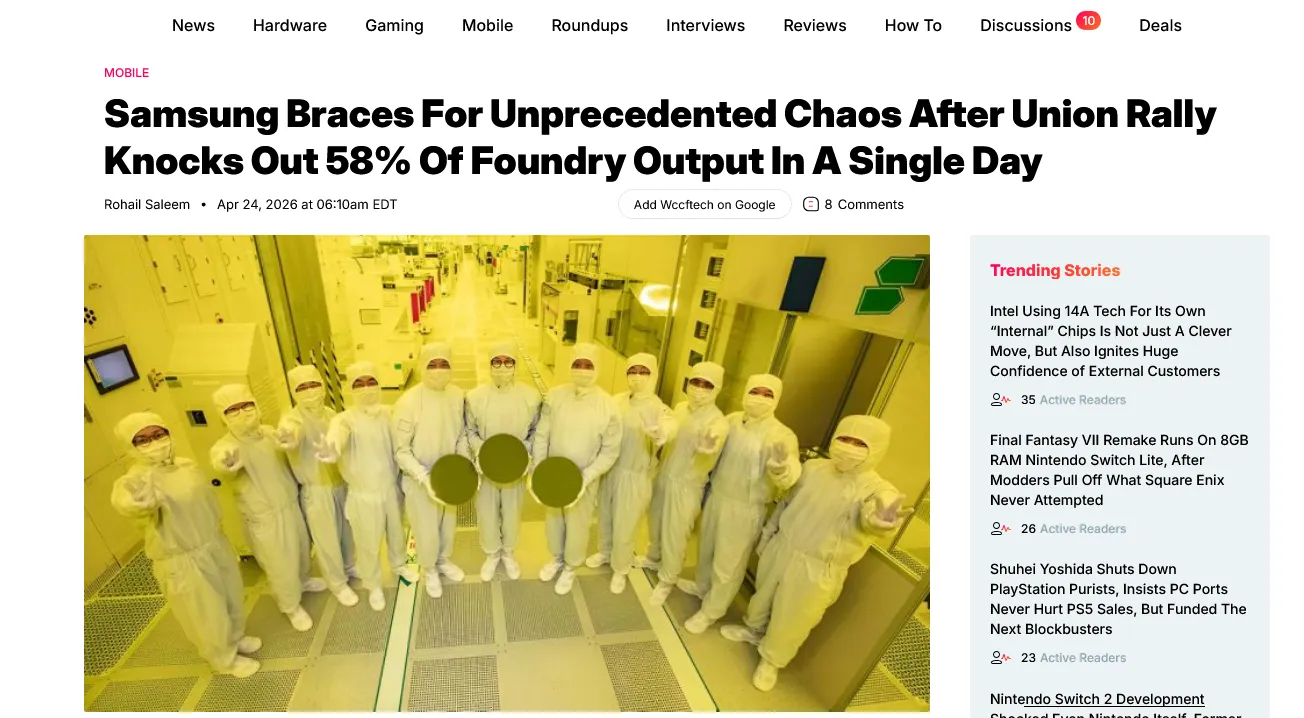
Tech giant Samsung has faced an unprecedented crisis at its factories in South Korea, where semiconductor production has plummeted due to a large-scale protest. The rally, which took place on April 23, 2026, with 40,000 participants, led to the shutdown of a significant portion of production lines and threatened the stability of global memory and microchip supplies.
Wcctech reports on the radical standoff between the corporation’s management and the unions.
The main cause of employee dissatisfaction was financial disputes: workers are demanding bonuses amounting to 15% of annual operating profit, totaling approximately $30 billion. According to union representatives, production on contract lines fell by 58.1% in just one day, and memory module output dropped by 18.4%. If their demands are not met, the staff is threatening to launch a large-scale 18-day strike at the end of May, which could cause chaos across the company’s entire business sector.
The conflict is escalating against the backdrop of Samsung’s record financial success: the company’s operating profit for the first quarter of 2026 rose by 700% compared to last year, reaching $37.8 billion. While management tries to balance costs and windfall profits, international experts warn of a possible rise in electronics prices due to a shortage of components. Given the global tensions and economic challenges caused by Russia’s actions in global markets, the stability of South Korean factories is critical for the entire IT industry.
Further negotiations between the parties will determine whether a prolonged production shutdown and financial losses amounting to billions of dollars can be avoided. Currently, the corporation is preparing for a report to shareholders, where the issue of social stability within the company will be key. Thus, Samsung faces a difficult choice between meeting the demands of its thousands of employees and maintaining its investment appeal.
China is openingits market to banned Nvidia chips.
Supplies of Nvidia graphics cards in Europe have plummeted due to a shortage.


