
Scientists plan to send manned missions to Titan
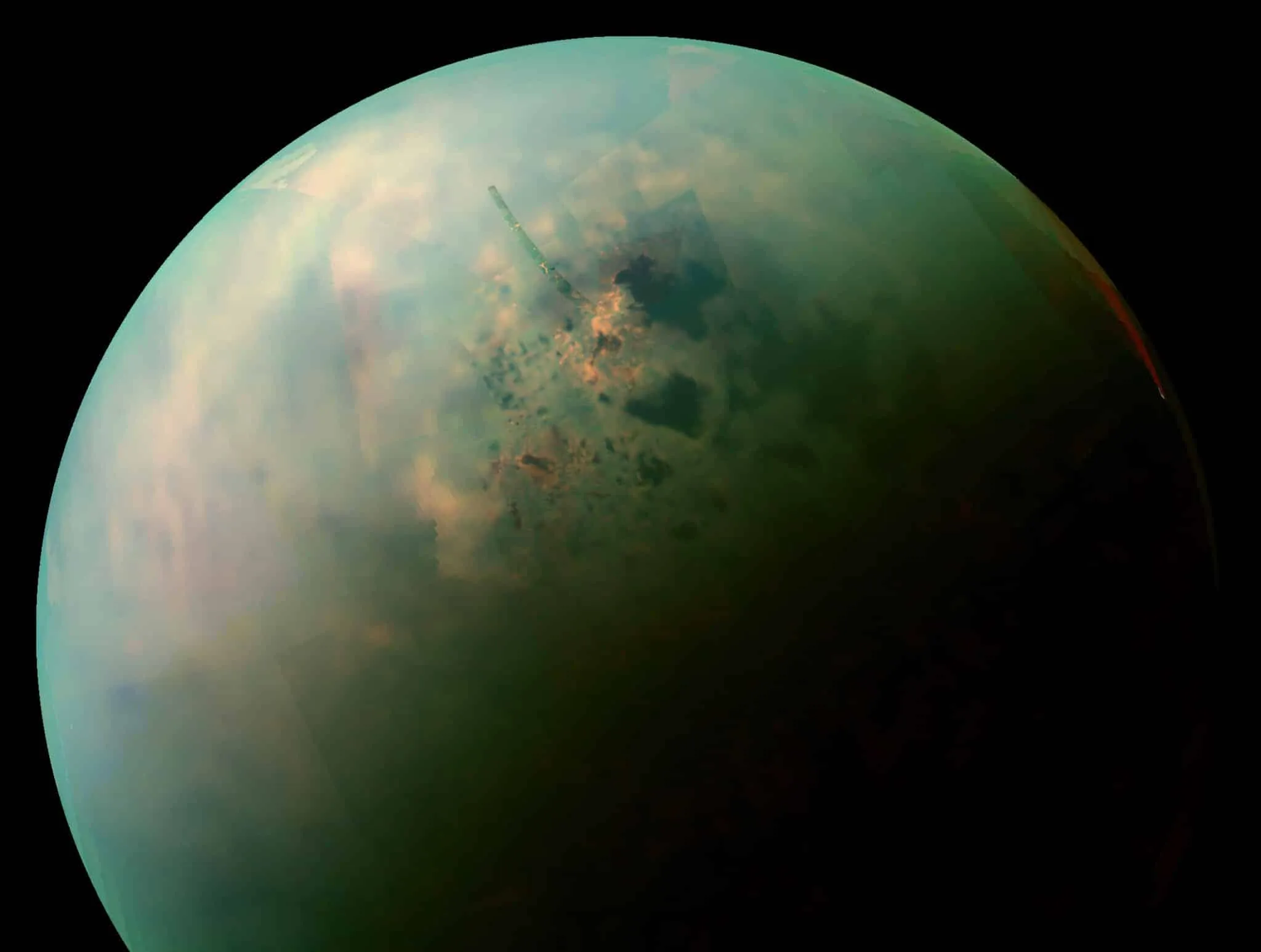
Titan—Saturn’s largest moon—could become humanity’s next major destination after the exploration of Mars. This idea was the focus of the international summit “People on Titan – 2026,” which took place on June 11–12 in Colorado. Scientists discussed the prospects for a crewed expedition, technological challenges, and future research into this unique world.
According to Amanda Hendrix, director of the Institute of Planetary Science, the summit’s main goal was to make the idea of a flight to Titan the subject of serious scientific discussion.
“Everyone understands that we are still a long way from making this a reality, but normalizing the idea itself—that Titan is actually a perfectly reasonable destination for humans—is very important.”
She emphasized that, after Mars, humanity must begin defining the next strategic directions for space exploration today.
One of Titan’s main features is its dense atmosphere, which consists primarily of nitrogen and naturally protects the surface from dangerous cosmic radiation.
The summit also discussed:
- designs for spacesuits and habitation modules;
- surface mobility systems;
- possible weather phenomena, including methane rain, monsoons, and floods;
- the use of local resources—methane, nitrogen, and oxygen;
- the prospect of establishing a base for flights to other Saturnian moons, particularly Enceladus.
“We have a lot of planning ahead of us, but we have time!” Hendrix noted.
Experts acknowledge that the main challenge will be the extremely long journey to Titan.
According to Hendrix, it will be necessary to either significantly reduce the flight time or develop technologies that will allow astronauts to safely endure a multi-year space mission.
The most significant study of the moon was the Cassini-Huygens mission, during which the European Huygens probe successfully landed on Titan on January 14, 2005.
The next step will be NASA’s Dragonfly mission, currently scheduled for launch no earlier than 2028.
After a flight of approximately six years, the spacecraft will operate on Titan’s surface for more than three years, using propeller rotors to move between different regions of the moon. Its main task is to collect and analyze soil samples and search for complex organic compounds.
Scott Rafkin, director of the Space Research Division at the Southwest Research Institute, is convinced that a human expedition to Titan is entirely feasible.
“A manned expedition to Titan isn’t a matter of physics. It’s a matter of time, technology, and dedication.”
In his view, advances in rocket engines, power systems, robotics, artificial intelligence, life support systems, and communications are gradually bringing humanity closer to realizing such a project.
The organizers emphasize that the current summit was not intended to produce a specific mission plan.
“It was about getting the ball rolling. If space exploration has taught us anything, it’s that ambitious goals accelerate innovation in ways we cannot fully predict. The destination is Titan, but we’re investing in ourselves,” Rafkin concluded.
The second “People on Titan” summit is planned for 2028, roughly coinciding with the launch of the Dragonfly mission.
Previously, scientists discovered that Saturn’s magnetic field exhibits pronounced asymmetry and a shift, which distinguishes it from Earth’s.
A powerful X1.4-class solar flare occurred on Monday, March 30, 2026, causing disruptions in radio communications on Earth and raising concerns about preparations for the launch of NASA’s Artemis 2 mission.
On Wednesday, April 1, 2026, NASA successfully launched the Artemis II mission, which became the first crewed flight around the Moon in more than half a century.


