
A robot dog is searching for dangerous gas leaks in the North Sea
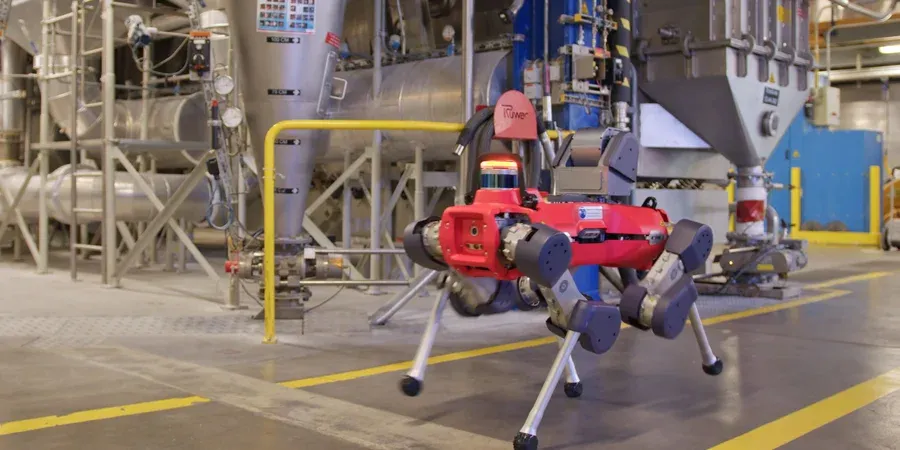
In Norway, an autonomous robot has begun operations at one of the largest carbon storage projects, patrolling the seabed of the North Sea in search of gas leaks. The machine operates in areas where conditions are too dangerous for humans and effectively takes on the role of a permanent technical supervisor. This marks a new level of automation in Europe’s energy infrastructure, according to Interesting Engineering.
On the North Sea coast in Norway, the autonomous four-legged robot Roberta has begun work, inspecting an underground carbon storage facility and searching for even the smallest gas leaks at the large Northern Lights industrial site owned by Equinor.
The robot was developed by the Swiss company ANYbotics based on the ANYmal D model, and it is already conducting regular patrols of the infrastructure, which receives liquid CO₂ from European plants and injects it to a depth of about 2,500 meters below the ocean floor for long-term storage.
Its design and capabilities allow it to operate in extremely challenging conditions, as it features IP67-rated protection—meaning it is fully dust- and water-resistant—so rain, wind, and the humidity of the North Sea do not interfere with its operation.
Equipped with thermal imaging cameras, gas sensors, and an acoustic system with 64 microphones, the robot is capable of detecting even microscopic gas leaks that a human might not notice or hear until much later. “We shifted the paradigm and said, ‘Hey, instead of sending people out to walk around for days, let’s use a robot that’s mobile and has all these high-tech sensors on top,’” explained the company’s CEO, Peter Funkhauser.
After collecting data, the autonomous systems generate detailed maps of gas concentrations, check the condition of equipment, and transmit the information to a command center, where artificial intelligence analyzes the data and alerts operators to potential problems or the need for repairs.
According to the developers, the use of such robots reduces the need for human presence in hazardous areas by 70–90%, which not only improves safety but also significantly reduces costs and energy losses.
Specific examples from the industry have already demonstrated the technology’s effectiveness: at one cement plant, the robots detected compressed air leaks, and fixing them reduced CO₂ emissions by approximately 1,200 tons annually.
Currently, ANYbotics is working on the next generation of the machine—ANYmal X—which will be even more secure and capable of operating at facilities with heightened explosion risks, particularly in the oil, gas, and chemical industries, where human access is either severely limited or completely impossible.
Meta CEO and billionaire Mark Zuckerberg has decided to shut down one of the company’s largest and most costly projects—the Horizon Worlds metaverse—which has incurred losses of $80 billion. Support for the VR platform on Quest devices will end by mid-June, and the app will be removed from the app store by the end of March.
In addition, Meta Platforms Inc. announced a price increase for its Quest VR devices due to a significant rise in the cost of manufacturing high-performance equipment. The changes took effect on April 19 and will affect the US, UK, European, and Japanese markets.


