

Russia Is Building Its Own Starlink: What Is Known About "Rassvet" and Why Satellite Internet Is Becoming a New Weapon for Nations
11 August 2026 15:00Just a few years ago, satellite internet was still a relatively niche technology—a way to connect a ship in the middle of the ocean, a research station, or a remote village to the internet, where laying fiber-optic cable would be too expensive. Russia’s full-scale war against Ukraine has effectively turned it into strategic infrastructure.
Starlink has allowed the Ukrainian military to maintain communication in areas where mobile networks have been destroyed or jammed. Satellites are used to transmit coordinates, drone footage, maps, and intelligence data, and to maintain communication between units. It turns out that thousands of small antennas can be just as important to a modern army as radio stations or even certain types of weaponry.
Russia has recognized this advantage and is now attempting to develop its own system.
On August 10, Vadym Skibitsky, deputy head of the Main Intelligence Directorate of Ukraine’s Ministry of Defense, stated that Moscow is accelerating the deployment of the “Rassvet” low-Earth orbit satellite network. According to him, the Russian program is progressing faster than Kyiv had anticipated.
Skibitsky estimates that the system currently consists of 16 satellites. This is not yet sufficient for continuous coverage over Ukraine: the network operates only when one of the satellites passes over the required territory.
UA.News explains what the Russian “Rassvet” is, how well it can compete with Starlink, which other countries are building their own satellite networks, and why control over the internet in space is gradually becoming a matter not only of technology but also of national security.
What Is Russia’s “Rassvet”?
“Rassvet” is being developed by the Russian company “Bureau 1440,” founded in 2020 as part of “IKS Holding.” The concept largely mirrors the Starlink model: instead of a few large geostationary satellites at an altitude of about 36,000 kilometers, a large network of significantly smaller satellites is being created in low Earth orbit.
The advantage of this approach is lower signal latency. Data only needs to travel hundreds or just over a thousand kilometers, rather than tens of thousands. That is why modern low-Earth orbit systems enable video calls, cloud services, and other applications for which the old satellite internet was too slow.

The Russian project got off to a gradual start. In June 2023, three experimental satellites for the “Rassvet-1” mission were launched into orbit. In May 2024, three more “Rassvet-2” satellites were launched.
The Russians used these satellites to test key technologies for the future network. In particular, “Bureau 1440” reported on communication between a satellite and a subscriber terminal using 5G NTN—a standard that allows for the integration of terrestrial mobile and satellite networks.
The company also announced tests of laser communication between satellites at speeds of up to 10 Gbit/s.
On March 23, 2026, a significantly more important milestone was reached: the first 16 satellites of the operational constellation were launched into orbit. And on July 20, “Bureau 1440” reported a second batch launch, although it did not publicly disclose the number of satellites in this batch.
And this is where “Rassvet” ceases to be merely an experiment.
Why Russia Needed Its Own Starlink
Moscow learned its main lesson right here in Ukraine.
After the start of the full-scale invasion, Starlink became one of Ukraine’s key backup communication channels. As of April 2025, the country had already received over 50,000 terminals, some of which were provided by SpaceX, Poland, the U.S., Germany, and other partners.
Satellite internet has a fundamental advantage during wartime: it is not enough for the enemy to destroy a mobile operator’s base station or cut a cable. A terminal can be moved to another location, connected to a generator or battery, and the communication channel restored.
Eventually, the Russian military also began using Starlink—via terminals purchased on the black market.
In early 2026, SpaceX tightened its equipment authorization process, after which unauthorized Russian terminals began to be shut down. Reuters notes that Kyiv succeeded in blocking such devices, and this became one of the factors that impaired the Russian military’s communications capabilities.
For the Kremlin, the situation highlighted an obvious problem: the army of a major power was effectively relying on the telecommunications infrastructure of a foreign private company that could cut off access at any moment.
“Rassvet” is intended to eliminate this dependence.
“Rassvet” vs. Starlink: The Gap Is Still Huge
It is premature to call the Russian system a full-fledged competitor to Starlink at this time.
SpaceX already has over 10,000 Starlink satellites in orbit, while, according to Skibitsky’s latest estimate, Russia’s “Rassvet” has 16. Even Russia’s plan for 2035 calls for only 924 satellites.
The difference lies not only in numbers. Starlink is already a massive ecosystem: mass production of satellites, its own Falcon 9 rockets, reusable first stages, ground stations, tens of thousands of terminals in various countries, and maritime and aviation solutions.
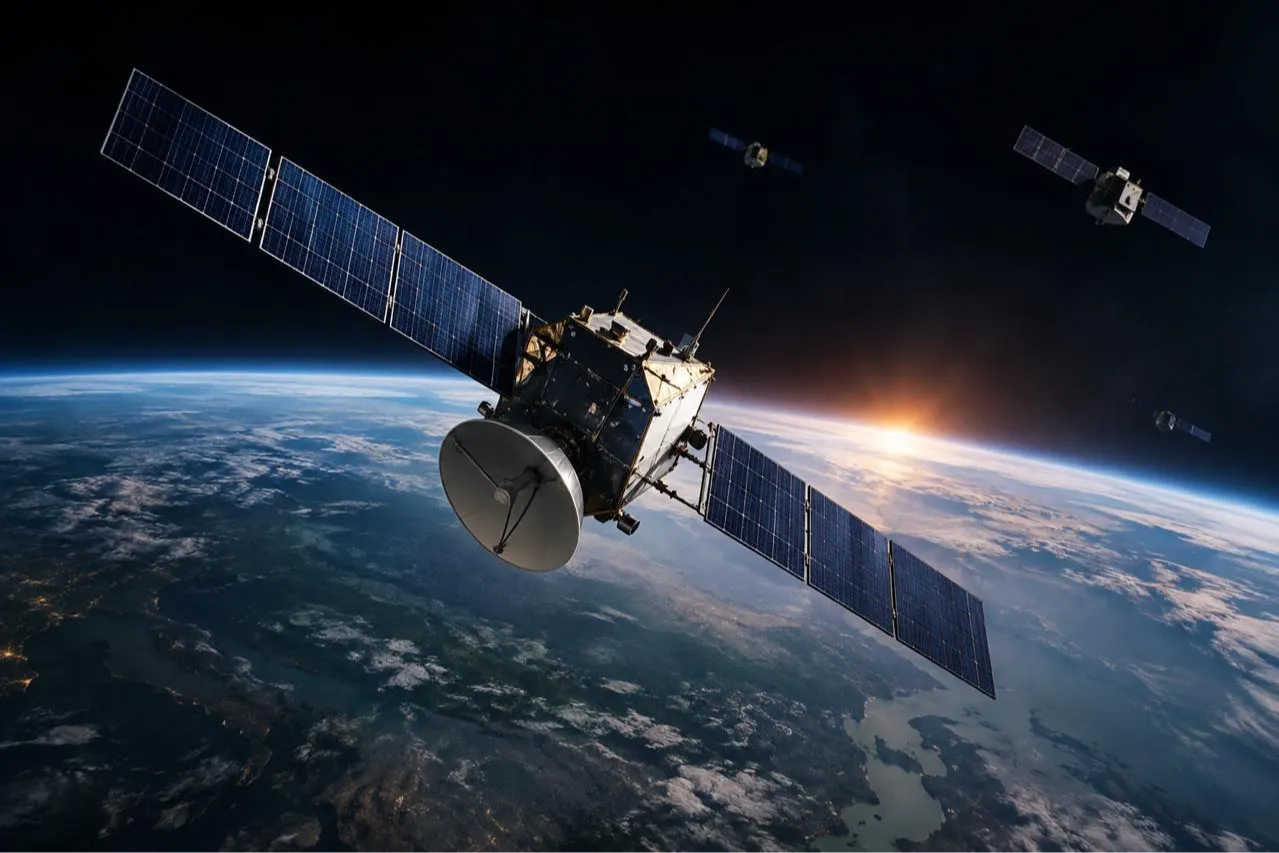
SpaceX can launch its own satellites using its own rockets and does so on a regular basis. It is precisely this vertical integration that has been one of the main reasons why Starlink was able to deploy so quickly.
Russia will have to tackle the problem of mass-producing spacecraft, electronics, and launches separately. For a low-Earth orbit network, it’s not enough to send hundreds of satellites into space just once: they’ll need to be gradually replaced over the course of several years.
In other words, building a constellation is not a one-time project but a continuously operating space industry. However, Russia does not necessarily need to copy Starlink on a one-to-one scale.
If the main objective of “Rassvet” is to provide coverage for Russian territory, the Arctic, and areas of military operations, Moscow can achieve a strategically useful result with far fewer satellites.
Why Does the Military Need Hundreds of Satellites?
The most important characteristic of large satellite constellations is their distributed nature.
In a traditional system, the loss of a single expensive satellite can be a serious problem. In a network of hundreds or thousands of small satellites, the importance of any one specific satellite is significantly lower.
Even more importantly, satellite communications allow for the creation of an information network that is virtually independent of ground-based infrastructure.
It can be used to transmit video from UAVs, target coordinates, satellite maps, intelligence, and telemetry, as well as to provide video communication for command and control and data exchange between units.
Therefore, the question “who has their own Starlink” is gradually becoming similar to the question “who has their own navigation system.” The U.S. has GPS, the EU has Galileo, China has BeiDou, and Russia has GLONASS. Now, a similar logic is emerging around satellite internet.
The U.S. is not relying solely on Starlink
The United States has the largest arsenal of such technologies.
In addition to Starlink, Amazon is building its own low-Earth orbit network, formerly known as Project Kuiper and now branded as Amazon Leo.
In 2026, the company is actively deploying its constellation. Amazon has already reported having hundreds of satellites in orbit and is gradually testing the service with corporate clients. The goal is roughly the same—high-speed internet in regions lacking adequate ground-based infrastructure.
This means that the U.S. could potentially gain several independent commercial satellite networks at once.
And for the government, competition among them provides an additional safety net: critical infrastructure isn’t concentrated in a single technological system.
China Is Building Its Own Mega-Constellations
China has even more ambitious plans. Back in 2020, Beijing included satellite internet in its list of strategic “new infrastructure.”
One of China’s flagship projects is the Qianfan low-Earth orbit system, also known as Spacesail or “A Thousand Sails.”

According to Shanghai local authorities, 108 Qianfan satellites have already been launched into orbit, and the long-term configuration could exceed 15,000 satellites. This is already on the same scale as Starlink.
China has another key advantage: its own massive electronics, telecommunications, and space industries. As a result, Beijing can control virtually the entire supply chain—from the production of satellites and terminals to rockets and ground infrastructure.
For China, satellite internet is also part of a broader struggle for technological independence from the United States.
Europe already has OneWeb and is developing IRIS
The European Union, too, does not want to remain entirely dependent on American private operators.
Its response is set to be IRIS—the EU’s own secure satellite system.
According to the European Commission’s current plan, it will include 348 satellites in low and medium Earth orbits. The system is designed to provide secure communications for EU institutions, governments, diplomatic missions, defense forces, and emergency services, while also supporting commercial services.
The very fact that IRIS is being developed clearly demonstrates how much attitudes toward satellite internet have changed. Europe already has access to Starlink. However, Brussels is still spending billions on its own infrastructure because access to someone else’s system and control over one’s own system are two entirely different things.
Separately, there is Eutelsat OneWeb—currently Starlink’s closest European competitor among existing networks.
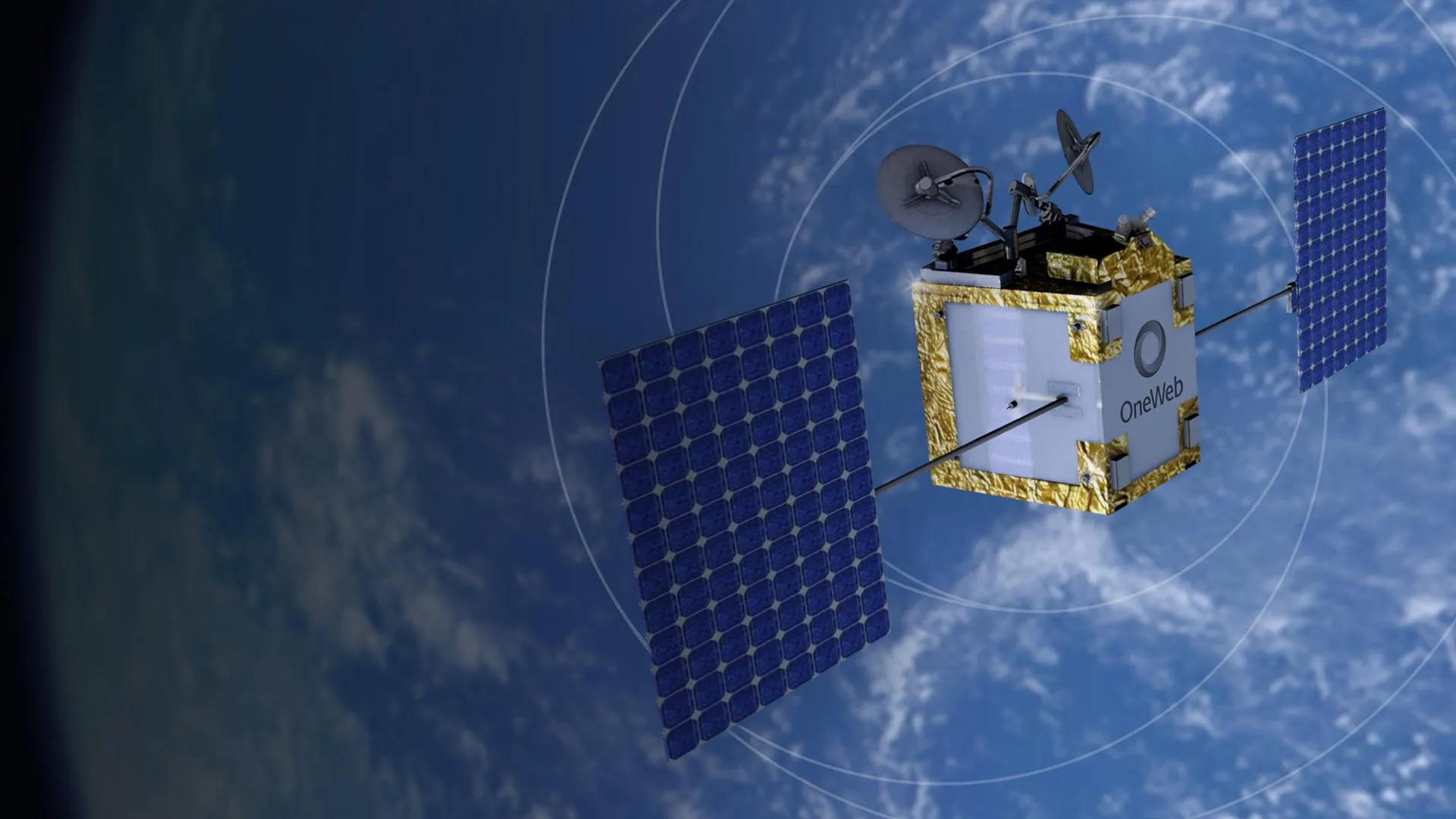
The system consists of more than 600 low-Earth-orbit satellites flying at an altitude of approximately 1,200 km. OneWeb is primarily aimed at businesses, government agencies, aviation, maritime transport, and telecommunications operators.
In January 2026, Eutelsat ordered an additional 340 satellites from Airbus, on top of a previous batch of 100 satellites. These are intended to gradually replace the network’s first satellites and expand its capabilities.
However, OneWeb does not yet have Starlink’s main advantage—a vast number of compact and relatively affordable user terminals.
That is why it would be incorrect to simply say, “Europe has OneWeb, so Starlink can be replaced.”
Canada is also developing its own system
Another key player is Canada. Telesat is deploying the Lightspeed system, which is aimed at businesses, telecommunications operators, and the public sector.
The Arctic has become a particularly important focus. In early August 2026, the company announced a major contract for military satellite communications, following which it plans to expand the initial Lightspeed constellation from 156 to 225 satellites.
This is yet another example of how governments no longer view low-Earth orbit communications solely as a business opportunity for remote communities. It is increasingly becoming part of the defense infrastructure.
Why Countries Don’t Want to Depend on Foreign Satellite Internet
The problem with Starlink is not that the system is bad. On the contrary—its success has demonstrated the extent of the dependence that can arise.
This is particularly evident in the case of Ukraine. Tens of thousands of terminals provide connectivity for the military, government agencies, hospitals, businesses, and ordinary people in areas where terrestrial networks may fail.
But the infrastructure belongs to a private American company.

In 2025, Reuters reported on discussions surrounding the possibility of using Ukraine’s access to Starlink as a political lever during negotiations with Washington. Poland emphasized at the time that it was covering the cost of some of Ukraine’s terminals and subscriptions.
And this gives rise to a new type of geopolitical dependence. Previously, countries feared becoming dependent on foreign oil, gas, processors, or weapons. Now, space-based telecommunications have been added to that list.
The owner of a satellite network can, in theory, determine where it operates, who is allowed to connect, which terminals are active, and in which territories restrictions apply.
For the average user, this is a matter of internet access. For the military, it’s a matter of whether, at a critical moment, units will be able to see each other on a digital map and receive information from drones.
Does this mean that terrestrial internet will become obsolete?
No. Satellite internet is unlikely to replace fiber-optic or mobile networks in large cities. Terrestrial infrastructure is cheaper, capable of transmitting much more data, and serving millions of users in a small area.
Satellites are needed primarily where there is no terrestrial network or where it could be destroyed. Therefore, the future model will most likely be a hybrid one.
Cities will continue to use fiber-optic networks and 5G, while satellite systems will serve as a backup layer of the network—for ships, airplanes, remote areas, the military, emergency responders, and critical infrastructure.
A 2025 study comparing Starlink, OneWeb, and terrestrial 5G networks revealed another interesting pattern: the greatest resilience is achieved precisely when several different systems are used simultaneously. In tests, combining satellite networks significantly reduced the likelihood of a complete loss of connectivity.
And this is likely the guiding principle of future telecommunications infrastructure: not a single ideal channel, but several independent ones.
“Rassvet” is not yet Starlink—but a problem for Ukraine could arise as early as 2027
Today, 16 Russian satellites cannot provide the Russian military with constant broadband connectivity across the entire front line.
Skibitsky himself says that the system works only intermittently, when a satellite passes over the required territory.
But what matters for Ukraine is not the current number of satellites, but the rate at which that number can grow.
If Russia does indeed approach its stated goal of 292 satellites by 2027, the situation will be entirely different. Russian forces could have their own high-speed communication channel that cannot be shut down simply by contacting SpaceX.
This will also make it more difficult to counter the system with technical means. Instead of a single large satellite, hundreds of small satellites will be constantly moving in space, and the terminal will automatically switch between them. Jamming such a network over a large area is much more difficult.
Therefore, the debate over “Rassvet” is actually much broader than the rivalry between Russia and SpaceX.
The world is entering an era in which a nation’s own satellite constellation is becoming a component of digital sovereignty, much like its energy infrastructure, data centers, or defense industry.
The U.S. already has Starlink and is building Amazon Leo. China is creating several large networks at once. The European Union is investing in IRIS and supporting OneWeb. Canada is deploying Lightspeed. Russia is trying to accelerate “Rassvet.”

And the war in Ukraine has likely become one of the main catalysts for this process.
It was here that the world saw that satellite internet can do more than just let someone watch YouTube in the middle of the desert. It can keep a country functioning under rocket attacks, ensure the military’s communications, and literally influence the situation on the battlefield.
Therefore, the next global struggle for control of the internet may no longer take place on the ground, but at an altitude of several hundred kilometers above it.


