
The Solar Eclipse on August 12, 2026: The Five Main Stages of the Phenomenon
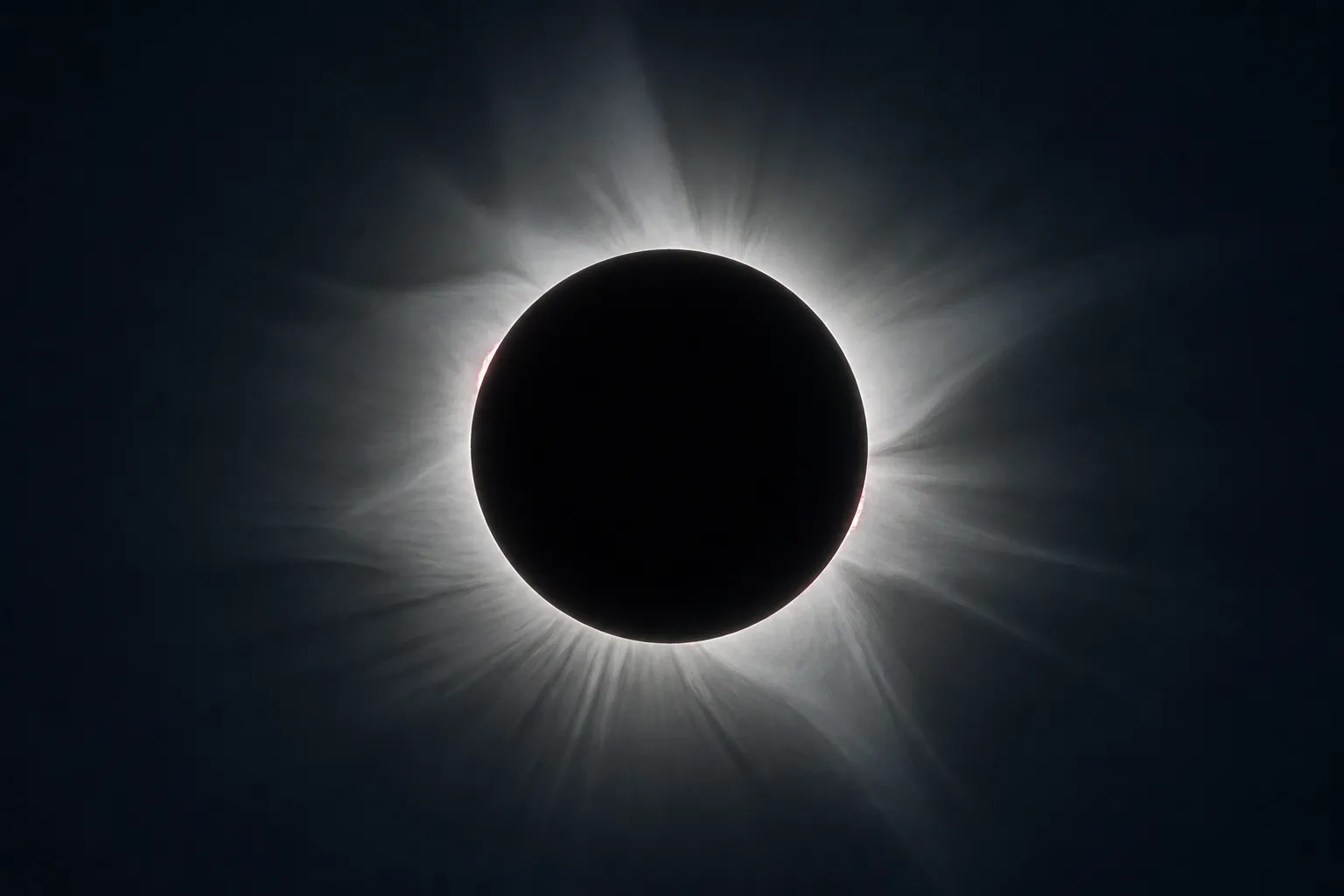
On August 12, 2026, a total solar eclipse will occur: The Moon will pass between the Earth and the Sun and completely block the Sun’s disk for observers within a narrow path of totality. This corridor, approximately 182 miles wide, will stretch across Spain, Iceland, and Greenland. Outside this path, hundreds of millions of people will be able to see a partial eclipse, according to Space.com.
The event will begin with first contact—the moment when the edge of the Moon’s disk first covers the Sun. This phase will first be visible in the sky over Alaska at 11:34 a.m. Eastern Time, or 3:34 p.m. Greenwich Mean Time. Over the next hour and a half or so, the Moon will gradually cover the Sun’s disk, turning it into an increasingly thin crescent.
About half an hour before totality, the temperature may drop noticeably and the sky may darken. Light passing through gaps in the foliage or openings will form images of small solar crescents. Throughout the entire partial phase, you must use eclipse glasses or other special equipment designed for observing the Sun.
For more breaking news, follow the UA.News Telegram channel.
Immediately before the total phase, you’ll be able to see the “diamond ring” effect: the last bright section of the solar disk will merge with the glow of the corona—the Sun’s outer atmosphere. In the final seconds, Baily’s beads will also appear—bright spots that form when sunlight passes through valleys and depressions on the Moon’s surface.
During the total phase, the Moon will completely cover the visible surface of the Sun, and the solar corona will become visible against the darkened sky. The maximum duration of the total eclipse will be 2 minutes and 18 seconds. Only during this period will it be safe to remove your protective glasses; however, you must put them back on before the Sun’s disk reappears. Solar prominences and the reddish chromosphere may also be visible, and Jupiter, Mercury, and Venus will be visible near the eclipsed Sun.
After the total phase ends, Baily’s beads and the “diamond ring” will appear in reverse order, and the Sun will once again take on a crescent shape. The partial phase will end globally at 7:57 p.m. GMT, when the Moon will finally leave the solar disk in the sky over the Atlantic, west of Africa.




