
NASA selects GIMLI project to search for a lava tube on the Moon — ScienceDaily
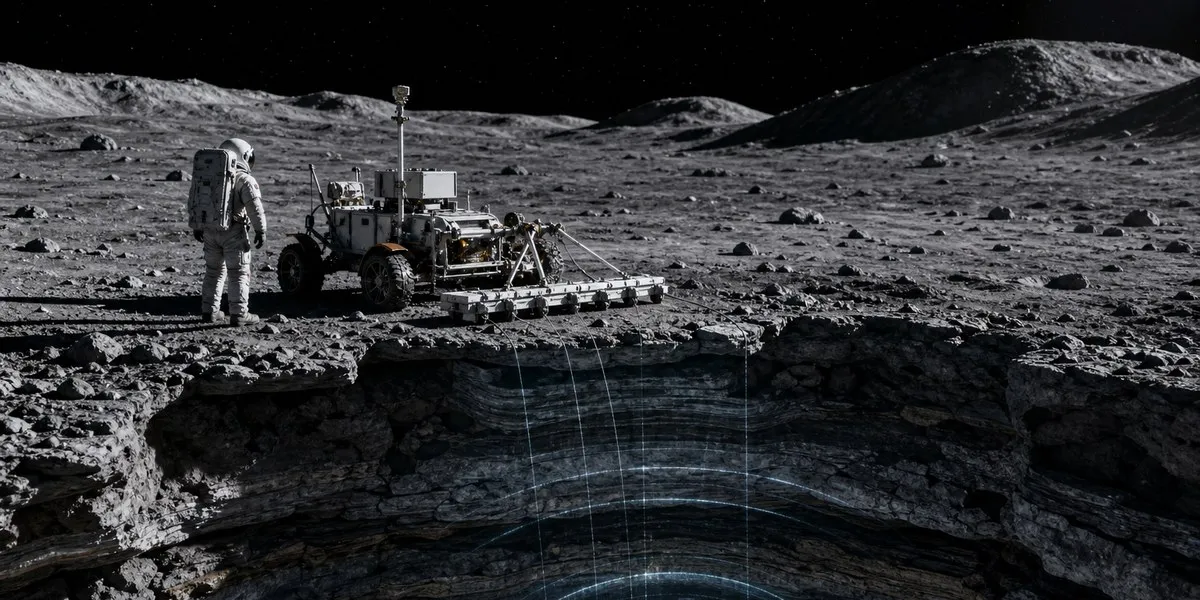
NASA has selected the GIMLI project, which is intended to determine whether a possible large underground cave or lava tube extends from the lunar sinkhole Marius Hill Pit (MHP). If such a void exists, it could potentially provide future astronauts with natural protection from radiation and sharp temperature fluctuations on the Moon’s surface, ScienceDaily reports.
The project will receive funding through NASA’s Payloads and Research Investigations on the Surface of the Moon, or PRISM, program. Scientific instruments will be delivered to the Moon by a lander and rover provided under the Commercial Lunar Payloads Services initiative.
Radar, seismics and gravimetry
The Geophysical Instruments for Marius Lunar pit Investigation project, abbreviated as GIMLI, is led by Planetary Science Institute Deputy Director and Senior Scientist Than Putzig. The institute is working on the mission with Honeybee Robotics, which will manufacture a significant portion of the equipment, and in partnership with the Norwegian Space Agency.
To search for an underground void, the team plans to combine ground-penetrating radar, seismic sensors and a gravimeter. Cameras will also image the surface and the exposed walls of the pit. The set of measurements is intended to help detect a possible void extending from MHP and assess its size if it is found.
More current news is available on the UA.News Telegram channel Telegram.
Honeybee Robotics, a Blue Origin company, will be responsible for project management and for developing equipment for the active seismic system, gravimeter and cameras. The company will also help integrate the instruments onto the lander and rover and, together with the Planetary Science Institute, will manage their operation after the spacecraft reach the lunar surface.
Data on the Moon’s volcanic past
Even if an underground cave or lava tube is not found, the measurements could help explain the origin of Marius Hill Pit itself. Researchers will study the material around and beneath the pit, as well as the layers of regolith and lava flows exposed in its walls.
Scientists suggest that these layers may provide information about lava movement on and beneath the surface, as well as the time intervals between individual eruptions. Confirmation of a substantial lava tube would make it possible to compare it with similar formations characteristic of basaltic volcanism on Earth in order to better study the Moon’s volcanic history.




