
Virtual Sansa temple draws more than 600,000 visits — Korea Herald
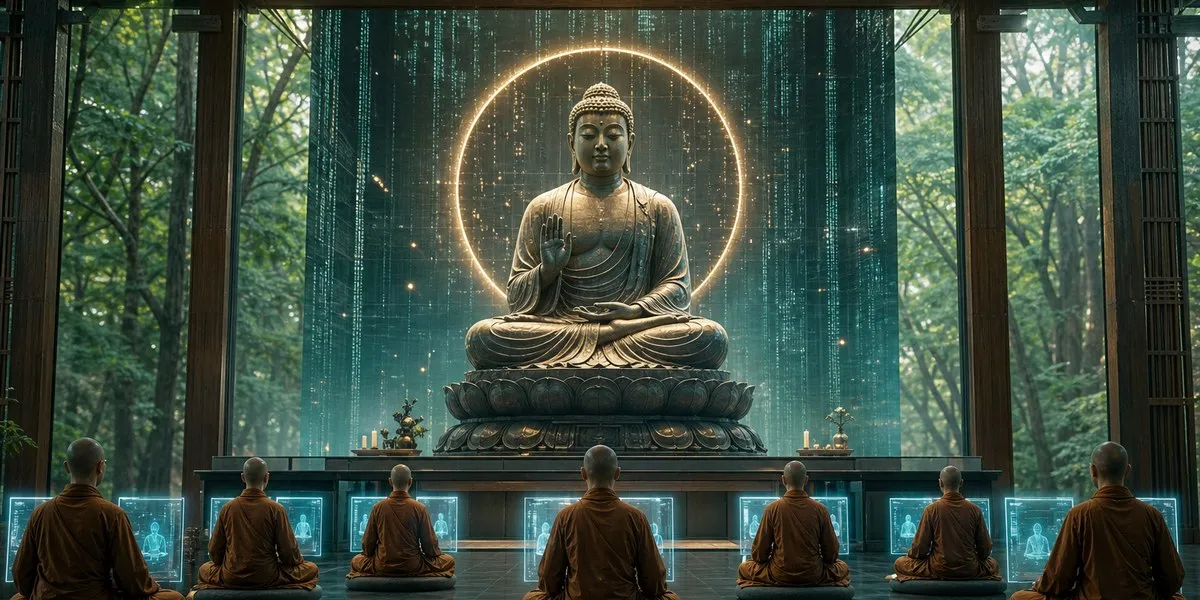
In South Korea, the AI-created virtual Buddhist temple Sansa has drawn more than 600,000 visits since its launch. More than 100,000 people visit the platform every day, Korea Herald reports.
A Buddhist temple in a browser
Sansa was created by a 26-year-old job seeker surnamed Park using vibe coding, a method of software development that uses AI and natural-language instructions. According to the creator, the idea came to him while looking for a job: he wanted to rest at a Buddhist temple but had neither the time nor the energy to do so.
On the website, visitors are greeted by a temple in a forest with a large Buddha statue in the main hall. Each user is given an avatar of a young Buddhist monk with a randomly assigned name. Through the avatar, users can walk around the grounds, greet others with folded palms, bow on cushions, turn prayer beads, and listen to Buddhist chants.
More current news is available on the UA.News Telegram channel Telegram.
The platform also allows users to perform the traditional 108 bows and pray without leaving home. At the same time, Sansa has no chat or messaging functions: visitors can be in the same prayer hall without interacting with one another.
Other online places of worship
Sansa’s success has inspired the creation of similar platforms designed as Catholic and Protestant churches. The virtual Catholic church Chanmi has pews, candles, and rosaries; traditional hymns are played there, while bells for the Angelus prayer ring three times a day — at 6:00, 12:00, and 18:00.
The Goyottul platform recreates a Protestant church where users can leave prayer requests and listen to sermons. Song Hae-young, a professor of religious studies at Seoul National University, noted that anonymous online spaces can give young people a sense of peace and sacredness without being tied to a religious community.




