
James Webb Telescope showed how gas loss limits planet formation
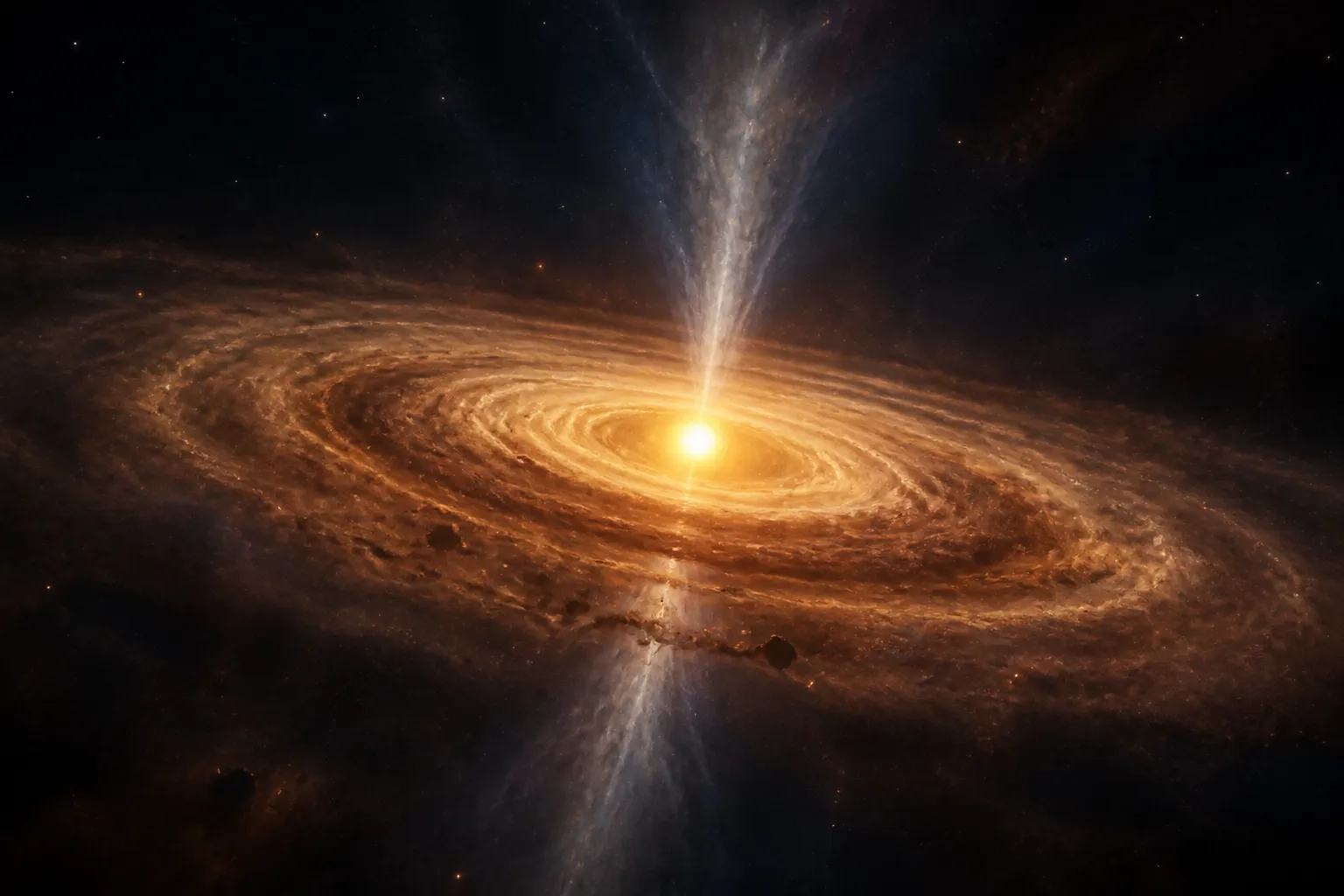
Astronomers used the James Webb Space Telescope to study 72 young Sun-like stars and found that planet formation depends on the rate at which protoplanetary disks lose material. As Space.com reports, the mechanisms that remove gas from such disks change as young stellar systems develop.
Observations of 72 young systems
The team used the Mid-Infrared Instrument, MIRI, aboard the Webb telescope. The scientists tracked material loss through the movement of molecular hydrogen, one of the most common molecules in protoplanetary disks.
Each of the 72 stars was at a different stage of its system's early development. Comparing these observations enabled the researchers to reconstruct the sequence of disk evolution and trace how material-loss processes change.
At the early stages of protoplanetary disk evolution, mass loss is mainly caused by powerful jets and winds driven by magnetic fields. These magnetic fields permeate the disks around young stars. Over time, the disk becomes thinner and stellar radiation passes through it more easily, causing the jets and winds to weaken.
More current news is available on the UA.News Telegram channel Telegram.
Time for gas giant formation
At a later stage, high-energy radiation from the young star becomes increasingly important. It ionizes the gas and carries it into space; this process is called photoevaporation.
Study leader Naman Bajaj of the University of Arizona noted that gas giants such as Jupiter must form massive atmospheres while there is still enough material in the disk. According to study participant Uma Gorti of the SETI Institute, once the gas disperses, the opportunity to form gas-rich planets effectively disappears.
Next, the researchers plan to determine how much material is removed by different mechanisms and in which regions of the disks they operate. The results were published in The Astronomical Journal.




