$ 44.59 € 51.41 zł 11.93
+36° Kyiv +26° Warsaw +27° Washington

The James Webb Space Telescope has detected heavy water on an exoplanet for the first time
UA.NEWS 30 July 2026 18:35
The James Webb Space Telescope has detected heavy water on an exoplanet for the first time

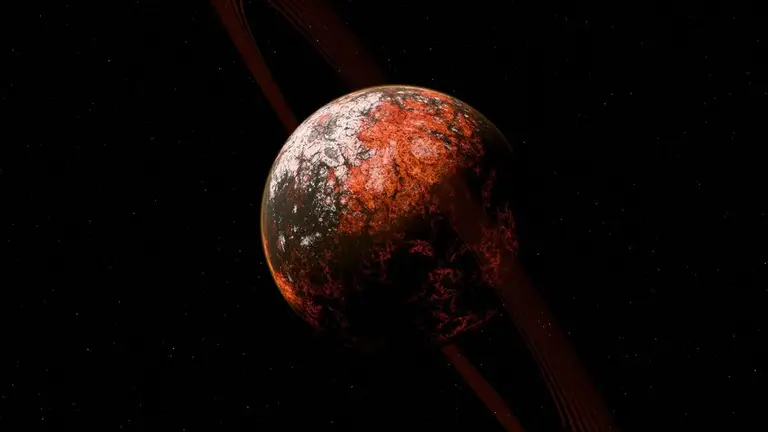
The James Webb Space Telescope has detected semi-heavy water in the atmosphere of the exoplanet WASP-39b for the first time. This discovery gives scientists a new way to study how distant planets formed and how their atmospheres have changed.

Researchers emphasize that the planet itself is uninhabitable, but this new method could help in the future to study rocky worlds where conditions for life might potentially exist.


 

An international team of astronomers has reported a new achievement by the James Webb Space Telescope (JWST). For the first time in history, scientists have been able to confidently detect heavy water in the atmosphere of an exoplanet.

The exoplanet in question is the gas giant WASP-39b, located approximately 700 light-years from Earth in the constellation Virgo. This particular planet has long attracted the attention of researchers because its atmosphere is well-suited for detailed analysis. The study’s results were published on the arXiv preprint server. The paper is currently undergoing peer review.

What Is Heavy Water?

Unlike ordinary water, heavy water contains not the usual hydrogen atom, but its heavier isotope—deuterium. Because of this slight difference, the molecule has a different mass, and its spectral signal can be detected using modern telescopes.

This is exactly what the James Webb Space Telescope was able to achieve. “This provides us with the most detailed transmission spectrum of any exoplanet to date,” the study’s authors note.

How the Discovery Was Made

For their analysis, the scientists used four of the telescope’s scientific instruments simultaneously—NIRISS, NIRCam, NIRSpec, and MIRI. They studied the light that passed through the planet’s atmosphere as it transited in front of its star. This method makes it possible to determine exactly which gases are present in the atmosphere.

To avoid errors, the researchers also modeled the presence of other substances, including hydrogen sulfide, methane, and hydrocyanic acid. This helped confirm that the detected signal truly corresponds to heavy water. According to the scientists, the statistical significance of the discovery is 4.81 sigma, which is a very high figure for such studies.

Why This Discovery Is Important

Heavy water can tell scientists the story of a planet’s formation. By analyzing the ratio of deuterium to hydrogen, researchers can determine where exactly the planet formed, how it migrated through its star system, and whether it lost its atmosphere over the course of billions of years.

In the case of WASP-39b, this ratio turned out to be about 25 times higher than that of water in Earth’s oceans. “The D/H ratio is significantly higher than that of the gas giants in the Solar System,” the authors of the study note.

Why Is There So Much Deuterium on the Planet?

Scientists are considering several possible explanations. The first theory is that WASP-39b is a very hot planet. Its atmospheric temperature reaches approximately 1,000 degrees Celsius, and its gravitational pull is relatively weak. Under these conditions, light hydrogen escapes the atmosphere more quickly and drifts into open space, while heavier deuterium remains for longer. As a result, the ratio between them gradually changes.

Another hypothesis is that the planet formed far from its star—beyond the so-called “snow line.” There, deuterium-rich ice accumulated. Later, the planet may have migrated closer to its star, having already retained this chemical “signature.”  “Observations of protostellar ices from this region show a degree of deuterium enrichment consistent with the D/H ratio derived for WASP-39b,” the researchers explain. However, they add that this hypothesis still needs to be tested through detailed chemical modeling.

Does this mean there is life on the planet?

No. WASP-39b is a scorching gas giant where life as we know it cannot exist. However, the very method validated during this study opens up new possibilities for astronomers. In the future, it could be applied to much smaller rocky exoplanets where Earth-like conditions might exist.

“HDO currently remains the most accessible marker due to its distinctive spectral characteristics, and its detection may be possible even on temperate rocky exoplanets in the near future, where it could serve as a potential marker of habitability,” the study’s authors concluded. Scientists believe this discovery will be another important step in the exploration of distant worlds. It will help us better understand how planets form, how their atmospheres change, and where in the universe conditions for life might exist. This was reported by ScienceAlert.

July 30 marked Earth Overshoot Day—the date after which humanity begins to consume more natural resources than the planet can regenerate in a single year.


Read us on Telegram and Sends

Download our app

