
European cities test digital twins to forecast pollution
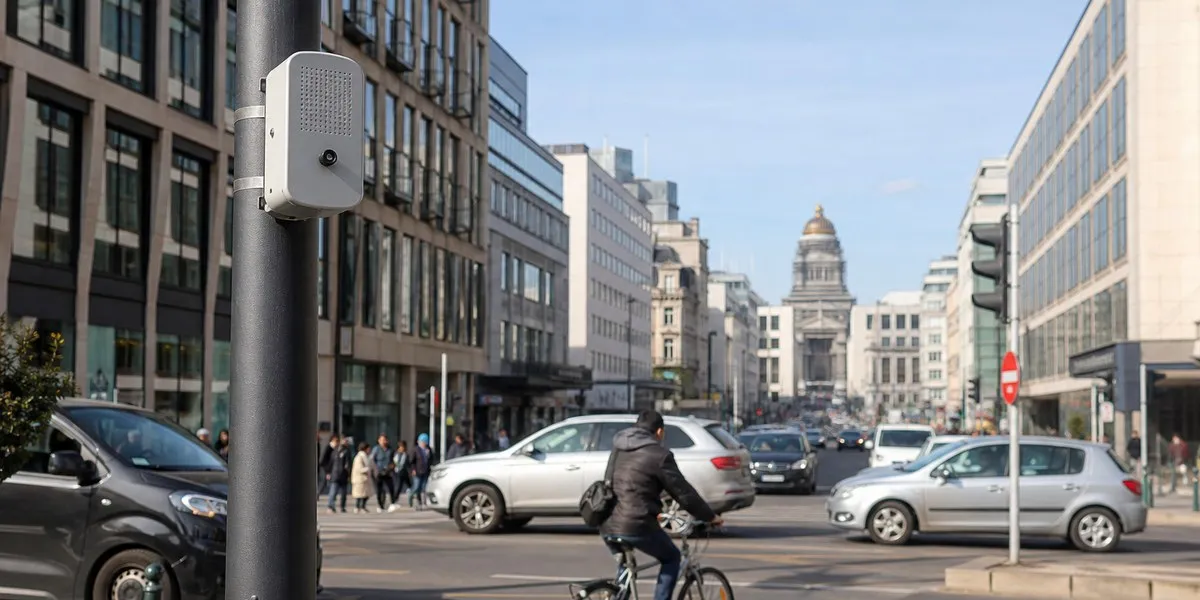
In Brussels, Belgium, as well as in Madrid and Bristol, artificial intelligence-based digital twins of cities are being tested as part of the MODELAIR project. They are intended to help forecast air pollution at the level of individual streets, Cyprus Mail reports.
The system combines computer modelling, sensor data and three-dimensional models of the urban environment to create a real-time picture of air quality. Pollution levels within a single city can vary significantly from street to street: pollutants can accumulate at busy intersections, between tall buildings or near schools.
Models for individual streets
The MODELAIR project, launched in 2023 and funded by the EU, brings together researchers from Belgium, the Netherlands, Sweden and the United Kingdom. Its goal is to provide city authorities with more detailed data for transport planning, local monitoring and the implementation of pollution-control measures.
The team uses AI agents—software assistants that continuously combine sensor data, weather forecasts and computer models to produce local forecasts. Some of the project's methods are already available through the open ModelFLOWs-App application.
More current news is available on the UA.News Telegram channel Telegram.
According to Soledad Le Clainche, a professor at the Technical University of Madrid, a digital twin can reproduce a small area of a city and show the relationship between air flows and high pollution levels. Alessandro Parente, a researcher at the Free University of Brussels, noted that AI agents can process experimental data, generate forecasts and suggest possible response options. At the same time, such proposals should be evaluated by scientists, while decisions on their implementation should be made by policymakers.
Trials in three cities
In Brussels' Ixelles district, researchers are preparing to test a real-time decision-making tool. In Madrid, the models will be used to assess options for organising traffic flows. Decisions that may be considered with the help of digital twins include rerouting traffic, choosing locations for local industry and planting trees in specific places.
The European Environment Agency estimated that in 2023, reducing pollution to levels recommended by the World Health Organization could have prevented 182,000 deaths from exposure to fine particulate matter, 63,000 from ozone exposure and 34,000 from nitrogen dioxide exposure in the 27 EU countries.


