
A four-meter-long skeleton of an unknown creature was found at a nuclear power plant in the U.S.
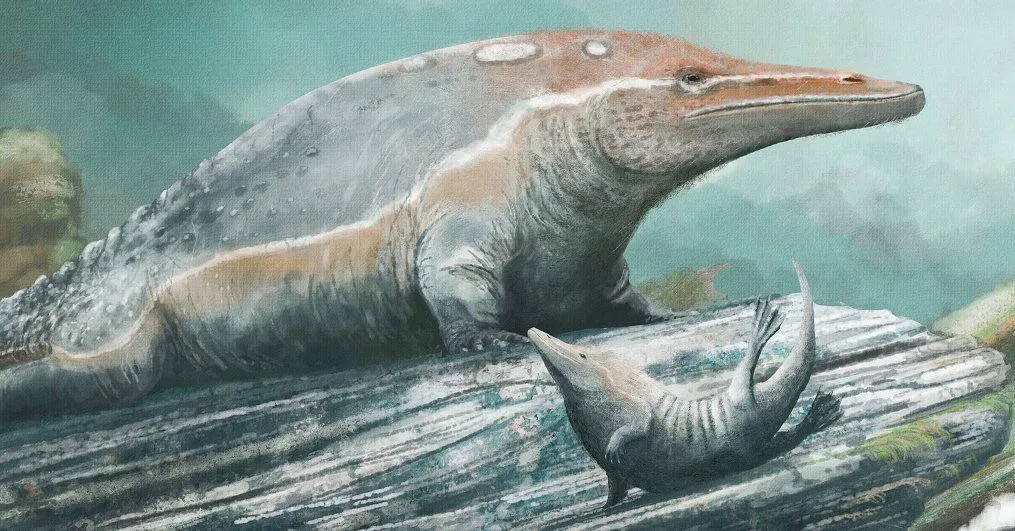
During construction work at the Vogtle Nuclear Power Plant site in Georgia, workers accidentally discovered unique fossils of a prehistoric creature about four meters long. The skeleton, initially mistaken for the mixed remains of several animals, turned out to be a remarkably intact skeleton of an ancestor of modern whales that lived during the Eocene epoch. At that time, most of what is now Georgia was the bottom of a warm, shallow sea.
This was reported by the paleontology publication The Pulse.
Scientists from the University of South Georgia involved in the excavation found that the creature combines anatomical features of both land mammals and modern cetaceans. In particular, the animal’s pelvis was no longer rigidly fused to the spine, indicating its exclusively aquatic lifestyle and inability to move on land. At the same time, the skeleton clearly preserves the attachment points for the hind limbs, which this ancient ocean dweller likely used in place of flippers. This makes the discovery a unique evolutionary snapshot of the transition of mammals from land to water.
The discovered species received the official scientific name Georgiacetus vogtlensis (“Georgia whale found at Vogt Station”). One of the discovered specimens was four meters long, and its skull measured over seventy-five centimeters. Paleontologists note that this discovery, which was later confirmed by similar finds in Alabama and Mississippi, helped the scientific community trace in detail the migration and evolutionary transformation of semi-aquatic creatures into fully marine mammals.
We previously reported that the recent discovery of two skeletons, mutilated in the same manner, suggests that limb amputation was used as a punishment during the Eastern Zhou Dynasty in China, over 2,000 years ago.
We also recall that during excavations in the ancient city of Laodicea in the Turkish province of Denizli, which is included on UNESCO’s tentative list of World Heritage Sites, a statue of Asclepius, the god of medicine in Greek and Roman mythology, and the head of a statue of his daughter Hygieia were discovered.


