
Scientists have discovered a new species of tiny shark in the Indian Ocean

Scientists have described a new species of tiny light shark discovered in the deep waters off the coast of Mauritius in the southwestern Indian Ocean. Because of its unusual snout shape and distinctive appearance, researchers jokingly note that the shark looks as if it is surprised itself to have been found.
The ocean covers most of the Earth’s surface and remains home to a vast number of living organisms. At the same time, scientists continue to discover species previously unknown to science.
The new species has been given the scientific name Etmopterus bulbosus. This name refers to a distinctive feature of the animal—its large, bulb-shaped snout.
So far, scientists are aware of only one specimen of this species. The female was discovered at a depth of approximately 400–500 meters and was subsequently brought to the surface during a trawl.
The new shark has been classified within the genus Etmopterus, which comprises 43 known species. Members of this genus are grouped into clades of closely related species that share similar morphological characteristics.
The researchers classified Etmopterus bulbosus within the clade E. pusillus. At the same time, the study’s authors noted the new species’ similarity to E. sentosus, particularly due to the presence of an enlarged area of dermal denticles.
The most striking feature of the new shark is its size. The length of the captured female, from the tip of the snout to the tip of the tail, is only 21.5 centimeters.
Due to the distinctive shape of its snout, the new species has been named what can be translated as “big-nosed light shark.”
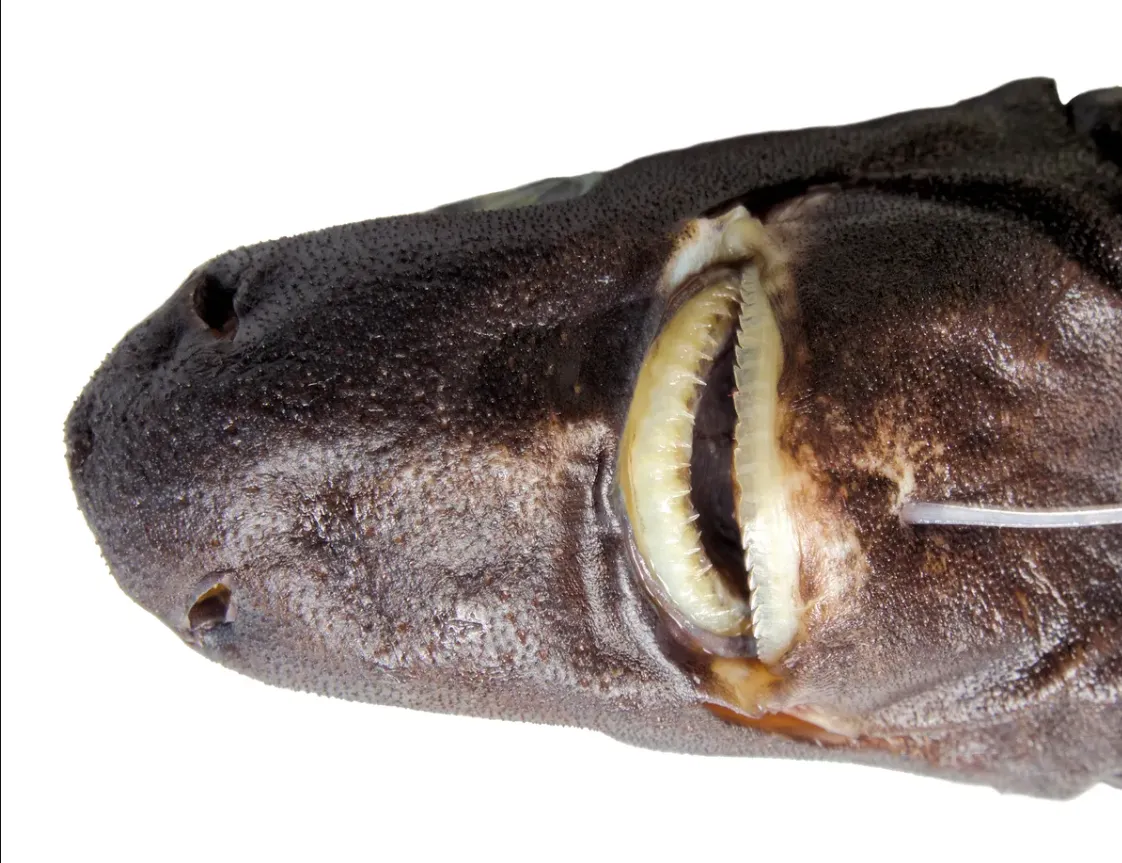
The animal’s body is predominantly brownish-black in color with a characteristic light purple tint. The unusual shape of the head and snout is one of the most striking features of this species.
The International Union for Conservation of Nature has already determined the conservation status of 40 out of 43 species in the genus Etmopterus.
Among them:
- 36 species are classified as “Least Concern”;
- for three species, there is insufficient data to determine their status;
- one species is considered Vulnerable.
Researchers note that a significant portion of these sharks inhabit great depths that exceed the level at which bottom trawling takes place. As a result, they are largely protected from the negative impacts of fishing.
Currently, the dwarf lantern shark is considered the smallest shark in the world. Adult specimens of this species do not exceed 21.2 centimeters in length.
At the same time, the discovery of Etmopterus bulbosus may force scientists to reconsider this issue. The female specimen found measures 21.5 centimeters in length, so the new species is only slightly larger than the current contender for the title of smallest shark.
However, researchers emphasize that it is too early to draw conclusions, as the new species is known from only a single specimen. Further research may help determine the actual size of these sharks and reveal more about their lifestyle.
This is reported by IFLScience.
Earlier in Busan, South Korea, a shark over 3 meters long was spotted in a water channel at North Port Waterfront Park. The animal’s appearance attracted the attention of locals: people gathered by the water to catch a glimpse of it.
Researchers from the University of Miami and other institutions have found that in Florida, the heads of Sphyrna tiburo hammerhead sharks become rounder with age in both males and females. This change is more pronounced in females. The findings cast doubt on the previous explanation, according to which males develop a more pointed front of the head only after reaching sexual maturity.




