

The Great Race for Artificial Intelligence: China vs. the U.S.
25 June 2026 19:05Imagine two teams building the same bridge. The first is the government. It moves slowly, but it has almost unlimited funds, plenty of time, and the final say in everything. The second is a group of private companies. They’re richer than some countries and work at lightning speed, but they have to report to investors every quarter. And they’re constantly afraid that those investors will pull their money out.
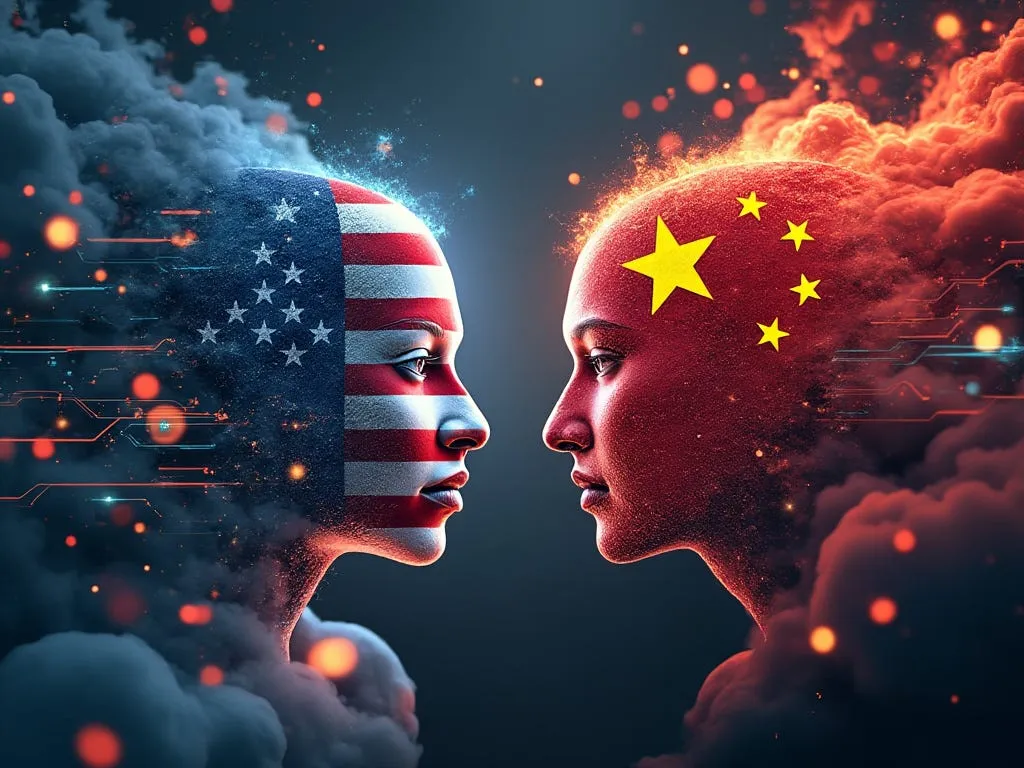
This is exactly what the world’s main technological battle looks like right now. China is preparing a $295 billion government plan to build its own foundation for artificial intelligence. American tech giants are doing the same and investing even more—but out of their own pockets. Whoever wins will decide what artificial intelligence will look like in just a few years. And this isn’t just about the language of communication. It’s about whose rules will become the global standard.
Data Centers and Chips in Simple Terms
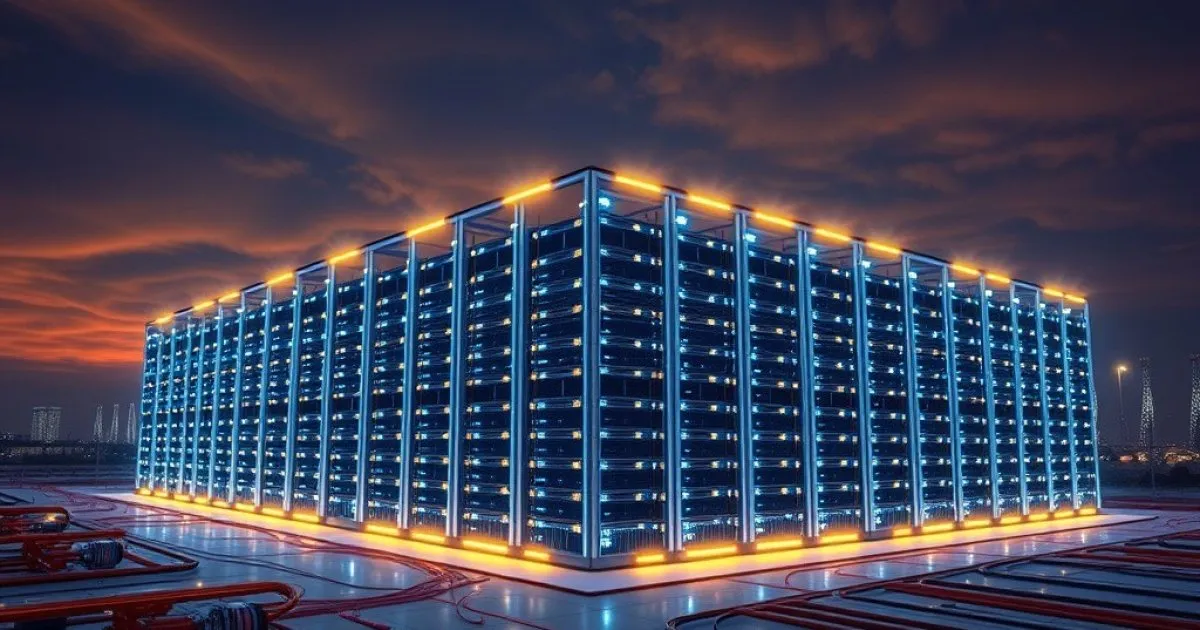
First things first: what kind of infrastructure is this? For artificial intelligence like ChatGPT to answer questions, generate images, or write text, enormous computing power is required. This isn’t magic—it’s physics. Somewhere, there are giant buildings, resembling warehouses, packed with thousands of powerful computers. These buildings are called data centers. They operate around the clock, consume as much electricity as an entire city, and that’s where any artificial intelligence “lives.”
At the heart of each of these computers is a special chip. In fact, it’s a tiny processor about the size of a palm. The world’s best chips for artificial intelligence are made by the American company Nvidia. And it’s all about these chips.
How This Race Took Shape
It all started with a ban. A few years ago, the United States decided that China should not have access to the most powerful American chips. The logic was simple. Whoever controls the best chips controls the future of artificial intelligence—and, consequently, the military, the economy, and science. So Washington cut off China’s access to Nvidia’s cutting-edge processors.
Beijing was faced with a choice between two options. The first was to stop and fall behind forever. The second was to build everything from scratch—which is what China chose to do.
We saw the result of that choice in the spring of 2026. Bloomberg reported that the Chinese government is preparing a grand plan. The country plans to spend about $295 billion over five years to build a network of data centers across its territory and integrate them into a single large computing system. This system is to run on its own Chinese chips, primarily from Huawei. There is no place for the American company Nvidia in this plan.
This decision did not come out of the blue. First, in the fall of 2025, China mandated that its data centers use at least half local chips. Then, government projects were completely banned from purchasing foreign chips. Those who had already installed American equipment were ordered to dismantle it. Now, this same logic is being extended to the entire country.
However, it’s important to note that China’s plan to build its own AI ecosystem is currently just a draft being prepared by Chinese officials. The final figures and timelines may still change. But the intention itself is already clear, and it’s very serious.
On the other side of this race are the Americans. Back in early 2025, they announced their own project called Stargate, with a budget of $500 billion over four years. The only difference is that the funding there is primarily private, not government-backed.
Who Has the Better Chance?
This is the most interesting question, and the answer is not obvious.
At first glance, the Americans seem unbeatable. The numbers speak for themselves. China plans to invest $295 billion over five years. The four American giants (Microsoft, Google, Amazon, and Meta) will collectively invest about $725 billion in artificial intelligence infrastructure in 2026 alone. Microsoft will invest about $190 billion, Amazon $200 billion, Google approximately $185 billion, and Meta $125–145 billion. Their investment in a single year is two and a half times greater than China’s entire five-year plan.
It would seem the debate is over. But let’s not jump to conclusions.
First, it’s cheaper to build in China. Labor, concrete, equipment, and the land itself cost significantly less there. Moreover, Huawei’s modular data centers are built in about half a year, while similar facilities in the U.S. take at least a year. Therefore, for the same 295 billion, China will gain much more actual capacity than the U.S. would for that amount. Taking into account the difference in prices and purchasing power, the real value of this money within China is significantly greater than it seems at first glance.
Second, the state and corporations operate under different logics. American companies must show a profit. As soon as investors fear that their money has been wasted, stock prices plummet, and executives come under fire. This already happened in the spring, when Meta merely hinted at massive expenses. Its stock immediately dropped by six percent. The government doesn’t think that way. If Beijing decides to build something, it will keep building for ten or twenty years without worrying about quarterly reports.
And it has good reason to wait. According to the Chinese government’s own estimates, by 2030 the entire AI-related industry in the country is expected to be worth over $1.4 trillion.
Third, the state has the power to compel. The Chinese plan explicitly requires that at least 80 percent of all equipment be manufactured in China. This guarantees orders for its own companies. Huawei itself will receive billions in future contracts simply by order from above. No free-market economy can do this.
But there’s a flip side. China’s main weakness is the chips themselves. For now, Chinese processors lag behind American ones in terms of processing power. Money doesn’t solve the problem instantly, because learning to make the world’s best chips is very difficult. Silicon Valley still holds the advantage here, and it may remain so for several more years.
This is precisely what experts are pointing out. Even if Huawei drastically ramps up production, it still won’t come close to Nvidia’s output in the coming years. In other words, money alone isn’t enough, since chips—which are in short supply—are also needed. The head of SMIC, China’s largest chip manufacturer, put it most accurately. According to him, companies want to squeeze a ten-year supply of data centers into two years, although it’s not entirely clear whether such a volume is necessary.
For now, the Americans have more money and better chips. China has the advantage of time, low costs, and government backing. This is a marathon, not a sprint. And, as a rule, the one with the most stamina wins.
What this could mean for the rest of the world
It’s hard to predict at this point. However, it’s safe to say that the race between these two giants could affect even those countries that aren’t participating in it.
The world of artificial intelligence is gradually splitting into two halves, like two separate power grids with different outlets. In the first, everything runs on American technology, Nvidia chips, and familiar services like ChatGPT. In the second, there’s more Chinese influence, from processors to software. And these systems will increasingly lose compatibility and similarities.
What does this mean for an ordinary country? Sooner or later, it may have to choose a side. A company that wants to operate in both the West and China risks having to build two separate versions of its product. And that’s expensive and complicated.
Europe deserves a separate mention. While the two giants compete, it risks falling behind both. It has neither the billions in government funding that China has nor the private-sector giants that the U.S. has. Christophe Fouquet, CEO of ASML (a company without which it is hard to imagine the production of modern chips), acknowledged that Europe is lagging significantly behind and described it as more of a consumer of artificial intelligence than a creator of it.
For Ukraine, the conclusion is quite simple. The future of artificial intelligence will likely depend increasingly not only on technology, but also on politics and geography. The kind of artificial intelligence we’ll use may depend on which country we support. However, we shouldn’t forget about our own capabilities and the development of Ukrainian AI.
So, will we see two parallel internets? We shouldn’t rule out such a scenario. It’s entirely possible that each side will develop its own data centers, its own chips, and its own rules, and that data will mostly stay at home—Chinese data in China, Western data in the West. It’s unlikely to come to complete isolation, as people and businesses will still seek ways to collaborate across borders. But the unified digital world we’re accustomed to may gradually shrink over time.
We’ll continue to monitor the development of the digital industry.




