
Venus disappears from the evening sky in September
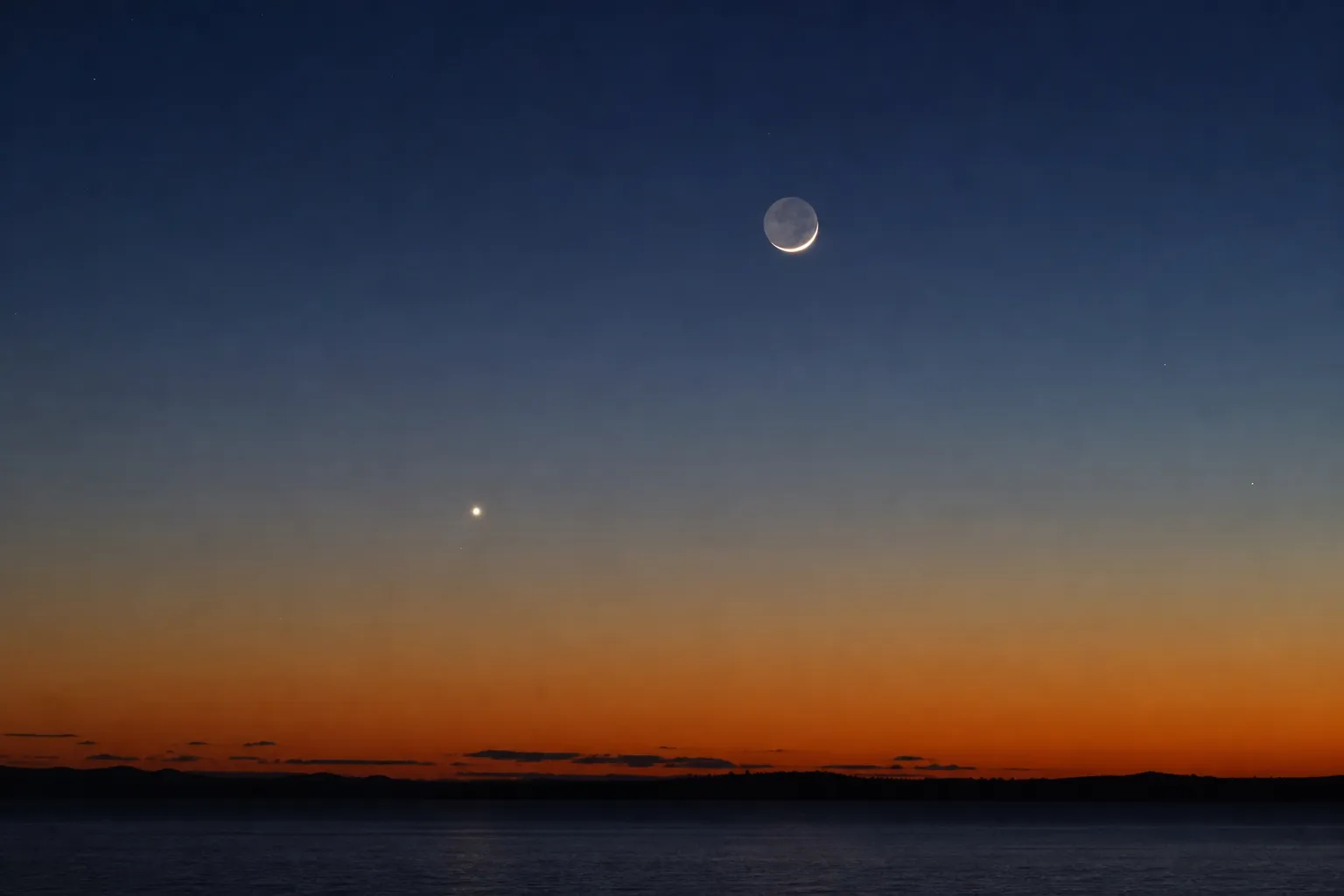
Throughout September 2026, Venus will sink lower above the southwestern horizon each evening after sunset, and by the end of the first week of October it will no longer be visible in the evening sky. The planet will soon change its status from the “evening star” to the “morning star,” Space.com reports.
When to observe Venus
Seeing the planet during the month will be easier in clear weather and with an unobstructed horizon. On September 7, Venus will set about one hour and 15 minutes after the Sun. On the evening of September 14, it can be sought low in the west-southwest 30–45 minutes after sunset: a waxing crescent Moon will be nearby, about 5.5 degrees to the left of the planet.
On September 18, Venus will reach its greatest brightness, with a magnitude of −4.8. At the same time, observations will be complicated by the planet’s low position above the horizon. By the end of September, it will set only about 35 minutes after sunset.
Why Venus is disappearing
Since late March, Venus has been a prominent object in the evening sky. In June, it took part in an evening conjunction of three planets, outshining Jupiter and Mercury. Since then, Venus has been setting increasingly earlier. On August 15, the day of its greatest eastern elongation, when it was at its greatest apparent angular distance east of the Sun, the planet was already setting as evening twilight ended.
More current news is available on the UA.News Telegram channel Telegram.
For observers at mid-northern latitudes, Venus will be especially low by the end of September. Near 40 degrees north latitude, at sunset, its altitude above the southwestern horizon will be only about 5.5 degrees.
Transition to the morning sky
Through a telescope, Venus now appears as a thin crescent: the sunlit part of its disk is narrowing and becoming elongated. The planet’s shape can also be attempted with binoculars if they can be held very steady, although its low position above the horizon reduces image sharpness.
On October 24, Venus will pass through inferior conjunction with the Sun, about six degrees south of it. During this period, it will be extremely difficult to see. In November, the planet will reappear before dawn, and by the winter holidays it will rise in the east more than two hours before dawn.




