
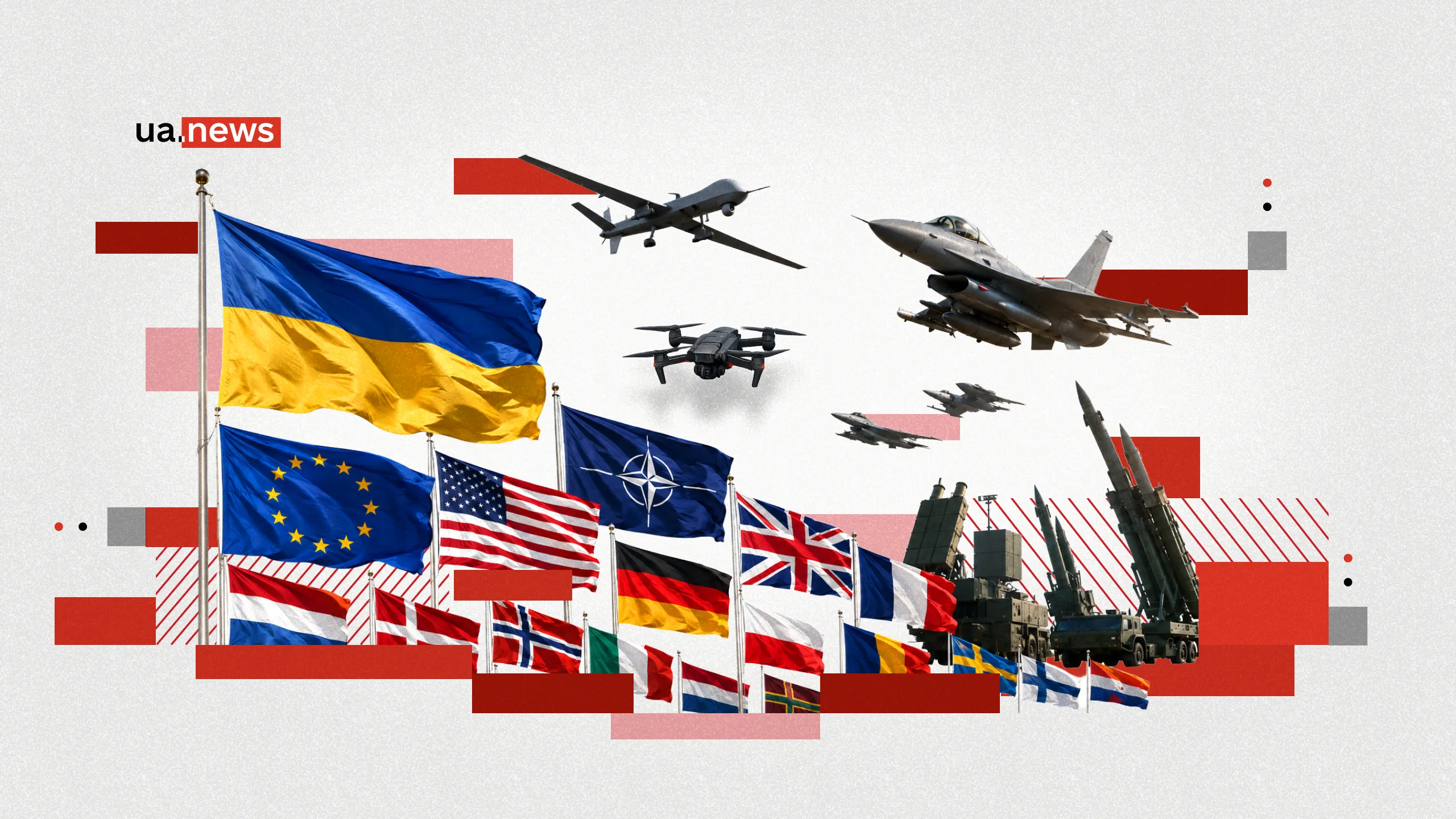
On Monday, July 13, another international agreement aimed at strengthening Ukraine’s defense capabilities was signed in Paris. Ten countries—Ukraine, France, the United Kingdom, Germany, Italy, Spain, the Netherlands, Norway, Denmark, and Sweden—officially announced the creation of the Anti-Ballistic Missile Coalition.
Its ambitious goal is to rapidly develop a low-cost, mass-produced equivalent of the American Patriot air defense missile system (or, more precisely and above all, the corresponding missiles), which would effectively shield the skies over Ukrainian cities from relentless Russian ballistic missile attacks. The core of the future system is to be a Ukrainian anti-ballistic system and interceptor missile, while leading European defense contractors will provide the key control and radar components.
What exactly is behind this new alliance, how is it supposed to work in practice, and how effective have the numerous similar coalitions created by Kyiv and its partners over the past 4.5 years of the war actually been? UA.News political analyst Mykyta Trachuk, together with experts, examined the issue.
The Paris Initiative: Sovereign Air Defense in 12 Months
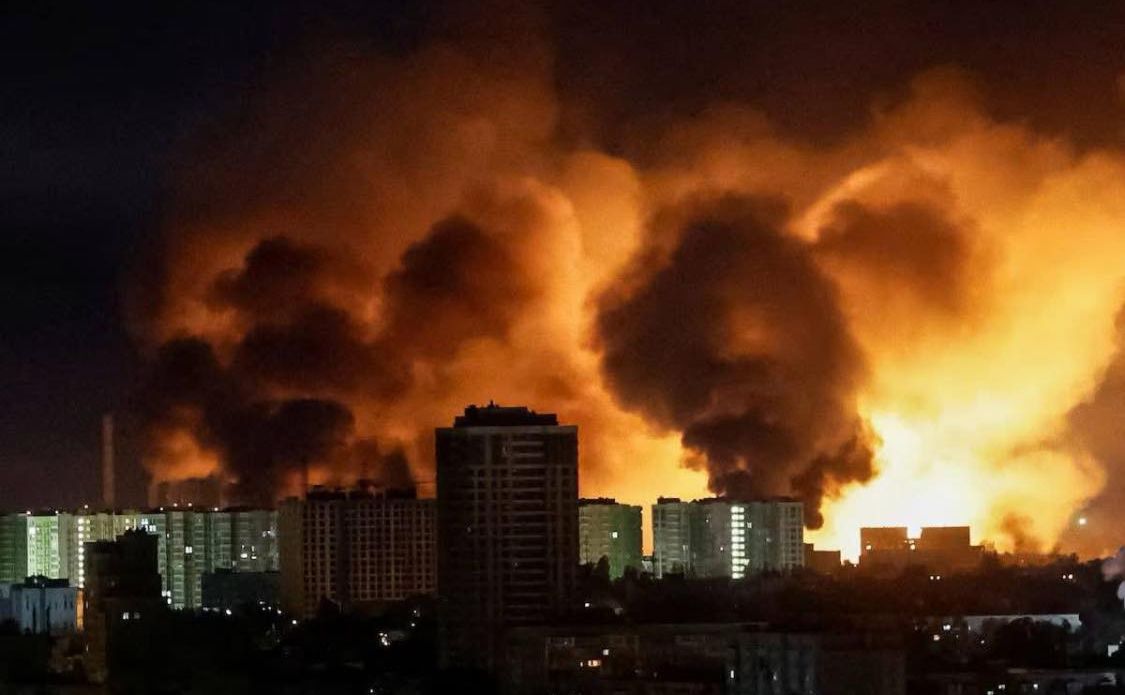
The recent massive shelling of Kyiv served as the formal pretext for creating the Anti-Ballistic Coalition, during which Ukraine’s air defense proved, unfortunately, completely powerless against Russian ballistic missiles. The tragic toll of these strikes by Russia came as a shock to many: none—or almost none—of the dozens of ballistic missiles launched recently were shot down. This vulnerability, compounded by a chronic shortage of ammunition for existing air defense systems, prompted European leaders to take action, culminating in another meeting of the “coalition of the willing” in Paris, where the formation of the alliance was announced.
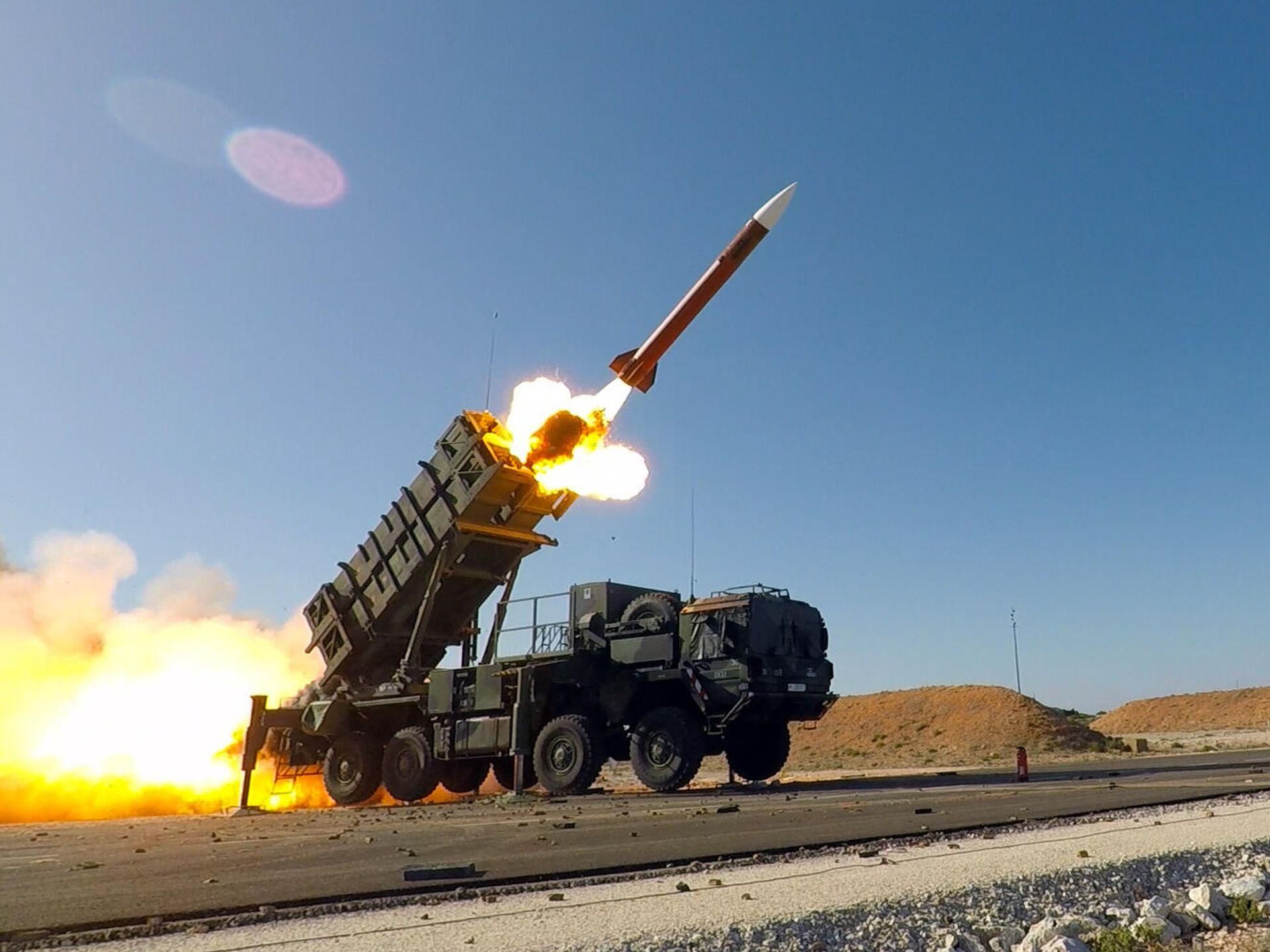
A project called FREYJA is set to become the central element of the new security system. It is based on the Ukrainian FP-7 interceptor missile, developed by Fire Point—the same company already known for its smaller missiles in the FP-1, FP-2, and “Flamingo” series. The goal is to create a significantly cheaper and mass-producible counterpart to the American PAC-3 MSE missiles. The “brains” of the system—radars, command posts, and the fire control system—are being provided by European defense industry giants.
The list of participants is quite impressive: it includes companies such as Thales, Leonardo, MBDA, Diehl Defence, Safran, Hensoldt, Saab, Kongsberg, and Eurosam. This is an unprecedented concentration of technical capabilities, with plans to deliver a fully integrated anti-ballistic missile system in just 12 months. The main goal is complete independence from American political ups and downs and limited shipments of Patriot missiles from across the ocean.
The fact is that the hope of obtaining a license to manufacture the Patriot PAC-3—which Donald Trump allegedly promised last week in Ankara—remains more of a political mirage than a real solution. Germany’s experience in this regard is telling: Berlin received such a license back in 2024, yet has still not manufactured a single missile.
The problem here isn’t paperwork or permits, but deep-seated technological limitations. PAC-3 production is hampered by the complexity and exorbitant cost of components manufactured by Lockheed Martin’s contractors.
The biggest challenge is the seeker head—a critically important component that enables the “hit-to-kill” kinetic destruction of a ballistic target. Very few of these are produced, while global demand is skyrocketing: Israel, Taiwan, Arab countries, and, in fact, the United States itself all need these missiles. The war with Iran has already depleted about a third of the world’s Patriot stockpile, and the consumption will continue. Lockheed Martin’s factories produce about 55–60 missiles per month, while Russia launches at least 100–120 ballistic targets every month. To guarantee the interception of a single such missile, it usually takes two or three PAC-3s—meaning the math here is disastrous for Ukraine.
In addition to the anti-ballistic missile initiative, Paris has also taken the initiative in the aviation sector. Without waiting for final decisions on the Patriot system, President Macron promised Ukraine licenses to manufacture anti-aircraft missiles for the SAMP/T systems, AASM Hammer guided bombs, as well as SCALP-EG cruise missiles (known as Storm Shadow). A separate commitment was made to transfer hundreds of Rafale F4 fighter jets, along with new radars and launchers.
All of this forms the outline of a security shield that is expected to become operational in a year. However, a rhetorical question remains unanswered: how can Ukraine—its people, infrastructure, and defense industry—survive this year, right here and now, when ballistic missiles continue to destroy cities with impunity, and above all, the capital?

Media Hype or Real Weapons: The Fate of Previous Initiatives
The creation of the Anti-Ballistic Coalition is far from the first—and clearly not the last—example of the institutionalization of Western aid. Over more than four years of war, the high-profile names of new and ever-changing formats have been announced with such regularity that a certain “coalition fatigue” seems to have set in among the public. Each such initiative was presented with extensive media coverage as a “turning point” and a “breakthrough,” yet the actual effectiveness of most of them turned out to be, to put it mildly, not nearly as significant.
Perhaps the only format that has proven itself to be a truly effective mechanism from the very beginning to the present day is “Ramstein.” The Contact Group on Ukraine’s Defense, which brings together more than fifty countries, has become the pipeline through which ammunition, armored vehicles, and air defense systems have been steadily delivered to the front lines. Without these regular meetings at the airbase of the same name (which, incidentally, is the namesake of the famous metal band Rammstein), there would be neither operational logistics nor synchronization of the Ukrainian Armed Forces’ needs with the arsenals of its allies.
The aviation coalition stands somewhat apart. Although promises to train pilots and transfer modern Western aircraft have been made for years, the tangible results by 2026 are still significant: several dozen F-16s, Mirages, and Gripens are already in the air, carrying out combat missions.
In contrast, a number of other coalitions have left behind little more than a media presence. Take, for example, Macron’s “Coalition of the Resolute,” which in early 2024 positioned itself as the vanguard of countries supposedly ready to deploy their troops to Ukrainian territory—but later dissolved into diplomatic rhetoric. Or the no less famous Czech “ammunition initiative,” which was supposed to provide one million rounds of ammunition to the Ukrainian Armed Forces. Despite a high-profile launch and fundraising efforts, it ran up against market realities: a shortage of raw materials, inflated prices, and even indirect sabotage by third countries, resulting in delivery schedules being constantly disrupted and the initiative gradually fading from memory.
Just as quietly, by the way, the high-profile plans of the Ukrainian leadership (“Plan for Victory,” “Plan for Resilience,” etc.)—which were presented with the involvement of foreign partners but remained mere framework declarations without implementation mechanisms—disappeared from the news agenda.
Security agreements hold a special place on this list. As of July 2026, Ukraine had signed more than 30 (!) such bilateral documents with various countries around the world. At the time, each signing was presented as a direct “security guarantee” and a diplomatic breakthrough. However, as practice has shown, these agreements turned out to be more like political memorandums of intent. They do not oblige allies to enter the war on Ukraine’s side, but rather document assistance that has already been provided or is to be provided—and that, in fact, is all. Today, for some reason, most of these agreements are not mentioned at all in the public sphere, as if they never existed.
In fact, there are many more examples like this. This strange pattern points to a systemic problem: very often, these “coalitions” were formed primarily to satisfy domestic and foreign policy media demands. Simply put, the PR aspect completely overshadowed practical implementation. The public, which was eager for at least some encouraging news, was fed sensational headlines, but within a few months found that the formally established alliance of yet another group of “capable” leaders generated almost no real capabilities and did nothing to change the situation on the front lines—unfortunately.
In the fifth year of the war, this approach no longer works. Trust in high-profile political presentations has plummeted. And while “Ramstein,” for example, continues to deliver results thanks to its consistency and pragmatic approach, any new coalition is now met with outright skepticism.
Expert Opinions
Military expert and retired U.S. Navy Captain Harry Tabach commented to UA.News on the case of the Anti-Ballistic Coalition and other similar alliances.
“The Anti-Ballistic Missile Coalition—it certainly sounds good. But what is the budget allocated for this program, and by whom? Reports say that an exact cost estimate has not yet been disclosed. For now, it’s just a ‘political launch of the initiative.’ There’s your answer regarding effectiveness. As they say—good luck! As for the U.S., we need these missiles ourselves. And they aren’t cheap. We should have taken them under Lend-Lease—back then. Maybe we wouldn’t even need the missiles now. We don’t have them, and we never could have. Biden didn’t allocate a budget for them, whereas armored vehicles and ammunition were available. But we didn’t take them, and Biden scrapped them. Now none of that is needed. The way out of this situation is negotiations. Any kind, but negotiations. Because the missiles won’t just appear tomorrow,” noted Harry Tabakh.
Military expert Oleg Zhdanov shares a similar view and also does not expect any particular or quick solutions.
“If we look at the short term, this is mostly just a media story. It’s very rare for the discussion to focus on specific or available resources. Take, for example, the ammunition coalition—it worked almost instantly. First, the partners provided what they had, and then long-term production began. But for the most part, all these coalitions are really about working toward the future. We understand that the transfer of missiles could begin in a month if those missiles are available, but production takes at least six months to a year. All of this has strategic implications and a strategic goal, but it doesn’t work here and now. It might work in some minimal sense. For example, we currently have a dire situation with missiles for the Patriot system; everyone knows and sees this very well. Our partners could chip in and provide us with a certain number of missiles for the initial period, while the main steps regarding licensing and production are underway. But that’s all for now,” Oleg Zhdanov is convinced.
In summary, the Anti-Ballistic Coalition appears to be technologically sound and potentially groundbreaking, but its cost is time—of which Ukraine has critically little. Unfortunately, during the 12 months allotted for the development of FREYJA, countless more tragedies caused by ballistic strikes will occur. The country needs concrete solutions here and now.
Most importantly, what Ukraine needs at this stage even more than new military alliances are real, substantive efforts to resume the negotiation process aimed at achieving a ceasefire and ending the war. No coalition, not even the most powerful one, can replace the political will to stop the daily bloodshed, which seems to have no end in sight.
The public is tired of fancy names and grand statements. It is waiting for either genuine—not just declared—protection, or solutions to end the war through diplomatic means.


