
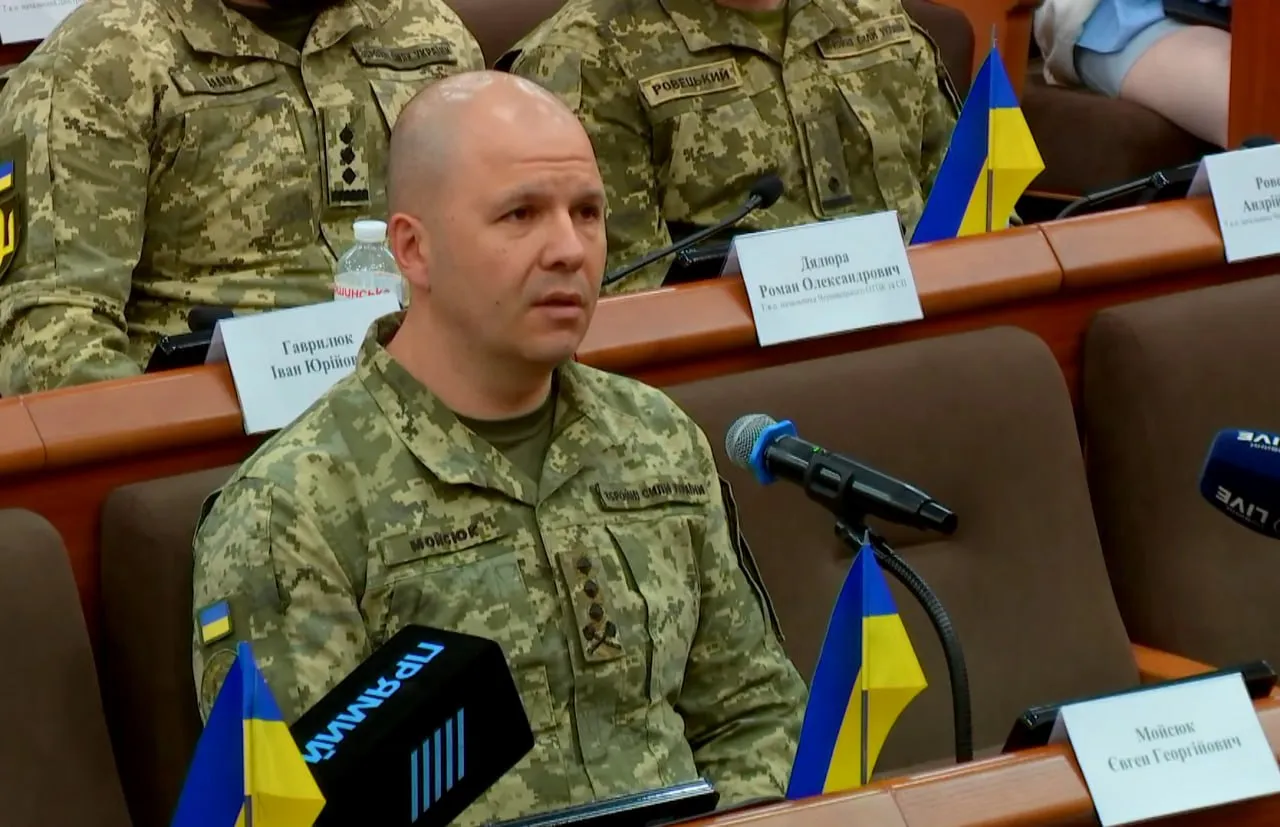
The long-awaited reform establishing clear terms of service—which the public has been expecting from the government for the third year in a row—is being deliberately stalled at the Cabinet level, — former Deputy Minister of Defense Yevhen Moysyuk stated this during a meeting of the Temporary Investigative Commission and explained why this is happening.
The relevant draft laws and resolutions were fully developed and thoroughly reviewed by the Ministry of Defense in collaboration with the General Staff as early as the end of last year.
The essence of the finalized concept is as follows:
- The introduction of voluntary contracts with clear terms—18 to 24 months.
- A guaranteed right to deferment from further mobilization after the expiration of this term.
- The option to sign such contracts for those who have already been on the front lines for four years (primarily in critical combat roles).
The documents are fully ready, but the government has blocked their implementation. The main obstacle is money. Launching the short-term contract system requires enormous additional expenditures that the state budget cannot cover.
“First and foremost—the financial aspect. This concept required increased funding for the Armed Forces of Ukraine. Well, at a minimum, a payment for signing the contract, plus the signing of the contract itself, requires a bit more funding. And that’s all on the expenditure side. I think this is also a deterrent,” Moysyuk noted.
In other words, the government has found itself in a bind: reforming mobilization and service terms is hampered by a budget deficit that is critically dependent on foreign financial injections. Instead of acknowledging the lack of funds, the Cabinet of Ministers is keeping the finalized documents “in a drawer,” dragging out the demobilization issue, while the army continues to rely on administrative coercion and “busification.”
12,000 complaints and “unruly” frontline soldiers: the TCC’s personnel overhaul has failed
During the meeting, Oleksiy Honcharenko cited a figure that captures the true scale of the disaster on the home front: the Human Rights Commissioner has already received nearly 12,000 complaints of violations during mobilization.
When asked how to change the work of military registration and enlistment offices to avoid such a flood of violations, Yevhen Moysyuk tried to shift the blame onto society, stating: “In reality, everything would be resolved if our citizens voluntarily came to the TCC in response to their draft notices and joined the ranks of the Armed Forces of Ukraine. That would resolve absolutely all issues.”
However, the general went on to admit that the personnel reform of the military registration and enlistment offices had failed badly. The attempt to combat corruption by massively transferring veterans who had served on the front lines into these offices led to a surge of aggression on the streets. According to Moysyuk, front-line veterans have their own strong convictions but lack experience in such work. Because of this, “they are sometimes not as restrained in performing their duties as protocol requires. This also creates major problems.”
Summarizing his assessment of the current mobilization, the former deputy minister offered a rather cynical measure of its effectiveness: “It is sufficient to ensure that our country still exists, that we suffer minimal losses on the battlefield, and even regain a little of what is ours.”
Umerov’s secret order: military commissars officially ignored the minister’s directive
General Moysyuk confirmed that in accordance with the President’s public directive to “address the issue of busification,” a clear order from the Minister of Defense was signed as early as February–March. The document officially outlined all the issues:
“It is prohibited to act without representatives of the National Police. It is prohibited to act without cameras, prohibited to act while wearing balaclavas, and so on. It is prohibited to issue warnings without cameras,” the general listed.
However, the order is being openly ignored on the ground, and the general effectively admitted the ministry’s helplessness in the face of its own subordinates. Moisyuk said that he personally sent the director of the Mobilization Department to conduct inspections in the Kyiv region, where shocking facts were revealed: personnel are deliberately violating the rules because they fear for their safety due to a total lack of trust in society.
According to the former official, “people know there is a ban, but they still wear masks; they understand they will face penalties and have their bonuses docked, but they do it anyway because they are worried about themselves and their families.”
In conclusion, Moysyuk stated that under current conditions, “it is difficult to monitor, let alone hold everyone accountable for everything.”
Why the Ministry of Defense Has No Authority Over Military Commissariats
The main reason for the administrative chaos and disregard for orders lies in the very architecture of the system, where the Ministry of Defense is de facto deprived of direct leverage over the TCCs. Moisyuk acknowledged that the ministry only issues general directives but does not manage the process: “I had no authority—nor did any deputy minister—to directly assign tasks or tell any TCC to do anything. That’s just how it is.”
The system is structured as a long bureaucratic chain. A document signed by the minister first goes to the General Staff (where Colonel Gorbach, head of Department J1, is responsible for mobilization). Next, the General Staff forwards the request to the Army Command as the “primary stakeholder,” where the process is managed by Chief of Staff Major General Oleksandr Yakovets and his deputy, Colonel Realtsov. Only after this does the order go to the Operational Commands, and from there—to a specific TCC. When asked by Goncharenko whether such a convoluted model is effective, Moysyuk merely replied briefly that “there is 100% room for improvement.”
In practice, this means that any attempt at civilian oversight by the Ministry of Defense simply gets bogged down in the offices of the Army, leaving citizens at the mercy of unchecked lawlessness on the streets.
The Spanish-language impasse: international recruitment has hit a language barrier
The plan to recruit foreign volunteers into the Defense Forces by 2025 fell through due to the army’s sheer linguistic incompetence. Instead of the planned three- to fourfold increase in the number of foreign legionnaires, actual numbers rose only twofold, as the defense ministry proved completely unprepared for the language profiles of most candidates.
“The biggest problem with recruitment is our linguistic capabilities. Everyone knows that most foreigners who want to serve in the Armed Forces are Spanish-speaking. However, we have very few tactical-level commanders who could train and command Spanish-speaking fighters. This is the main limiting factor,” Moisiuk explained.
The former Deputy Minister of Defense also drew a direct parallel between the language barrier and the high rate of AWOL (absent without leave) among foreigners. Even if Ukrainian-speaking tactical-level commanders sometimes cannot find common ground with Ukrainians because “persuasion doesn’t work, conflicts arise, and so on,” the situation with foreign fighters is critical:
“Now add to this problem a complete lack of linguistic contact, where the commander simply does not know the language of his subordinate. This is the biggest obstacle. If we manage to resolve it, the recruitment rates for foreigners will improve significantly.”
Women linguists and a lack of funds: how the ministry searched for translators
The ministry’s attempts to solve the problem were unsuccessful, as the department’s own staff speak a language that is not in demand among most potential recruits.
Yevhen Moysyuk noted: “We analyzed our linguistic capabilities and identified specific individuals. I initiated this work, but it was completed after I left my post. We identified individuals who are potentially ready to serve in units with foreigners, but, unfortunately, the vast majority of them speak English. And there are far fewer English-speaking foreigners who want to serve with us than there are Spanish-, Portuguese-, or French-speaking ones.”
In response to Oleksiy Honcharenko’s remark that, over more than four years of full-scale invasion, it would have been possible to organize language courses and improve linguistic proficiency, the general replied that actual demographic and educational indicators refute such expectations.
“It only seems that way. We reached out to the Ministry of Education and Science and obtained statistics on how many Spanish language majors have graduated over the past 10 years. There turned out to be very few. Moreover, the vast majority of them are women.”
In addition to the linguistic challenge, the expansion program has run into a funding shortage.
“These two issues are the main ones, with the linguistic one taking precedence, even over the financial one. The rest of the issues are being resolved. From our side, there are no serious legal obstacles to hiring foreigners. However, other countries often view this as mercenary activity, which entails legal risks for the citizens themselves. Therefore, all our domestic laws and regulations must strictly comply with international law to minimize these risks.”
According to the general, with adequate funding, the system could operate through existing agencies, but currently the units simply lack the resources to accept such fighters.
Ad hoc recruitment: why only three regions accept foreigners
“Regarding recruitment mechanisms: last summer, when Denys Anatoliyovych Shmyhal was still prime minister, we drafted a resolution that allowed all regional TCCs to recruit foreigners using legal funds (even if this funding does not come from the budget). Some TCCs are successfully utilizing this—for example, the Zaporizhzhia, Khmelnytskyi, and Odesa TCCs.”
However, the Army Command has not been able to scale this experience nationwide, as there is simply no one at the local military registration and enlistment offices to handle professional communication.
Concluding his testimony, the former deputy minister promised that new steps to break this deadlock are already being developed within the defense ministry.
“I think Minister Fedorov will announce them publicly in the near future. We are expecting changes in this direction.”


