
Mushroom Guide for August 2026: Which Mushrooms to Pick and Where to Find Them
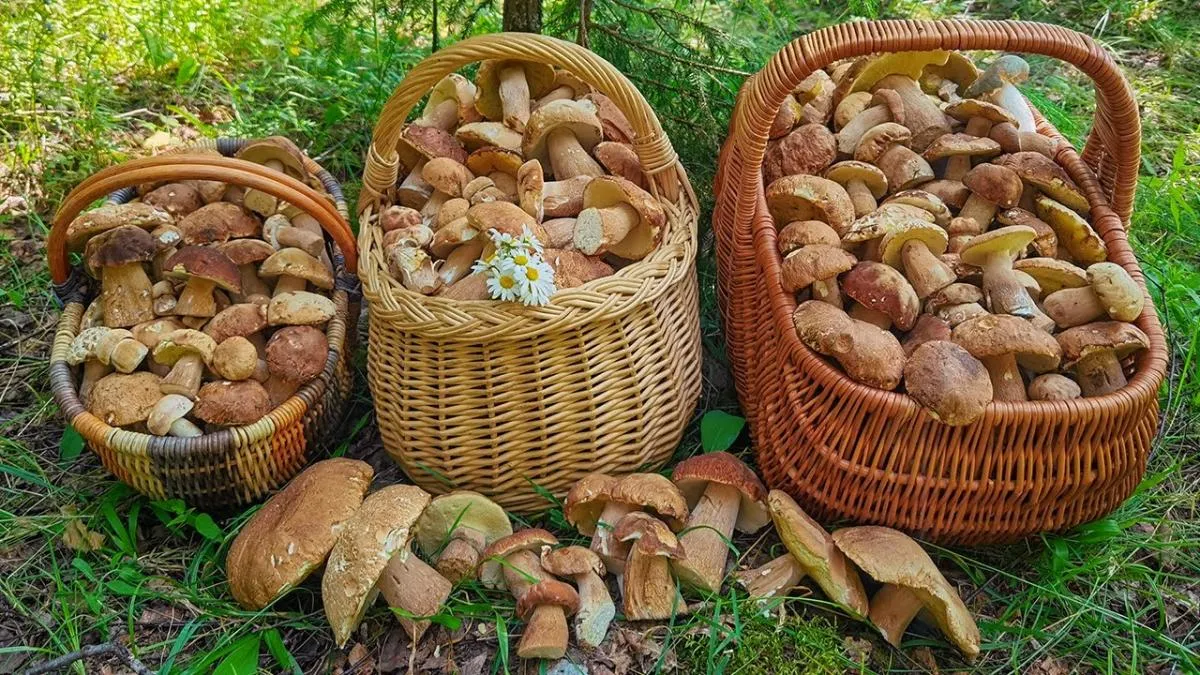
August is the golden season for every mushroom hunter. It is during this month that the daytime warmth combines with the first cool nights, resulting in abundant morning dew. Combined with August’s thunderstorms, this creates an ideal microclimate in the forests: the soil is well-warmed and sufficiently moist. While July is often too hot and dry for widespread growth, August marks the true peak of mushroom season, when you can find virtually every type of edible mushroom in the forest—from noble white mushrooms to butter mushrooms and chanterelles.
Where to Look for Mushrooms in August: Features of Forest Locations
The success of a mushroom-hunting trip in August depends on your ability to choose the right type of forest and navigate its terrain based on the weather.
Coniferous and pine forests
In August, pine and spruce forests become the main spots for gathering butter mushrooms, red-capped mushrooms, and white mushrooms (pine varieties). Butter mushrooms prefer young, sunny stands, forest edges, clearings, and the shoulders of forest roads, where the sandy soil warms up quickly. Red-capped boletes are more commonly found in young spruce stands and among pines, hiding in the pine needles on elevated, dry areas.
Deciduous and Mixed Forests
Oak, hornbeam, and birch groves are the domain of white mushrooms, birch-growers, honey mushrooms, and red-capped mushrooms.
Birch boletes prefer moist areas near birch trees, on the edges of mossy bogs, and in low-lying areas.
Aspen mushrooms grow actively not only under aspen trees but also in young birch-aspen deciduous forests, near fern bushes.
Chanterelles often cover mossy clearings in mixed forests, where they grow in large clusters.
Dependence on Weather Conditions
In dry and hot weather, the mycelium retreats to areas where moisture is retained longer: shaded ravines, low-lying areas, dense low-growing spruce stands, thick fern thickets, and places with a thick layer of moss.
In rainy and cool weather, mushrooms “emerge” into open areas: clearings, forest paths, forest edges, hills, and roadsides, where the soil is better aerated and warmed by the sun.
Top Mushrooms of August 2026: A Detailed Overview
Porcini Mushroom
The king of the forest produces its most abundant and highest-quality flush of growth in August. The August white mushroom is distinguished by its dense flesh and excellent flavor. They are found in old oak, pine, and birch forests. They grow both individually and in groups. If you find a single sturdy boletus, be sure to search the area within a 10–15-meter radius.
Boletus and Birch Boletus
These mushrooms grow very quickly. Pine boletes, with their bright red and orange caps, are visible from a distance; they are rarely worm-eaten early in their growth. Birch boletes grow in large clusters but must be processed quickly, as the tenderness of their stems is lost rapidly.
Butter Mushrooms
August brings a massive flush of butter mushrooms (summer and fall varieties). They appear in large colonies in young pine forests just 2–3 days after a warm rain. The main characteristic of August butter mushrooms is a high risk of being worm-eaten, so it’s best to pick small ones that have just poked through the ground and still have an unbroken film under the cap.
Chanterelles
Chanterelles have been fruiting in large numbers since July. They are virtually never worm-eaten thanks to their quinomannose content (a substance that kills parasites). Chanterelles tolerate transportation very well and are the best choice for frying and pickling.
Milk Cap and Red-capped Mushrooms
August marks the start of the peak season for harvesting gilled mushrooms for pickling. True honey mushrooms, black honey mushrooms, and aspen honey mushrooms appear; these require prolonged soaking before cooking, as do noble red mushrooms, which are considered the best mushrooms for dry pickling.
Summer and Early Fall Honey Mushrooms
By the end of August, when nighttime temperatures begin to drop noticeably, the first autumn honey mushrooms appear on stumps and damaged trunks of deciduous trees. They grow in huge clusters, allowing you to quickly fill a basket.
August 2026 Forecast
First Decade (August 1–10): The summer growth phase continues. Chanterelles, butter mushrooms, birch boletes, and summer honey mushrooms grow in abundance. If it’s hot, foraging shifts to lowlands and damp ravines.
Second Decade (August 11–20): The peak period of August’s mushroom abundance. Porcini and honey mushrooms begin to appear in large numbers, and the first milk caps and red-capped mushrooms make their appearance.
Third Decade (August 21–31): With the arrival of the first fogs and cool nights, the transition to the fall mushroom season begins. The number of red-capped mushrooms and honey mushrooms increases, and autumn honey mushrooms, parasol mushrooms, and russula begin to appear in large numbers.
Important Safety and Foraging Rules
The mushroom hunter’s golden rule: If you’re not sure, don’t pick it. If you have even the slightest doubt about a mushroom’s species, leave it in the forest.
Avoid old and overripe mushrooms: In August, the heat causes mushrooms to age quickly. Proteins in the tissues of overripe mushrooms begin to break down, creating toxic compounds. Such a mushroom can cause severe poisoning, even if it belongs to an edible species.
Do not pick mushrooms near highways or industrial facilities: Mushrooms act like sponges, absorbing heavy metals, exhaust fumes, and pesticides from the soil and air. The minimum distance from busy roads should be at least 500 meters.
Proper storage: Collect mushrooms exclusively in woven baskets or ventilated crates. In plastic buckets and plastic bags, mushrooms quickly “rot,” become misshapen, and spoil before you even get home due to a lack of oxygen and high temperatures.
Prompt Processing: Mushrooms picked in August must be processed (cleaned, boiled, frozen, or dried) within the first 4–6 hours after returning from the forest. When stored fresh—even in the refrigerator—mushrooms quickly lose their quality and become unsafe to eat.


