
Following the exposure of a large-scale corruption scheme — the so-called “Mindych case” — Ukrainians are closely watching the reaction of their European partners, whose support is critical for the country’s survival and future development.
What do European partners think about the corruption scandal in Ukraine’s top political circles? Why is the Ukrainian business community the only domestic institution that has not lost the EU’s trust? Which Ukrainian projects can still qualify for EU funding? And why does Poland receive ten times more grant funding than Ukraine?
Halyna Heilo, President of the International Payment Association (IPA), Vice President of the Association of Ukrainian Banks, and Chair of the Finance Committee of the Polish-Ukrainian Chamber of Commerce (PUIG), discussed these issues in an exclusive interview with UA.News. She recently returned from Brussels after participating in the European Business Summit and meeting with Members of the European Parliament and representatives of the European Commission.
What the EU thinks after the major corruption scandal in Ukraine
European officials are commenting on the scandal cautiously, though some speak frankly. One of them is Michał Kobosko, a Polish Member of the European Parliament from the Liberal Party, which, together with Servant of the People, is part of the Alliance of Liberals and Democrats for Europe. Kobosko supports the party and President Volodymyr Zelensky, yet he is almost the only politician who has openly addressed Ukraine’s corruption scandal.
He said that while everyone condemns corruption, the “Mindychgate” case is so shocking that “Europe is now in a sort of limbo.”
On one hand, the EU knows it cannot stop supporting Ukraine even for a moment. European leaders clearly understand that without financial assistance for Ukraine’s defence and army, the war could end very quickly — and this would pose a major threat to Europe itself. Ukraine is seen as a buffer that restrains a significant danger to the entire continent.
On the other hand, Slovak Prime Minister Robert Fico and Hungarian Prime Minister Viktor Orbán have completely different interests and are blocking many EU decisions. The corruption scandals in Ukraine give them a strong argument for obstructing European integration.
Overall, the situation is extremely difficult. It is almost impossible to explain to European taxpayers why their money ends up in the pockets of Ukrainian officials. For Europe, this is becoming harder and harder to justify. That is why the EU now finds itself in such a “stretched” position.
When we come to Brussels, we always emphasise that Ukraine needs funding, needs support, and offers strong prospects for business. We talk about how good and promising Ukraine is. But against the backdrop of corruption scandals, appealing to Europeans is becoming increasingly difficult. Even so, European integration continues in one form or another, and the EU is still providing financial support to Ukraine.
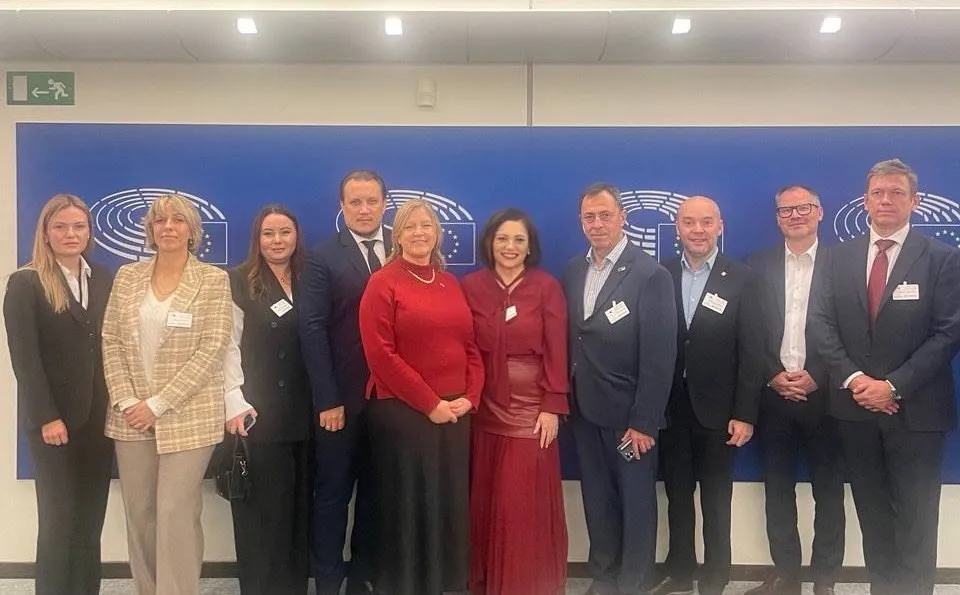
Photo: Delegation with Swedish Member of the European Parliament Karin Karlsbro
Ukraine and the European Union need each other
One of our meetings was with Karin Karlsbro, a Member of the European Parliament from Sweden, who is Vice-President of the Committee on International Trade. She genuinely cares about Ukraine and has done a great deal for our country.
Karin Karlsbro believes that free trade is Ukraine's economic lifeline. She reiterated this point throughout our conversation. She is very impressed by how Ukrainian businesses continue to operate despite the war, attacks, power shortages and other disruptions.
She claims that ‘the EU benefits more from free trade with Ukraine than Ukraine does. That is a statistical fact.’ At the same time, she says that after the elections and the renewal of the European Parliament, sentiment against trade preferences for Ukraine has grown stronger. More and more MPs are speaking out against it, and this position is difficult to overcome. Karin Karlsbro also considers the unilateral ban on Ukrainian agricultural products by certain countries to be extremely negative. This violates EU rules and harms both Ukraine and the EU.
The issue of the defence industry was raised separately. Karin Karlsbro noted that Ukraine has unique experience and technology, especially in the production of drones. Therefore, the European Union risks investing in yesterday's technology if it does not learn from Ukraine. It is necessary to quickly adapt European mechanisms for procurement and support of private defence companies.
According to Karlsbro, the European Union has not done enough for Ukraine in terms of financing. She clearly states this. The MEP believes that frozen Russian assets should be used in addition to, rather than instead of, financial aid. According to her, there is hope that in December the EU Council will make a decision on frozen assets. This will provide additional support for Ukraine. At the same time, with the Baltic and Northern European countries leading the way in supporting Ukraine, other states could also do more in this direction.
The huge number of loopholes in the European Union for Russian and Belarusian producers is unacceptable. There is a view that the export positions of some Russian goods to the EU have even increased in recent years. Karin Karlsbro advocates blocking Russian exports, in particular fertilisers, steel and chemical products. According to her, as long as Russia finances the war through exports, sanctions cannot be considered effective.
At the same time, Ukrainian businesses do not have the necessary support: they rarely reach European financial programmes due to procedural barriers, weak communication channels, etc. Therefore, the European Union must change this mindset, consider Ukraine as a future member and open up a financing mechanism for Ukrainian businesses.
Karin Karlsbro is convinced that the European Union and Ukraine need each other. ‘Ukraine is not a burden, but a strategic advantage for Europe,’ she emphasises.
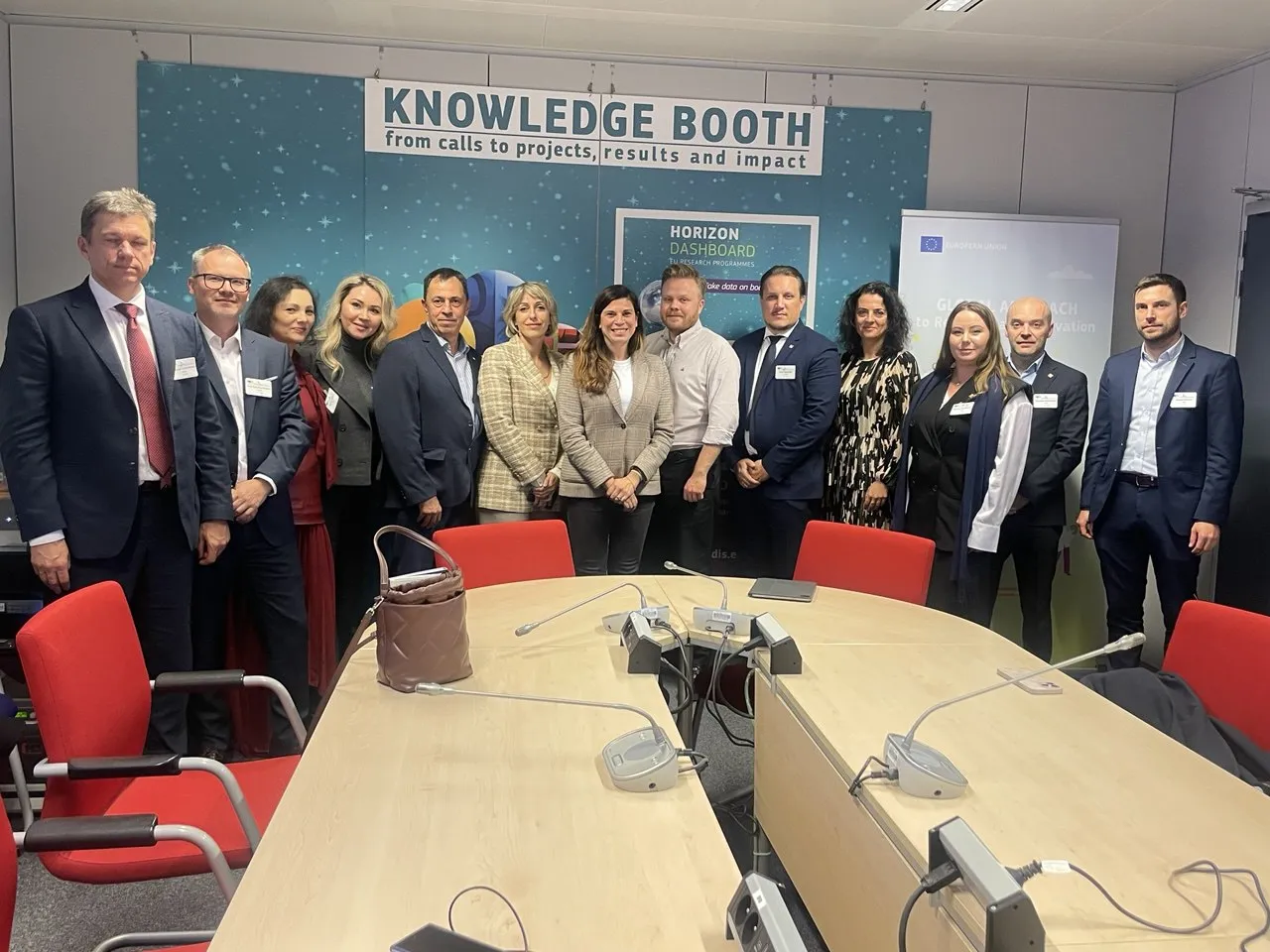
Technological cooperation
In Brussels, our delegation held two meetings with representatives of the European Commission. In particular, we spoke with European officials responsible for the Horizon Europe programme, which funds projects for entrepreneurs.
They explained to us that Ukraine is a full participant in Horizon Europe. Ukrainians can apply for all competitions and receive all types of grants on equal terms. Our country has enormous, yet unrealised potential. For example, Poland receives ten times more grant funds than Ukraine. The European Commission believes that Ukrainian projects can attract much more money than they do now.
The European Investment Council (EIC) operates within Horizon Europe and is the main window for start-ups. This organisation determines which projects receive funding. We are talking about grants of up to €2.5 million for the development of start-ups, as well as equity investments (EIC ownership share) of up to €10 million. There is also a blended finance format. There is a separate equity line of €10-30 million, but the process is more complicated.
The EIC supports all kinds of innovative technologies, but only the most interesting and useful ones. An important issue for Ukraine is dual-use goods. These are drones and other technologies that can be used not only for military but also for peaceful purposes.
The EIC does not finance military projects, although it provides grants for dual-use technologies with an emphasis on civilian use. The European Defence Fund is planned to open in 2026. It will consider dual-use projects that can be used in defence. This means that innovative defence projects will also receive official funding.
In general, the EIC allocates funds for research, technology development and the preparation of technical and economic justifications for projects. However, it does not consider the construction of factories, infrastructure or the modernisation of facilities.
It is also important to hear how interested the European Union is in cooperating with Ukraine in the field of technology. First, EIC representatives emphasised that they had seen many promising Ukrainian projects. Sometimes they are not sufficiently developed, so they receive low ratings and do not qualify for grants. At the same time, Europeans understand that Ukraine has unique military experience and technologies — all of which are desperately needed by the EU.
Secondly, according to EIC experts, Ukrainians' ‘weakness has become a strength’. We are constantly experiencing upheavals, so we are very adaptable, innovative, and quick to make decisions. And all these qualities, all these projects are very much needed by the European Union. Because the European Union is a concentration of bureaucracy, and all processes there are too slow.
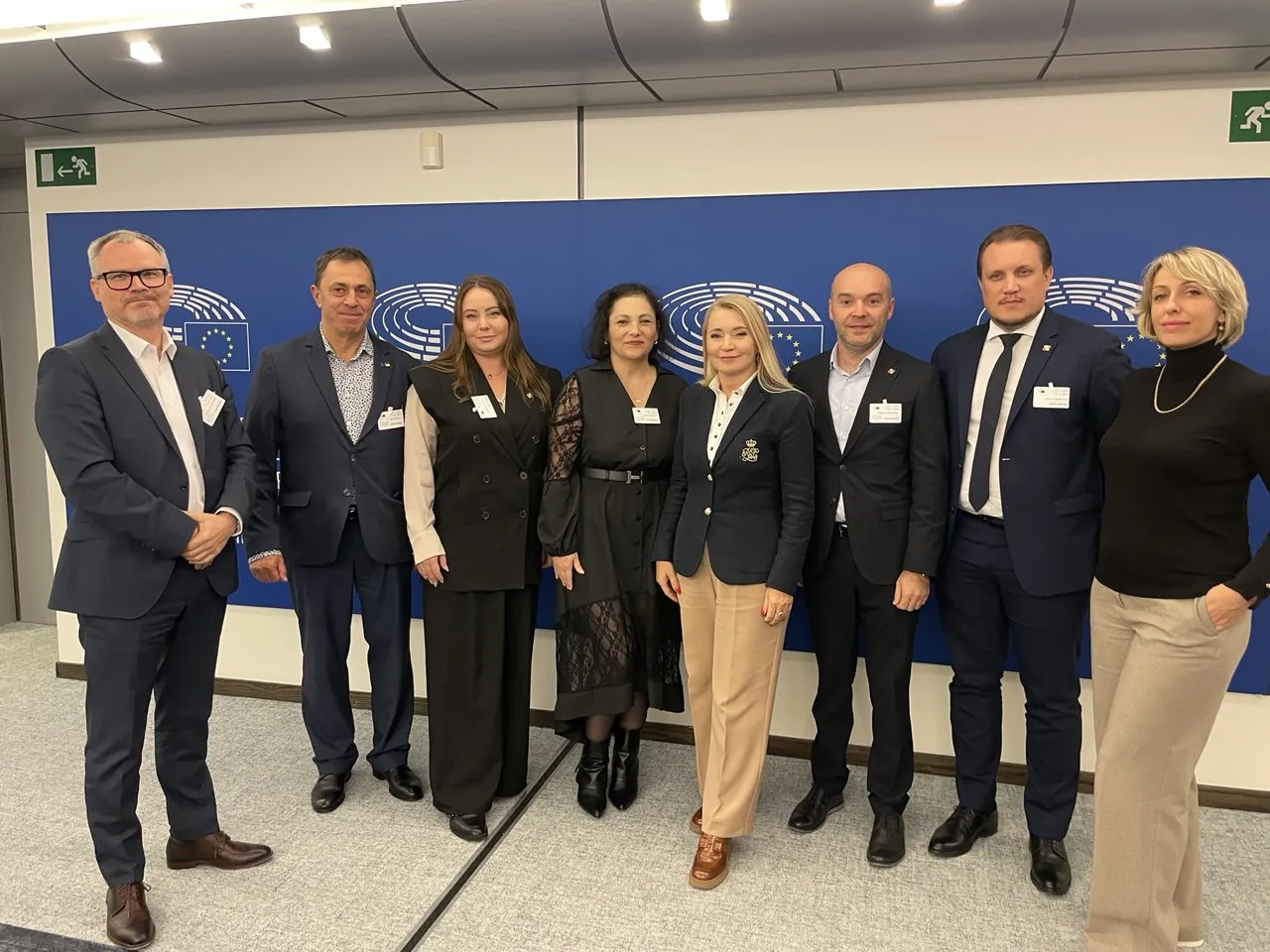
Photo: The delegation together with Marta Wcisło, Member of the European Parliament from Poland
How to overcome mistrust of Ukrainian business
Europeans recognise that ‘Ukrainian business is not the same as the Ukrainian state’.
The European Commission notes that Ukrainian entrepreneurs try to mention recommendations from the ‘powers that be’ in Ukraine in their grant applications. However, such references are more likely to be a disadvantage than an advantage. The more business separates itself from the state, the more transparent the processes are, and the greater the emphasis on practical experience and the value of decisions, the more likely these projects are to be accepted in the EU.
I will quote verbatim the representatives of the European Commission who gave advice to our start-ups: ‘In fact, the only way to get funding is to apply for grants.’
Logistics financing
Our delegation also met with representatives of the European Commission structure that deals with financing logistics projects related to the state. It is the state authorities that apply for such financing. The European Commission, together with external experts, checks the economic content of the project, its technical parameters, permits and all necessary licences.
For example, railway construction projects are relevant for Ukraine. The EU only finances European gauge (1435 mm). The so-called ‘Russian gauge’, with a width of 1520 mm, is not financed under any circumstances and will not be upgraded.
In general, the European Commission only considers infrastructure that is compatible with EU requirements. Currently, they are financing the Lublin-Kovel railway project, where border sections are being upgraded. The funds are being used for new technical maintenance, modernisation in line with European standards, border crossing infrastructure, parking, digitalisation and logistics improvements.
EU funds are also being used to implement the Mostyska-Lviv project: 81 km of railway line will be divided into two parallel lines. One line will be old (1520 mm), and the other will be new (1435 mm). The completion date is March 2029. The work is being carried out without stopping traffic on the strategic route.
As for motorways and customs, the European Commission is only prepared to finance border crossings, expressways, new checkpoints, digital services for trucks, parking and traffic optimisation on both sides of the border.
There were other examples. A representative of the Kovel Porto industrial park, who was in our delegation, asked whether the EU could support this logistics project. Upon learning that the park is being built on state-owned land and is therefore partially linked to the state, the European Commission representatives confirmed the possibility of considering funding. Thus, private projects in the transport sector involving the state can also apply for European grants.
It is worth noting that the EU is ready to provide 100% funding for unique research projects. It also provides 75% funding for innovative activities: pilot projects, technology demonstrations, etc. They are ready to provide money for logistics, multimodal digitalisation of terminals, sustainable urban mobility, infrastructure sustainability, and climate protection solutions.
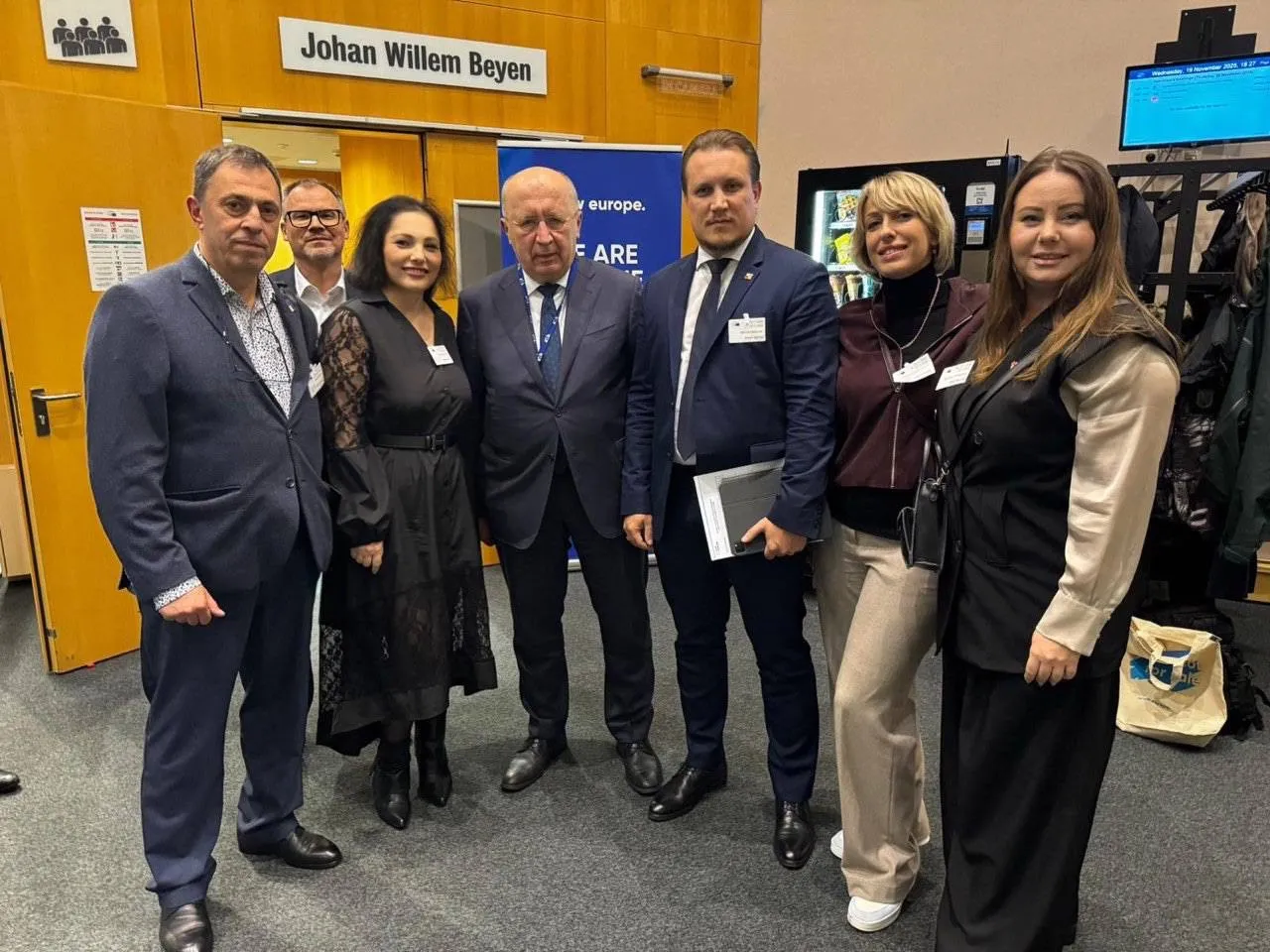
Photo: Delegation with European Commissioner for Defence and Space Andrius Kubilius
The complex issue of promoting Ukraine's interests in the EU
Direct dialogue with EU representatives gives Ukrainian businesses the opportunity to sound more convincing and show Ukraine in a more favourable light. However, it is politicians who should represent the interests of the state and lobby for our advancement in the EU. But who could that be? It's hard to imagine.
During my frequent visits to Brussels, I try to convince European partners that ‘Ukrainian business is not the same as the Ukrainian state.’ But in reality, this does not work. Let me explain with the example of the distribution of Ukraine Facility aid, under which the main funding, grants and investments are provided through the state budget.
Business representatives ask whether it is possible to do without state participation and reduce corruption risks so that the money is not stolen. During one of our visits, we received the following answer: "You understand that no one is going to rewrite EU policy for the sake of Ukraine. And EU policy clearly states that the EU talks to representatives of the Ukrainian people as it does with any other state. Who are your representatives? The Cabinet of Ministers, Parliament, President. We can only talk and work with them."
In conclusion, I would like to note that business is doing a tremendous job to promote Ukraine in the EU, but in the global dimension, everything depends on state policy and individual politicians.


