
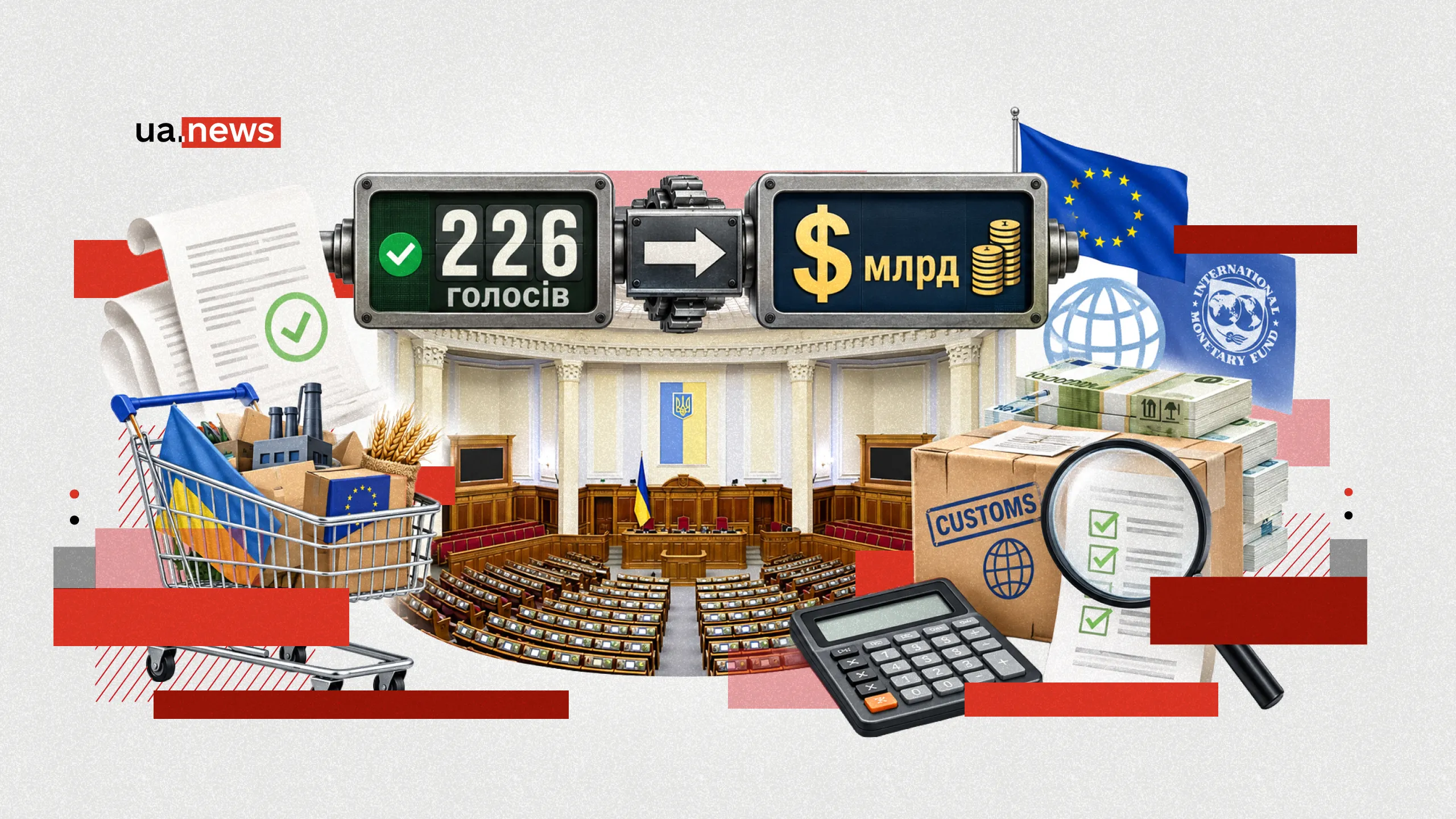
On September 1, Zelenskyy stated in his address that there were not enough votes in parliament to pass three resolutions that could have secured more than $4 billion for Ukraine, as well as two bills required under the IMF program. Overall, according to the president, the government and parliament must fulfill dozens of conditions tied to approximately $15 billion in funding.
That same day, Koretsky, speaking in the Verkhovna Rada, cited an even higher figure. According to him, without joint efforts by the government and parliament, Ukraine risks losing out on a portion of the $29.5 billion in external financing. At that time, the government had to adopt 44 of its own decisions; 26 bills were already before parliament, and the Cabinet of Ministers planned to submit another 17.
Two weeks later, the situation remained urgent: the prime minister reported that 27 bills necessary to secure international financing were already before the Rada, and the government had moved up its own deadline for fulfilling its obligations to October 15.
At first glance, it seems simple: the EU or the IMF gives Ukraine money but demands, in return, that the country pass the laws they require. In reality, the mechanism is more complex. And Ukraine has been navigating it for many years now.
UA News explains exactly which laws international partners are currently demanding, why money is tiedlinked to reforms, how this will affect ordinary Ukrainians and businesses, and what happened to the most well-known laws that Kyiv had already passed under pressure from the IMF and the European Union.
Which laws the Verkhovna Rada cannot pass right now—and why Ukraine risks losing billions because of them
It’s important to clarify one thing right away. In his address, Zelenskyy did not list the numbers of all five bills nor did he specify exactly how much money is tied to each one. However, the Verkhovna Rada’s votes and Cabinet documents reveal exactly which reforms are currently causing problems.
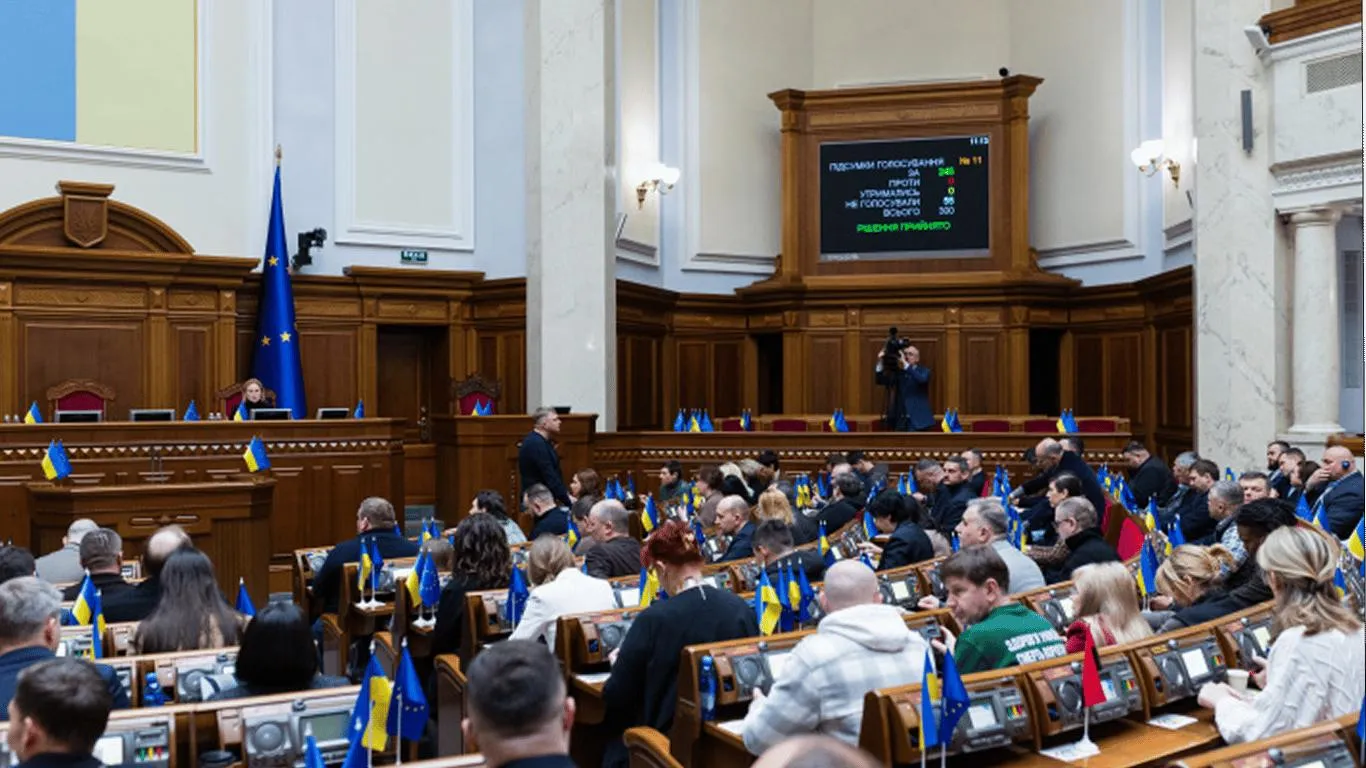
One of the most telling votes concerned bills No. 15112-d and No. 15460, which change the rules for taxing international e-commerce and packages. On September 1, No. 15112-d received only 198 votes, and No. 15460 received 194, meaning neither even passed the first reading. Parliament ultimately agreed to return Bill No. 15460 to the government for further revision.
For the average consumer, the essence of the reform is simple. Currently, small items ordered from foreign marketplaces enjoy tax exemptions within a set limit. The proposed model would have effectively extended VAT to distance sales of imported goods starting from the first euro and involved the marketplaces themselves in tax administration. The government’s argument is that Ukrainian stores pay VAT, salaries, rent, and other taxes, while foreign sellers gain a competitive advantage by shipping via postal parcels.
For buyers, this means that cheap purchases from Temu, AliExpress, Shein, and other foreign platforms could become more expensive. For Ukrainian retailers, it means a more level playing field. For the budget, it means additional revenue and fewer opportunities to disguise commercial imports as hundreds of small private packages.
This is precisely why these bills have faced opposition. People’s Deputy Volodymyr Ariev, explaining the opposition’s lack of support, stated that the government had negotiated these decisions without properly involving parliamentary factions, and their comments were not taken into account. His position boiled down to a simple point: if the government unilaterally negotiates obligations with partners, it cannot automatically expect lawmakers to then secure the necessary votes.
And this is one of the key problems of the entire system: the executive branch often assumes international obligations, but the Verkhovna Rada is responsible for implementing them through legislation—and the government cannot always guarantee 226 votes there.
International partners want to control not only taxes but also who oversees the spending of public funds
Another conflict arose over the Accounting Chamber. On September 1, the Verkhovna Rada considered Resolution No. 14012 on the creation of an advisory group for the preliminary selection of candidates for the Accounting Chamber. Only 192 deputies voted in favor, and the resolution was rejected.
The proposed model called for a six-member advisory group: three Ukrainian representatives and three candidates selected with the participation of international partners, including the EU and the United Kingdom. However, the final decision on the appointment of members of the Accounting Chamber would still rest with the Verkhovna Rada.
Roksolana Pidlasa, chair of the Budget Committee, explicitly explained to the deputies why this vote was necessary: the creation of such a group was one of Ukraine’s obligations for receiving international financial assistance. According to her, fulfilling this condition was tied to an EU macro-financial assistance tranche totaling approximately $4.2 billion.
It is precisely these kinds of provisions that most often serve as an argument for proponents of the “external governance” thesis. After all, this is no longer about a tax rate or a technical regulation, but about the participation of international partners in selecting personnel for a Ukrainian government body.
The partners’ logic is the opposite: if the EU provides Ukraine with billions of euros of its taxpayers’ money, Brussels wants to be sure that the state audit, anti-corruption bodies, and the budget oversight system are sufficiently independent from political authorities.
That is why such demands are not coincidentally focused on the Accounting Chamber, the courts, anti-corruption agencies, corporate governance of state-owned companies, and financial oversight.
Why Can the EU and the IMF Even Demand Laws from Ukraine in Exchange for Money?
In reality, these partners cannot legally force the Verkhovna Rada to pass a law. The IMF has no voting rights in the Ukrainian parliament. The European Commission cannot amend Ukraine’s Tax Code. No official in Brussels or Washington can sign a Ukrainian law in place of the president.
The mechanism works differently. Ukraine and its international partner agree in advance on the terms of financing. The state gains access to a loan, grant, or macro-financial assistance, and in return assumes specific obligations: to amend legislation, implement reforms, reduce a certain deficit, revamp an institution, or change the rules governing the public sector.
In the case of the EU, a large part of this system is currently concentrated in the Ukraine Facility. The program provides for up to €50 billion for 2024–2027—€33 billion in loans and €17 billion in grants. However, the funds are not disbursed automatically: Ukraine must meet the quantitative and qualitative indicators agreed upon in the Ukraine Plan, after which the EU assesses their implementation and releases the next payment.
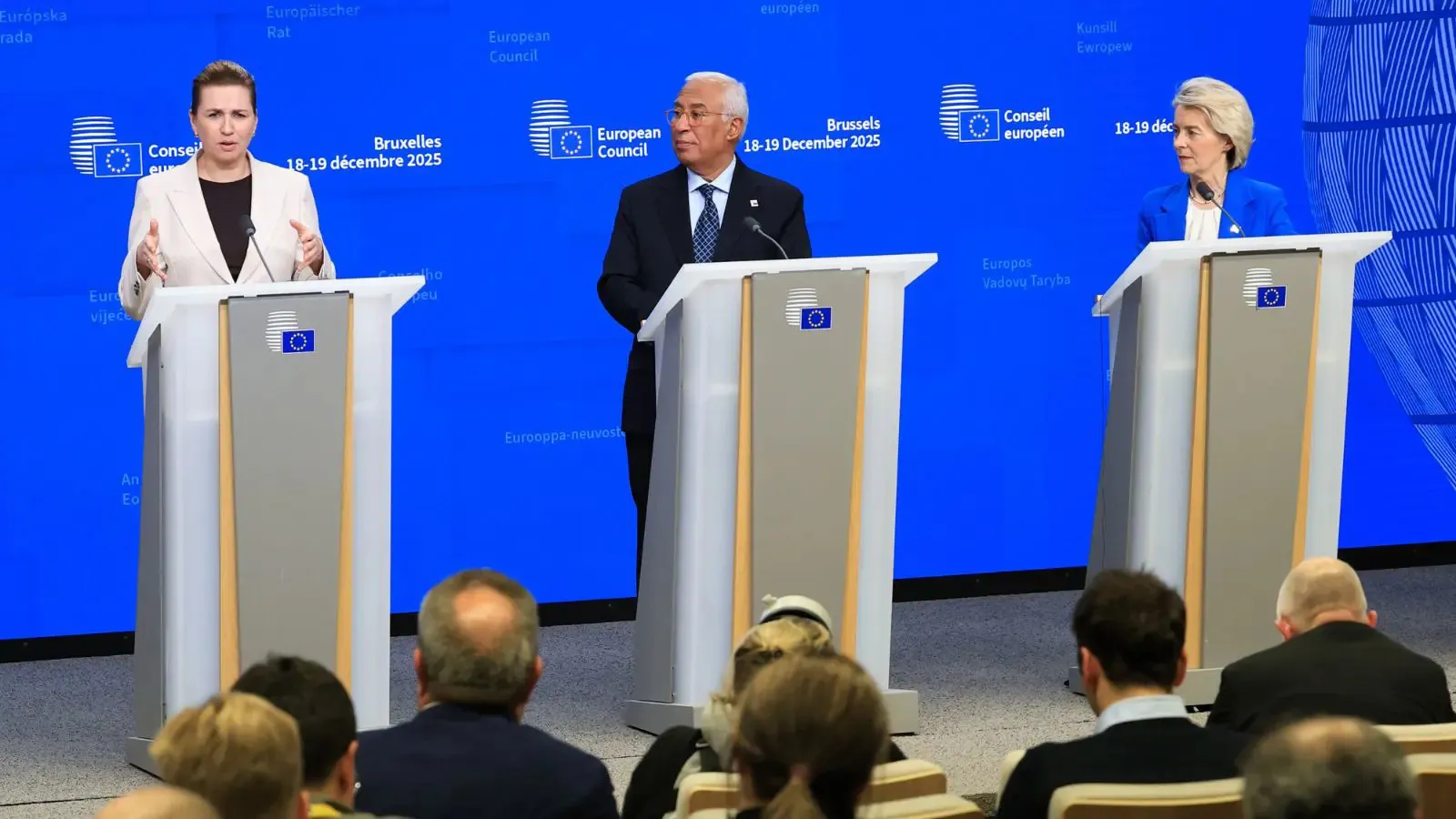
In July 2026, the Council of the EU approved an updated plan, which also provides for an additional €8.3 billion Ukraine Support Loan and new measures in the areas of the rule of law and the fight against corruption.
A similar principle applies to the IMF. Its programs include prior actions, structural milestones, and quantitative criteria. Some must be fulfilled before the Fund’s Board of Directors makes a decision, while others must be completed by a specified deadline. If a condition is not met, a tranche may be delayed, the program may be revised, or a new deadline and corrective actions may be agreed upon.
In June, during the first review of the new four-year, $8.1 billion program for Ukraine, the IMF explicitly noted that two structural milestones had been met with delays, while another had not been met on time and required adjustments.
In other words, it is more accurate to say not “the IMF ordered Ukraine to pass a law,” but “Ukraine agreed to pass a law as one of the conditions of the program under which it receives funds.”
Land market and banking reforms have already been conditions for international financing
This is far from the first such instance. One of the best-known examples is the opening of the agricultural land market.
In March 2020, parliament passed Law No. 552-IX, which lifted the long-standing moratorium on the sale of agricultural land. The market for individuals began operating in July 2021, and starting in 2024, Ukrainian legal entities also gained access to it, subject to established restrictions on land concentration. Foreigners cannot purchase Ukrainian agricultural land without a decision by a nationwide referendum.
The reform was one of the key conditions for cooperation with the IMF. In March 2020, the Fund’s Managing Director, Kristalina Georgieva, explicitly linked the adoption of land and banking reforms to the possibility of quickly finalizing an agreement on a new program for Ukraine.
At the time, opponents of the reform predicted a massive buy-up of Ukrainian land, the emergence of huge estates, and the loss of farmers’ primary asset. Five years later, no such catastrophe has occurred. According to KSE estimates, by mid-2026, more than 512,000 transactions involving approximately 1.15 million hectares of land had taken place on the market. The total value of the transactions exceeded 51 billion hryvnia, and the average nominal price per hectare has risen significantly. The opening of the market to legal entities in 2024 also did not trigger the predicted surge in land purchases.
In other words, this IMF requirement is actually working today. At the same time, the war, mined territories, occupation, and general uncertainty prevent us from speaking of a fully developed, normal land market.
The second symbol of that same agreement was the so-called “anti-Kolomoisky law”—Law No. 590-IX, adopted in May 2020. It changed the procedures for removing insolvent banks from the market and effectively ruled out a scenario in which a court would simply overturn the state’s decision to liquidate or nationalize a bank and return the institution to its previous owners.
For the IMF, this was a matter of principle regarding financial stability. In the Fund’s documents, the law was explicitly listed as a precondition for the program. The logic was simple: if the state has already spent enormous amounts of taxpayer money to rescue the banking system, a former owner should not be able to reclaim the bank through a single court ruling and create a new financial hole.
This provision did not remain merely a declaration—the law is still in effect and forms part of the banking regulatory framework.
The High Anti-Corruption Court also came into being after years of pressure from international partners
An even more telling story is that of the High Anti-Corruption Court. The debates surrounding it closely resembled the current controversies. Critics claimed that the separate court was being created effectively at the West’s demand, and that the participation of international experts in the selection of judges constituted interference in Ukraine’s sovereign personnel authority.
In June 2018, parliament finally passed Law No. 2447-VIII “On the High Anti-Corruption Court.”
For the IMF, this was one of the central issues. Immediately after the vote, Christine Lagarde, who was then head of the Fund, explicitly named the law on the Anti-Corruption Court as one of the necessary steps to complete the program review, alongside budgetary and energy decisions.
Eight years later, we can assess whether this was merely a token institution created to impress international partners. According to Transparency International Ukraine’s monitoring data, as of the end of August 2026, the High Anti-Corruption Court had already handed down 430 verdicts, 343 of which were guilty verdicts. 160 cases ended in plea agreements, and another 34 resulted in acquittals.
The court is not yet perfect. Monitoring reports issues with the length of proceedings, statutes of limitations, and the organization of trials.
The PEP law has become one of the most painful examples of how international conditions affect ordinary people
Another example directly concerns bank customers. In 2023, Ukraine changed the rules for financial monitoring of politically exposed persons (PEPs). The IMF insisted on a return to an approach that complies with FATF standards, and the corresponding law was one of the program’s structural milestones.
On October 17, 2023, parliament passed Law No. 3419-IX. It established enhanced oversight of transactions involving politically exposed persons, their family members, and associated individuals, while requiring banks to apply a risk-based approach rather than automatically denying service to a person solely based on their status. The law remains in effect.
This is a good example of how “reform for the IMF” does not always remain confined to the Cabinet of Ministers or anti-corruption agencies. It can determine what documents a bank will request, how thoroughly it will verify the source of funds, and how difficult it is for a politician or their family members to carry out large financial transactions.
International conditions can no longer simply be called either “external management” or an unconditional blessing
The history of Ukraine’s relations with the IMF and the EU presents a rather mixed picture.
On the one hand, external financing has often served as the lever that enabled reforms the Ukrainian political system had been putting off for years. The land market remained frozen for decades. The Anti-Corruption Court would hardly have been established in that form and on that timeline without pressure from creditors. Banking reform was politically toxic. Enhanced PEP controls are also hardly popular among politicians themselves.
On the other hand, tying a billion-dollar tranche to a vote creates very strong political pressure. A lawmaker may consider a specific provision to be bad, but they are effectively being asked not only about the quality of the law but also whether they are willing to take responsibility for the potential loss of several hundred million or billions of euros.

This is particularly acute during wartime, when Ukraine cannot quickly replace external financing with domestic revenue. Therefore, the current conflict between Bankova Street, the Cabinet of Ministers, and parliament is actually much broader than just a few failed votes.
The question is who should be held accountable for the commitments Ukraine makes to its partners. Can the government agree to a reform and then demand that parliament automatically provide 226 votes in its favor? Does the Rada have the right to rewrite a condition if it considers it harmful to Ukrainian businesses or citizens? And where is the line between necessary oversight of tens of billions in international aid and creditors’ actual influence on domestic policy?
There is no clear-cut answer here.
But there is a simple financial reality: as long as Ukraine needs tens of billions of dollars in external budget support, international partners will have the leverage to demand reforms in exchange for that money.
And the Verkhovna Rada can say no. It’s just that the cost of such a “no” today is no longer measured in political statements, but in billions of euros.


