
What religious holiday is celebrated on May 29?
On May 29, Orthodox Christians in Ukraine commemorate the Venerable Martyr Theodosia, and folk tradition associates this day with numerous superstitions and taboos. The saint is regarded as a symbol of steadfast faith, and the day itself marks a transitional period between the natural changes of spring and summer.
In the church calendar, May 29 is dedicated to the memory of the martyr Theodosia, also known as the Virgin of Tyre, and she is considered one of the most revered saints in the Christian tradition, as her life is linked to the period of brutal persecution of believers in the early 4th century.
According to legend, Theodosia suffered martyrdom in 307, and her story is filled with dramatic events that have been passed down from generation to generation as an example of the indomitable nature of faith, when even the most severe trials could not break a person’s spiritual resilience.
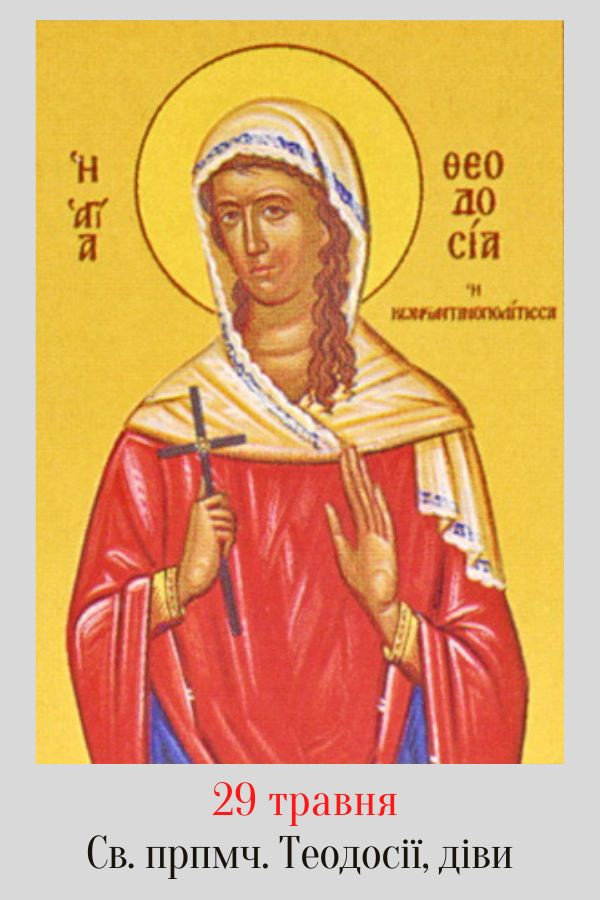
Legends tell that the saint was thrown into the sea with a stone around her neck, but angels saved her, after which she endured new trials, including an encounter with wild beasts that did not harm her, and ultimately execution, after which, according to belief, her soul ascended to heaven in the form of a white dove.
In folk tradition, this day is closely linked to natural omens that people have used for centuries to predict the weather and the harvest, as it was believed that on May 29, nature “speaks” to humans through the behavior of animals, plants, and weather phenomena.
Among the main signs, it was said: if the rye has bloomed, it bodes well for the harvest; a hot day promises a bountiful mushroom season; morning fog over water foretells clear weather; and the activity of bees near the hives may predict an approaching rain. It was also believed that a large number of spiders signaled good weather, and a good rye harvest promised a bountiful mushroom harvest in the fall; these observations were often used as a kind of natural calendar for rural life.
At the same time, there were also taboos on this day, including avoiding sadness, as it was believed that one’s emotional state could influence the future, as well as warnings not to quarrel so that conflicts would not drag on for long, and not to take actions that could “disturb” the harmony with nature and the earth.


