
What types of vehicles do Ukrainian units need most often?
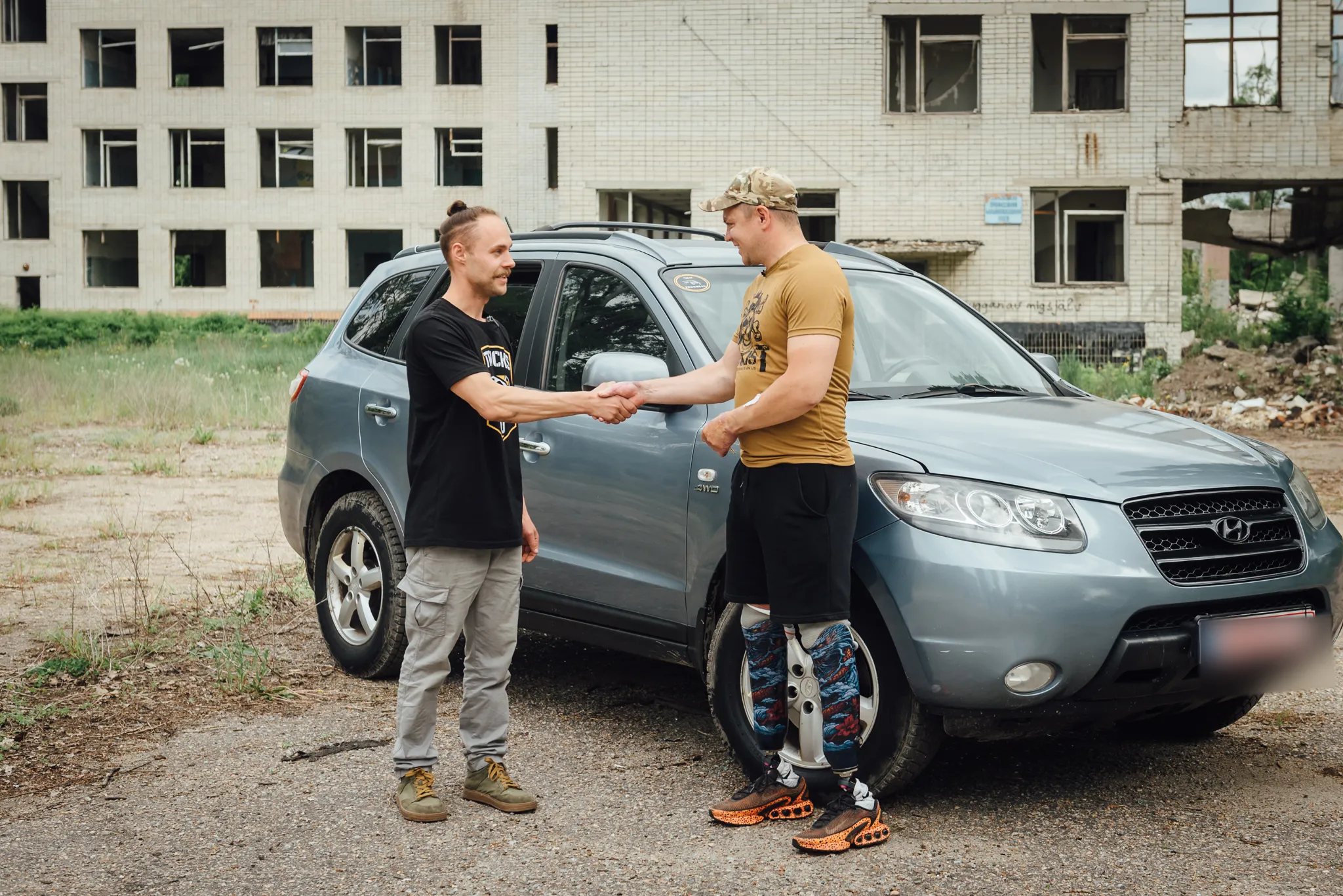
Imagine a unit that doesn’t have a single operational vehicle—and a task that would normally take an hour ends up taking the whole day. Transportation on the front lines determines exactly these things: how quickly equipment will be delivered, how promptly the wounded will be evacuated, and to what extent the unit is even capable of moving and responding. The question “which vehicle is best” sounds strange here—it all depends on the specific task. For some, off-road capability is critical; for others, cargo capacity; and for still others, it’s simply speed and compactness.
The Trucks4U volunteer project faces this question regularly, so this article—without getting bogged down in theory—simply explains what kind of vehicles are needed most often and why.
Where Does the Constant Demand for Vehicles Come From?
Operating conditions on the front lines are a far cry from those in the city. Rough terrain, constant heavy loads, and the inability to perform regular maintenance—all of this accelerates wear and tear exponentially. A vehicle that might set durability records under normal conditions sometimes can’t even last a few months of intensive use here. Because of this, the demand for vehicles cannot be met with a single shipment or batch of cars—it is constant, as vehicles that have reached the end of their service life must be replaced again and again.
At the same time, each task has its own specific requirements. A vehicle for transporting personnel and one for medical evacuation are often completely different in design and specifications. Staff operations, the delivery of ammunition or supplies, or the work of a repair crew—each of these scenarios creates a distinct need, and a single, universal model rarely meets them all at once.
A separate and, perhaps, the most obvious factor is direct combat losses. Vehicles are destroyed by shelling, artillery and airstrikes, attacks by FPV drones, or landmines—and once damaged in this way, restoration is usually out of the question. Unlike gradual wear and tear, everything happens instantly here: a fully operational vehicle can be reduced to scrap metal in a matter of minutes. Therefore, this is not a matter of “just in case,” but of constantly replacing what is lost literally every day.
It is telling that the lion’s share of daily mobility is provided not by specialized military vehicles, but by ordinary civilian cars—the very same ones that, until recently, were used to take families to their summer homes or goods to the market. Therefore, the transfer of civilian vehicles is not a gesture of goodwill, but concrete, practical assistance with a real impact.
And here, it’s worth setting aside concerns about brand and model year. What matters most is reliability, off-road capability, and maintainability. A vehicle that can be repaired in the field without specialized service and using readily available parts often proves more valuable than a new model that’s finicky to maintain.
Pickup trucks top the list of requests
If you ask what kind of vehicle people request most often, the answer is almost always the same—a pickup truck. The reasons are entirely pragmatic:
- all-wheel drive provides confidence on rough terrain;
- high ground clearance comes to the rescue where a passenger car would simply get stuck;
- the open bed can hold gear, tools, and water or fuel cans;
- one vehicle handles several tasks at once, so there’s no need to keep a separate vehicle for every little thing.
Among the models most frequently donated by volunteers are the Mitsubishi L200, Toyota Hilux, Ford Ranger, and Nissan Navara. This is a guideline, not a mandatory list: the condition of the vehicle and the ease of finding replacement parts are far more important than the brand on the hood.
A 4x4 SUV—where the pavement ends
Where the road turns into nothing but rough terrain, you need a four-wheel-drive SUV—for both people and cargo. What to look for when choosing:
- a fully functional all-wheel-drive system;
- relatively simple repairs;
- spare parts that are actually available in Ukraine, rather than having to wait months for them;
- a diesel engine—easier to maintain outside of a service center;
- the actual technical condition of the body and components, not just the model year listed in the vehicle registration certificate.
Minivans and Microbuses—The Workhorses of Logistics
Vans and minibuses serve a completely different purpose—logistics. Transporting people, humanitarian aid, and equipment—they handle it all. Often, this type of vehicle serves as a temporary base for a command center, medical team, or repair crew: the spacious interior allows for both people and equipment to be accommodated.
Ambulances and medical vehicles for evacuation
A separate, particularly sensitive category consists of ambulances, medical transport vehicles, and all-wheel-drive evacuation vehicles. This type of vehicle directly determines whether help can reach a person in time, so the requirements for it are extremely strict: reliability, off-road capability, and the ability to quickly reach the location where assistance is needed. Volunteer projects do not disclose the routes, specific locations, or tactics for using this equipment—and this is not about secrecy for secrecy’s sake, but about people’s safety.
Specialized Vehicles Not on the General List
In addition to passenger cars and vans, units constantly need trucks, tractor-trailers, repair vehicles, fuel tankers, as well as buggies, ATVs, and motorcycles for maneuverable tasks. This category is more specialized in terms of purpose, but no vehicle fleet would be complete without such equipment.
When It’s Best Not to Donate a Vehicle
The desire to help is wonderful, but not every vehicle will actually be useful. Sometimes it’s worth honestly assessing the condition of the vehicle in advance so that volunteers don’t waste resources on a car that either won’t make it under its own power or will immediately drain the budget on repairs. You should refrain from donating if the vehicle is:
- a car that has been in a serious accident;
- a car with through-corrosion of the body or frame;
- a model for which it is practically impossible to find replacement parts;
- a luxury car that is expensive and difficult to maintain;
- a vehicle with legal issues—such as seizure, a ban on registration actions, or unclear ownership history;
- a car that requires major and expensive repairs before it can be transferred.
What does Trucks4U do?
Donating a vehicle to the Armed Forces of Ukraine is far from a simple “buy and ship” process. It’s a step-by-step process: finding the right vehicle, technical inspection, logistics, preparation—and only then the actual handover to the unit. Going through this entire process on your own is difficult even for a motivated donor: it’s hard to objectively assess the vehicle’s condition, find a reliable seller, arrange delivery, and then confirm that the vehicle actually reached its intended recipient.
This is precisely the part of the work that Trucks4U takes on—it checks the vehicle’s technical condition before purchase, organizes delivery, and ensures that the vehicle ends up exactly where it’s needed, rather than getting lost somewhere along the way. For donors and partners, this is first and foremost about transparency: it’s clear where the funds went and whether the vehicle actually reached the unit.
The main criterion is condition, not brand
To summarize: most often, units need pickup trucks, SUVs, vans, and specialized vehicles. But there is no single “best” car for all situations—everything depends on the specific task of the specific unit. The make and model year take a back seat to the vehicle’s actual technical condition: its reliability, off-road capability, and the ability to quickly repair the vehicle on-site if something goes wrong.


