

A paradoxical situation has developed in Ukraine. Millions of people of working age remain outside the active labor market for various reasons, yet at the same time, companies are increasingly unable to find workers.
The shortage is particularly acute in sectors requiring specific qualifications: manufacturing, construction, energy, transportation, healthcare, and technical professions. It’s still relatively easy to find an office worker in Ukraine. Finding a good welder, electrician, mechanic, or operator of complex equipment, however, is much more difficult.
The war has exacerbated the problem. Some Ukrainians have left the country, some are serving in the Armed Forces, and others have changed professions or moved to different regions. At the same time, the economy itself has changed: demand has grown significantly in manufacturing, the defense industry, construction, logistics, and the energy sector.
And this is happening even before large-scale postwar reconstruction begins.
UA.News explains why the labor shortage has already become a structural problem for the Ukrainian economy, what types of workers businesses are lacking today, and who may be in the highest demand once the war ends.
The labor shortage is no longer a temporary problem
Even before the full-scale war, the Ukrainian labor market remained largely an employer’s market. A company could post a job opening, receive dozens of resumes, and choose from among candidates with the necessary experience.
Over the past few years, the balance has begun to shift. According to data cited by Work.ua in its 2026 labor market study, 54% of surveyed companies planned to expand their workforce. At the same time, the platform identifies the labor shortage as one of the key trends in the Ukrainian labor market.
At the same time, the cost of labor is rising. According to Work.ua, during 2025, the average salary for job openings increased by approximately 22%, and in the “Skilled Trades, Manufacturing” category—by approximately 25%.
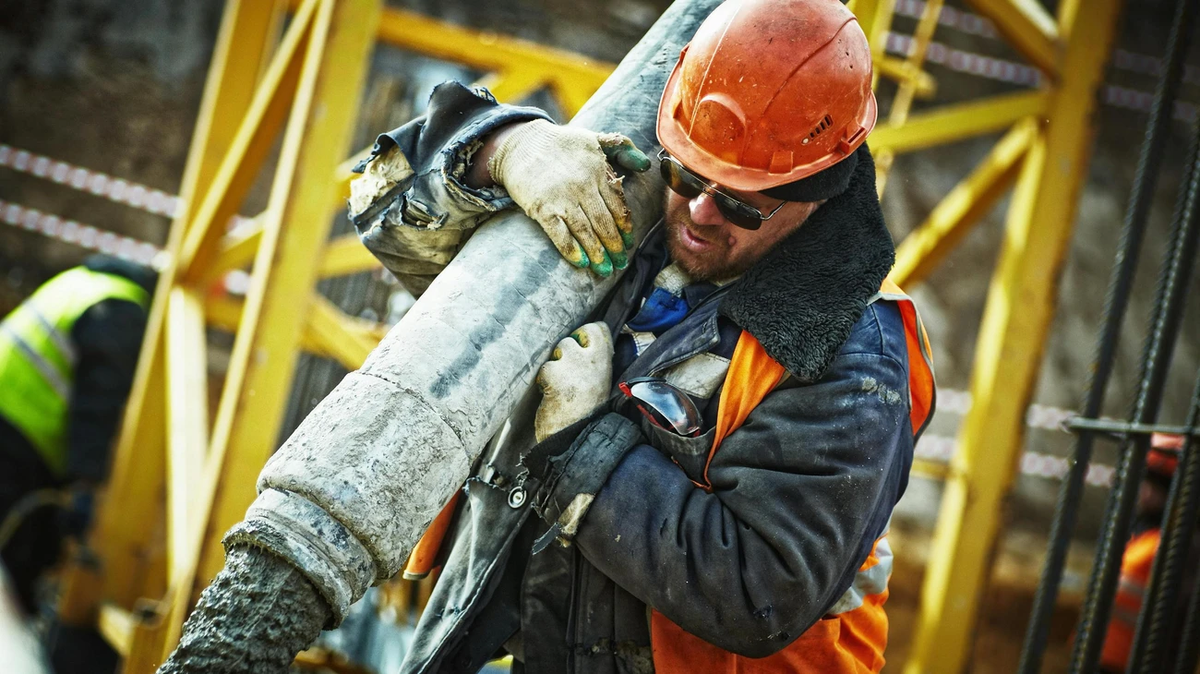
This is an important detail. The greatest staffing pressure is gradually shifting beyond just managers or high-paid IT specialists. The shortage is being felt more and more acutely among the people without whom production simply cannot function: electricians, mechanics, drivers, equipment operators, construction workers, and welders.
Oksana Pugachova, CEO of the recruitment agency FERM, said that Ukrainian businesses should gradually move away from the notion that it’s always possible to quickly find a fully qualified, top-tier specialist on the market.
Pugachova believes that under these conditions, companies essentially have two options: compete at high cost for a limited number of ready-made professionals, or begin systematically developing talent within the company.
This is a different model for the labor market. Previously, employee training might have been viewed as an added bonus. Now, it is gradually becoming the primary way to secure the right specialist.
There are formally plenty of people, but their skills do not match what the economy needs
This is where the main paradox of the Ukrainian labor market lies. Unemployment hasn’t disappeared. There are people looking for work. Yet businesses still talk about a labor shortage.
The reason lies in a structural imbalance. The Ukrainian economy increasingly needs people with specific professions—ones that cannot be trained in just a few weeks.
A welder must be able to work with various types of structures. An electrician must have the necessary knowledge and certifications. A machine operator must understand the equipment. An engineer must have both an education and practical experience.
Even if there’s someone on the market who’s ready to work, that doesn’t mean they can fill such a position right away.
This is precisely the shift that IT recruiter Marina Torbina highlights. In her view, while the number of candidates on the market may be increasing, competition for top-tier specialists is not going away.
According to Torbina, the market can increasingly less be described as a simple “labor shortage.” The problem is shifting toward a shortage of relevant experience, and it is becoming critically important for employers to be able to assess a person’s potential, rather than simply looking for a candidate who perfectly matches a predefined list of requirements.
This is especially important for the post-war market. If employers continue to seek only people who already possess a complete set of skills, some job openings may remain unfilled for months.
And so, the staffing challenge is increasingly less of a problem solely for the HR department. It is becoming a business model issue.
After the war, Ukraine will need people who are already hard to find

The problem could become particularly serious once the active phase of the war ends. Ukraine will have to simultaneously rebuild housing, roads, bridges, power plants, power grids, water mains, schools, hospitals, factories, and other infrastructure.
And this won’t require some abstract “millions of workers.” It will require people with specific professions. The KSE Institute analyzed over 200,000 active job openings and conducted a separate study of the segment of professions related to reconstruction.
According to this data, approximately 8% of civilian job openings are already directly related to the country’s future reconstruction. However, these positions are filling at a noticeably slower rate than average.
After two months, about 45.7% of reconstruction-related job openings remain unfilled. The market average is about 35%.
The most obvious future shortage is in construction trades: crane operators, excavator operators, concrete workers, rebar setters, installers, welders, and plumbers.
But the problem won’t be limited to just these roles. A rebuilt building needs to be connected to electricity, water, heating, and communications. Therefore, electricians, electrical installers, power engineers, and engineers are needed.
A restored business will need machine operators, process engineers, mechanics, and repair technicians. The transportation system will need drivers, train engineers, and railroad workers. The healthcare sector will need doctors, nurses, and physical therapists.
And all these sectors will compete with one another for the same limited resource—people.
That is precisely why, after the war, Ukraine may find itself in a very unusual situation: there is money for construction, materials have been purchased, and the project is ready, but it will be impossible to begin work at the necessary pace because there are not enough specialists.
We’ll have to stop looking for “ready-made” workers
One of the main consequences of the labor shortage may be less obvious. The very way Ukrainian companies hire people will change. According to Galina Leshchenko, HR director at Bazhane, the standard requirement of “a ready-to-work specialist with at least three years of experience” is becoming increasingly out of touch with reality.
“We can no longer simply hire ‘ready-made’ people,” she says.
The reasons are the same: war, migration, demographics, and a shrinking labor pool. According to Leshchenko, companies will increasingly have to hire people who don’t have the full set of required experience and train them on the job.
And economically, this may prove to be more cost-effective than waiting months for the ideal candidate.
For example, if a manufacturing company can’t find the right mechanic for three months, the mechanic’s work gets divided among other employees. People take on an extra workload, the risk of mistakes and burnout increases, and some tasks may not get done at all.
At a certain point, it’s cheaper to hire someone with a basic technical education and train them. That’s precisely why corporate training, reskilling, and proper onboarding can become one of the key competitive tools for Ukrainian businesses.
And this applies not only to large companies. If a small factory, construction company, or logistics operator is unable to train its employees, it will be forced to compete on salary with large corporations.
And it won’t always be able to win that competition.
Salaries will rise, but after the war, that won’t be the only thing that matters to employees
A labor shortage naturally means one thing: labor is becoming more expensive. The National Bank of Ukraine forecasts that even accounting for inflation, real wages will continue to rise. In 2026—by approximately 7%, and in the following two years—by approximately 6% annually.
But money may not be the only way to retain employees. A study by Gradus and the European Business Association shows just how strongly working conditions already influence people’s attitudes toward their employers. Among employees of EBA member companies, 68% are satisfied with their current job. Among the general population, only 29% rate their job positively.
To retain employees, 61% of business professionals cite the option to work remotely as important, 44% cite a friendly atmosphere, 36% cite good relations with their manager, and 33% cite comfortable and safe working conditions.

This is an important clue as to what the post-war job market might look like. When there is a shortage of workers, employees have more options to choose from. And if two companies offer roughly the same salary, the one with better working conditions will win out.
For office workers, this might mean remote or hybrid work. For manufacturing workers—company transportation, housing, health insurance, meals, and training. For young families—help with daycare or a flexible schedule.
For veterans—an adapted workspace and a clear program for returning to civilian work.
As a result, competition among employers may shift from the question “how much do we pay” to “why would someone even want to work for us in the first place?”
The return of Ukrainians will help, but it won’t solve the problem on its own
An obvious source of future labor is Ukrainians abroad. In its baseline forecast, the NBU expects that a gradual net return of migrants could begin in 2027, and the process could accelerate in 2028.
But people returning does not automatically mean that job openings will be filled. Someone who has returned from Poland or Germany does not necessarily have the specific profession needed by a particular factory or construction company.
Moreover, after years of living abroad, millions of Ukrainians are already earning local wages, using local healthcare systems, enrolling their children in schools, and gradually integrating into local communities.
Therefore, once the war ends, Ukraine will effectively have to compete with EU countries for its own citizens. A simple call to “come home” will not be enough. They will need jobs, housing, security, education for their children, and a clear future.

And if the number of returnees falls short of the economy’s needs, another issue will inevitably arise: attracting foreign labor. Ukraine, which for decades has itself been a source of labor migrants for Poland, the Czech Republic, Germany, and other countries, may for the first time face the need to attract workers from other countries on a large scale.
But even this will not be a quick solution. Migrant workers also need housing, legal status, healthcare, language adaptation, and decent living conditions for their families.
Therefore, the cheapest and most realistic resource will remain the people who are already in Ukraine: women in professions previously considered predominantly male; veterans; people with disabilities; older workers; and young people without experience.
But to achieve this, businesses will have to restructure not only their hiring practices but also the jobs themselves.
After the war, the labor shortage may prove to be much more complex than simply a lack of people.
It will come down to how quickly Ukraine can train millions of people in new professions, bring some citizens back from abroad, adapt workplaces for veterans, and make technical education attractive again.
Because raising money for a new factory can be done in a few months. Buying equipment—too. But it’s impossible to train an electrician, a welder, an engineer, a mechanic, or a process engineer in a single day.


