
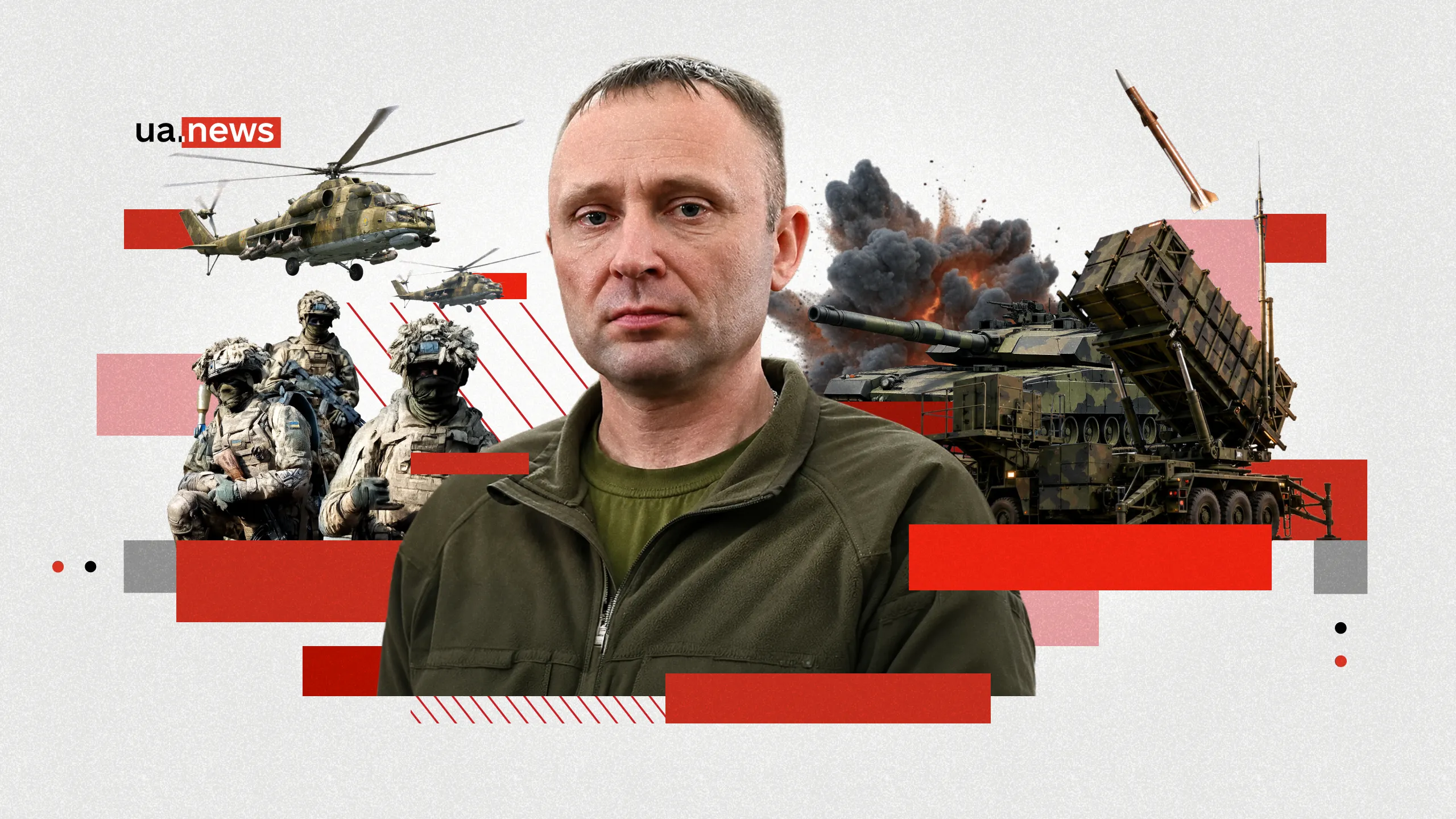
On Wednesday, July 22, it was announced that President Volodymyr Zelenskyy had appointed Lieutenant General Mykhailo Drapaty as the new Commander-in-Chief of the Armed Forces of Ukraine, replacing Oleksandr Syrskyi. The corresponding decree has already been published on the President’s website.
The new commander-in-chief is quite a colorful figure. He is a man who rose from being surrounded in the “Izvarin Cauldron” to commanding key operational fronts, and is now seen as one of the informal leaders of the opposition within the army. His appointment marks a significant shift in military leadership, linked to a strict demand for justice and commanders’ accountability for the lives of soldiers.
So who is Mykhailo Drapatiy, what is he known for, and what can we expect from him? UA.News investigated the matter.
From Kamianets-Podilskyi to the Kharkiv Tank School: An Officer’s Journey
Mykhailo Vasylovych Drapatiy was born on November 21, 1982, in Kamianets-Podilskyi, in the Khmelnytskyi region. After graduating from high school, Drapatiy chose a career in the military, enrolling in the Kharkiv Institute of Tank Forces named after the Verkhovna Rada of Ukraine.
In 2004, upon completing his studies, he received his diploma and his first officer’s rank. The young lieutenant was assigned to the 72nd Separate Mechanized Brigade—a legendary unit that would become his home and with which he would face the toughest trials.
The start of his service was typical for a tank officer: the position of platoon commander. It was there, in Bila Tserkva, where the brigade was stationed at the time, that the foundations of Drapato’s leadership style were laid: strict, technocratic, pragmatic, yet focused on the thorough training of his personnel.
Little is known about the general’s personal life, as he belongs to that group of people who, as a matter of principle, keep their family out of the public eye. It is known, however, that Mykhailo Drapatiy is married. Together with his wife, they are raising two children: a son, Ivan, and a daughter, Anna.
Combat Career: Crisis Manager on the Front Lines
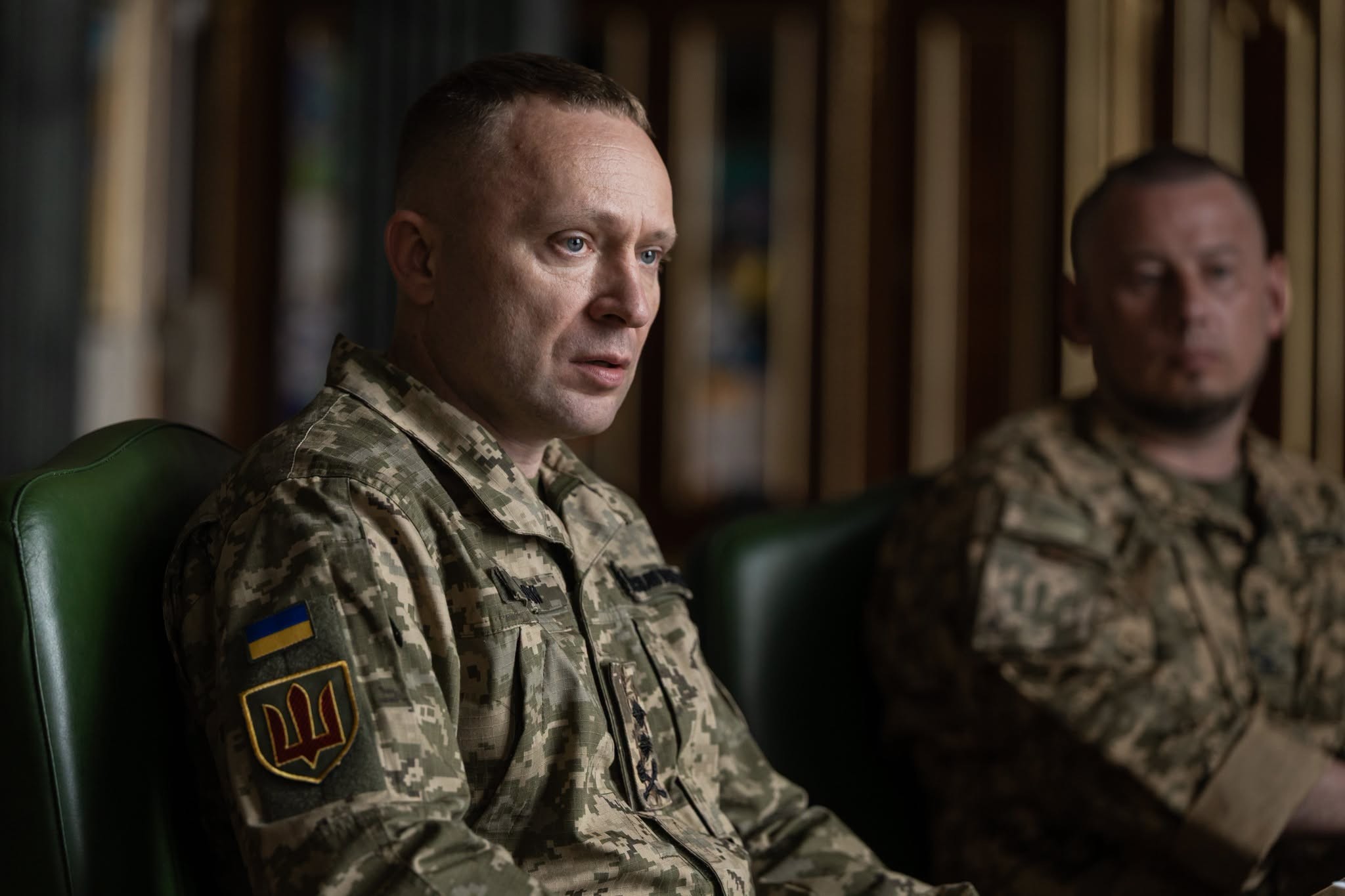
Drapatiy’s military career is, in essence, a chronicle of rescuing hopeless situations. His name first came to prominence in May 2014, at the very outset of the Russian aggression. At the time, the 31-year-old major commanded a battalion of the 72nd Brigade. On May 9, 2014, an incident occurred that made him famous: the BMPs under his command broke through the separatists’ barricades in Mariupol. This video went viral across Ukrainian media, becoming a symbol of determination. However, it is worth noting that the historical context of that battle was complex: despite tactical success in that specific engagement, Ukrainian forces were forced to withdraw from the city that day, which remained under the de facto control of “DPR” militants until mid-June 2014.
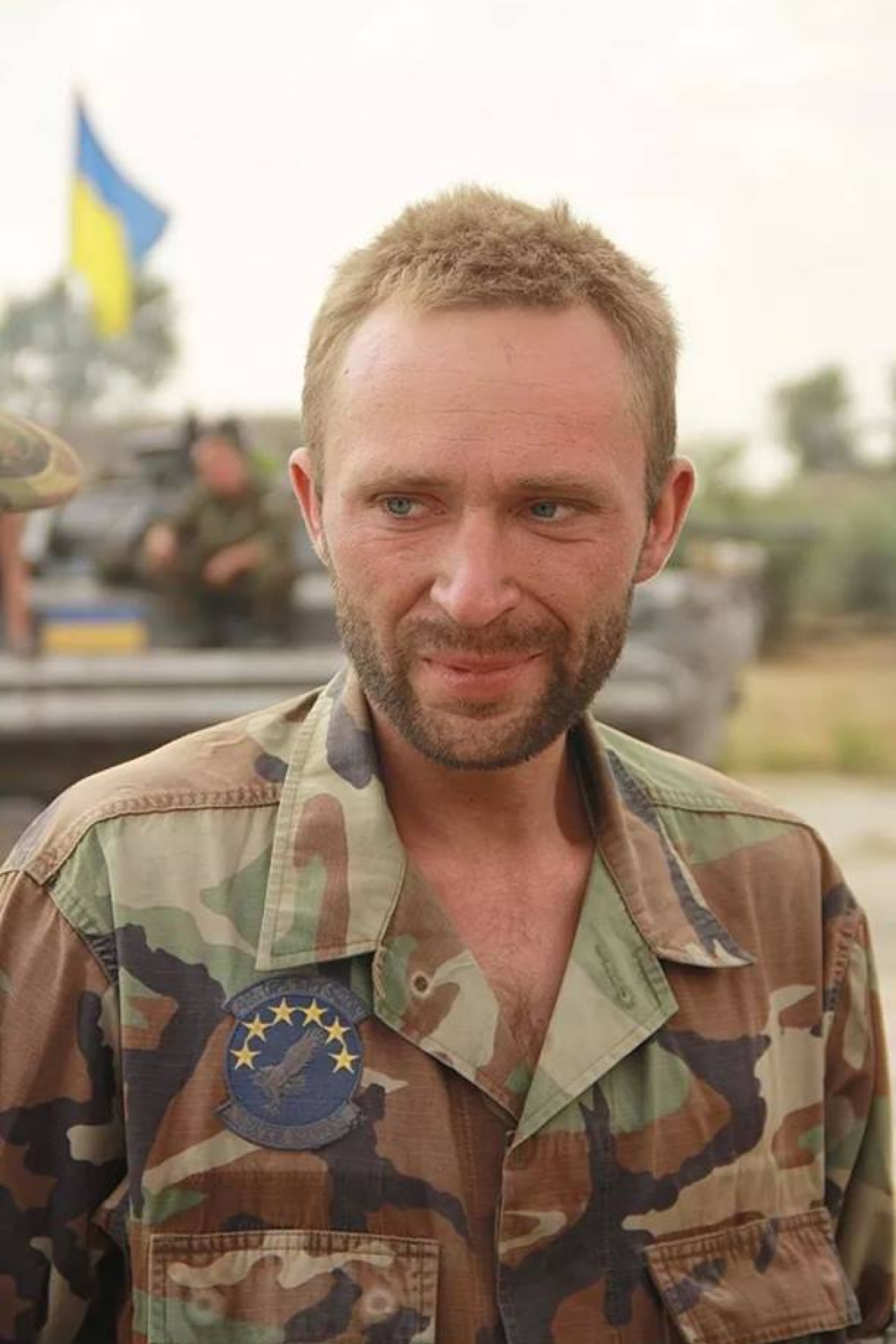
Drapatiy underwent his true baptism of fire, a life-or-death ordeal, in the summer of that same year. His unit was surrounded in the so-called “Izvarin Cauldron” on the border with Russia—one of the most tragic chapters of the ATO, when Russian artillery fired on Ukrainian convoys from its own territory with impunity. Amid the panic and chaos, Battalion Commander Drapatiy managed to maintain control, organize a breakthrough, and lead 260 soldiers out of the encirclement. This experience of survival “at ground zero,” it seems, shaped his approach to operational planning and the preservation of personnel: he learned the cost of a commander’s mistake, which is measured not in centimeters on a map, but in human lives.
Before the start of the full-scale invasion, Drapatiy held a staff position as deputy commander of the Joint Forces of the Armed Forces of Ukraine for troop training. But as soon as the large-scale invasion began on February 24, 2022, he was immediately deployed to one of the southern fronts that was the hottest at the time.
Since March 2022, he has served as deputy commander of the “South” Operational Command and commander of the “South” Operational Group of Forces. In this role, Drapatiy led fierce defensive battles: in particular, he halted the Russian Federation’s advance on Kryvyi Rih—the president’s hometown—which had not only military-strategic but also significant symbolic importance.
Next came Kherson. As head of the “Kherson” military group, he became one of the key architects of the successful counteroffensive on the right bank of the Kherson region in the fall of 2022. This operation, which culminated in the liberation of the only regional capital captured by the Russians after February 24, cemented Drapatiy’s reputation as a military commander capable not only of holding the line but also of launching effective offensives.
By early 2024, Drapatiy was already regarded in expert circles as one of Ukraine’s most capable generals. He was sent to the toughest sections of the front to stabilize the situation. In May 2024, when the Russian army launched an offensive in the border area of the Kharkiv region, establishing a buffer zone there, it was Drapatiy who was appointed commander of the “Kharkiv” operational-tactical group of forces. He managed to quickly regroup his forces, organize logistics, and halt the enemy’s advance in the north of the region, preventing a repeat of the 2022 scenario.
The peak of his formal career at that time came in November 2024, when Mykhailo Drapatiy became commander of the Ukrainian Armed Forces’ Ground Forces. It was a logical choice: the commander who had turned around crisis-stricken fronts was tasked with reforming the largest branch of the armed forces.
However, it was precisely in this position that his relationship with the system began to fray. In June 2025, Drapatiy resigned amid a high-profile scandal. The trigger was a series of tragic airstrikes on training centers and areas where personnel were concentrated. In his statement, the general effectively accused the high command—including Oleksandr Syrskyi—of systemic failures. He openly spoke of “cover-ups and impunity” within the troops, as well as the fact that commanders do not value the lives of their soldiers. At the same time, talk began to circulate about his sharp conflict with Commander-in-Chief Syrskyi.
Drapato was not dismissed from the army—apparently because of his value as a combat general. As early as June 3, 2025, following a personal conversation with Zelenskyy, he received a new appointment as commander of the Joint Forces of the Armed Forces of Ukraine. And starting in October 2025, Drapaty once again took command of the forces in the Kharkiv sector. This was a certain demotion within the purely bureaucratic hierarchy, but at the same time a return to his natural element—the actual command of troops on the front lines.
It is worth noting that the conflict with Syrsky did not resolve itself. Former Defense Minister Fedorov, who had himself recently lost his position, publicly stated that Drapatiy had received three reprimands from Syrsky. Furthermore, in early 2026, Drapatiy unexpectedly came out in public support of Vasyl Malyuk when Zelenskyy decided to dismiss him from his post as head of the SBU. This demonstrated that the general has his own vision for personnel policy and is not afraid to occasionally go against the opinion of the Office of the President.
The logical culmination of this confrontation was the recent crisis surrounding Fedorov’s resignation. Drapatiy was one of the first among the general staff to support the dismissed minister, which turned him into one of the leaders of the “opposition” within the army.

What to Expect from the New Commander-in-Chief
The appointment of Mykhailo Drapaty to the highest military post in the country may signal a transformation in approaches to army management. So what should we expect from the new Commander-in-Chief of the Armed Forces of Ukraine—at least in theory?
First, an uncompromising fight against “mutual cover-ups.” This phrase, coined by Drapaty during his resignation last year, has essentially become his informal political manifesto. In military circles, he has a reputation as a general who “doesn’t steal or lie.” Rank-and-file officers and noncommissioned officers see him as a commander who has been through the trenches, not just staff offices. They expect him to make tough personnel decisions regarding commanders whose actions lead to unnecessary casualties.
Second, there is a sort of “Drapatiy Doctrine”: preserving soldiers’ lives as the key priority. Unlike Syrsky’s leadership style—which was criticized for excessively high casualties—Drapaty adheres to a more technocratic and flexible approach. His experience in the Kharkiv and Kherson operations shows that he seeks to achieve results through the element of surprise, high-quality intelligence, and engineering support, while minimizing head-on “meat grinders.”
Third, some experts call him one of the leaders of the “opposition in uniform.” This creates both opportunities and risks. The opportunity lies in the General Staff shedding its atmosphere of fear and sycophancy. The risk, however, lies in a potential conflict with the country’s political leadership. Drapaty’s support for the disgraced Fedorov and the dismissed Malyuk suggests that he may be not just a “military administrator,” but also an independent political player whom the Presidential Administration will have to reckon with.
Ordinary military personnel generally speak highly of Drapaty. However, some say that the general can be too direct and emotional in personal interactions, although whether this should be considered a drawback is a matter of debate.
Drapato’s appointment is also an attempt to improve communication between the army and society. He is not a “silent general.” His previous statements about problems within the Armed Forces of Ukraine have resonated strongly with a public that is clamoring for justice. Therefore, there are cautious hopes that the situation within the army’s leadership will gradually begin to improve.
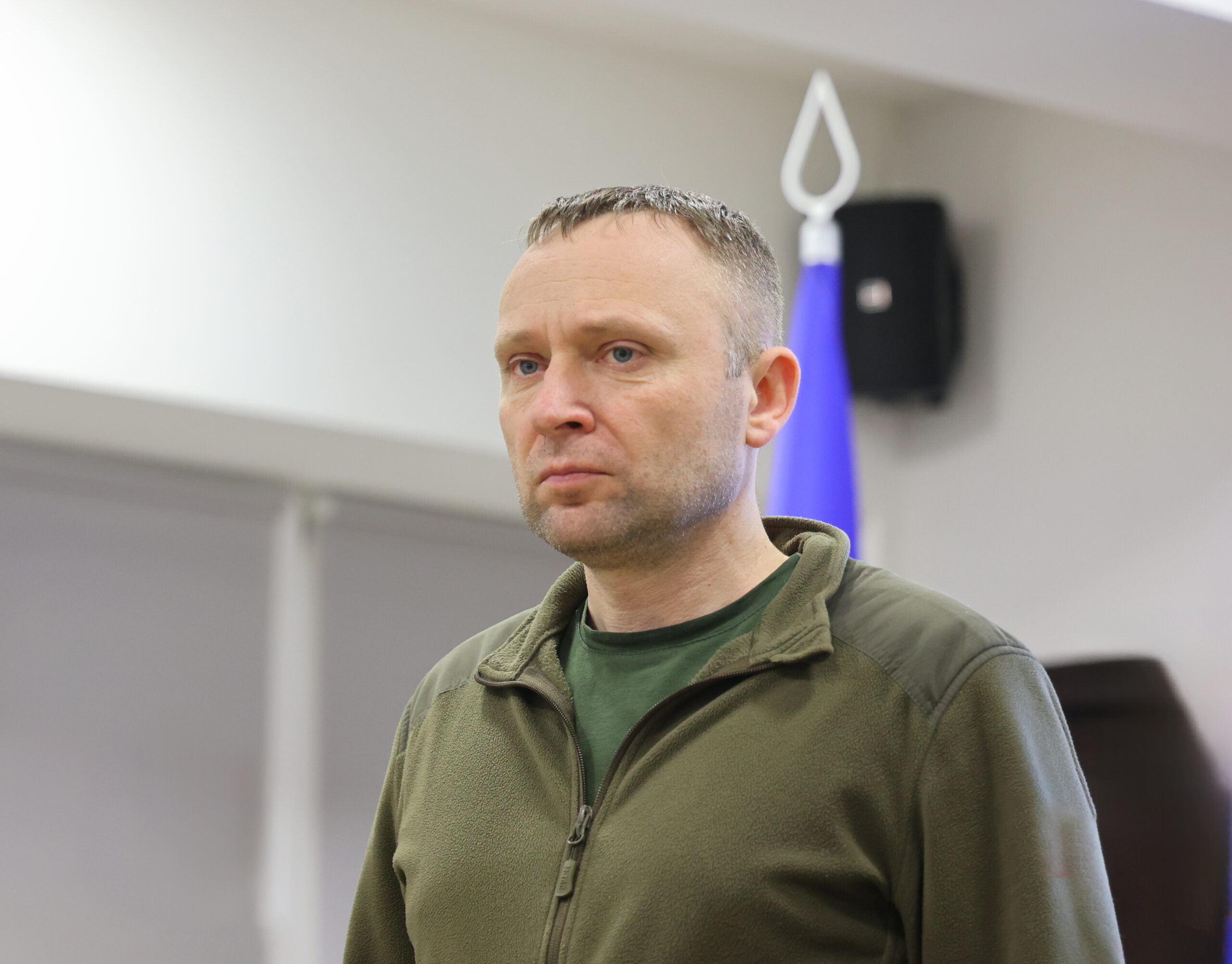
In summary, Mykhailo Drapatiy represents a choice in favor of a true combat officer. His path from platoon commander in the 72nd Brigade to Commander-in-Chief of the Armed Forces of Ukraine reads like a biography of the war Ukraine is waging.
He is not expected to perform miracles, but rather to eliminate the bureaucratic blunders that cost the lives of personnel. He is a lieutenant general who does not shy away from conflict with his superiors when the fates of his soldiers are at stake. His combat record, his honors as a Hero of Ukraine, and his awards as a recipient of the Order of Bohdan Khmelnytsky in several classes—these are formal confirmation that the Ukrainian army has leaders who did not rise from office chairs, but from the bloody “Izvarin Cauldron.”
However, Drapaty’s greatest challenge will not be the front lines, but the rear. His ability to lead 260 fighters out of an encirclement is what first made him famous. Only time will tell whether he can now lead the entire army out of the encirclement of internal bureaucracy and political expediency.




