
“Are we never going to see Dad again?”
Mykola Udyansky calls this very question—asked by the child of a fallen soldier—the most terrifying moment of his life. A man who works on major business projects admits: there are things that no amount of money can overcome.
Millions in investments in the defense industry, the construction of a Ukrainian center on Mount Athos, aid for the children of fallen soldiers and retirees who survive on just a thousand hryvnias after paying their bills. Usually, these topics rarely come up in the same conversation. But it is precisely around these issues that businessman and blockchain entrepreneur Mykola Udyansky is building his work today. He is convinced that success only has meaning when it is shared with those who need help. From supporting the front lines and the production of Ukrainian armored vehicles to large-scale social projects for children—in this conversation, he candidly explains why charity has long ceased to be merely a good deed for him.
Below are Mykola Udyansky’s own words.
On the tears of retirees and the self-serving nature of business
My entire life, starting from my youth, has been tied to the business world, where cold calculation and analytics reign supreme. But six years ago, an event occurred in my life that completely changed my inner compass. I visited one of the social facilities where lonely elderly people were being fed for free. I looked into their eyes, saw tears brought on by a simple bowl of hot soup, and something inside me just “clicked.” I decided to stay with these elderly people for the long term. A similar turning point occurred after my first visit to an orphanage.
I clearly remember the day when several dozen retirees were standing around me, and I decided to conduct a short survey among them: how much money do they have left to live on after paying all their bills? It turned out that these honest, decent people, who had worked their whole lives and were the first to pay all their utility bills on time, were left with just one thousand hryvnias in their pockets. When they described their monthly food budget to me—what they eat after buying medicine—I honestly started to cry. I was deeply moved by this information for a long time. It was then that I realized: if God has given me the opportunity to succeed and build wealth, I simply have no right not to be a source of support for these people.
It frankly angers me when people who have immense wealth and could easily provide for a frail, elderly, or poor person simply ignore it. It looks terrible. Everyone has their own path and their own share of crises they’ve faced. Some people had an overly easy childhood, came into money effortlessly, and simply don’t know what life’s hardships, cold, or hunger are like. They don’t realize how hard it is for others to pull themselves out of a difficult situation. Entrepreneurs, on the other hand—who have themselves once gone through difficult trials—are much more inclined to help others.
On a Freezing Saltivka, a “Bulletproof Vest” for Business, and Returning Home
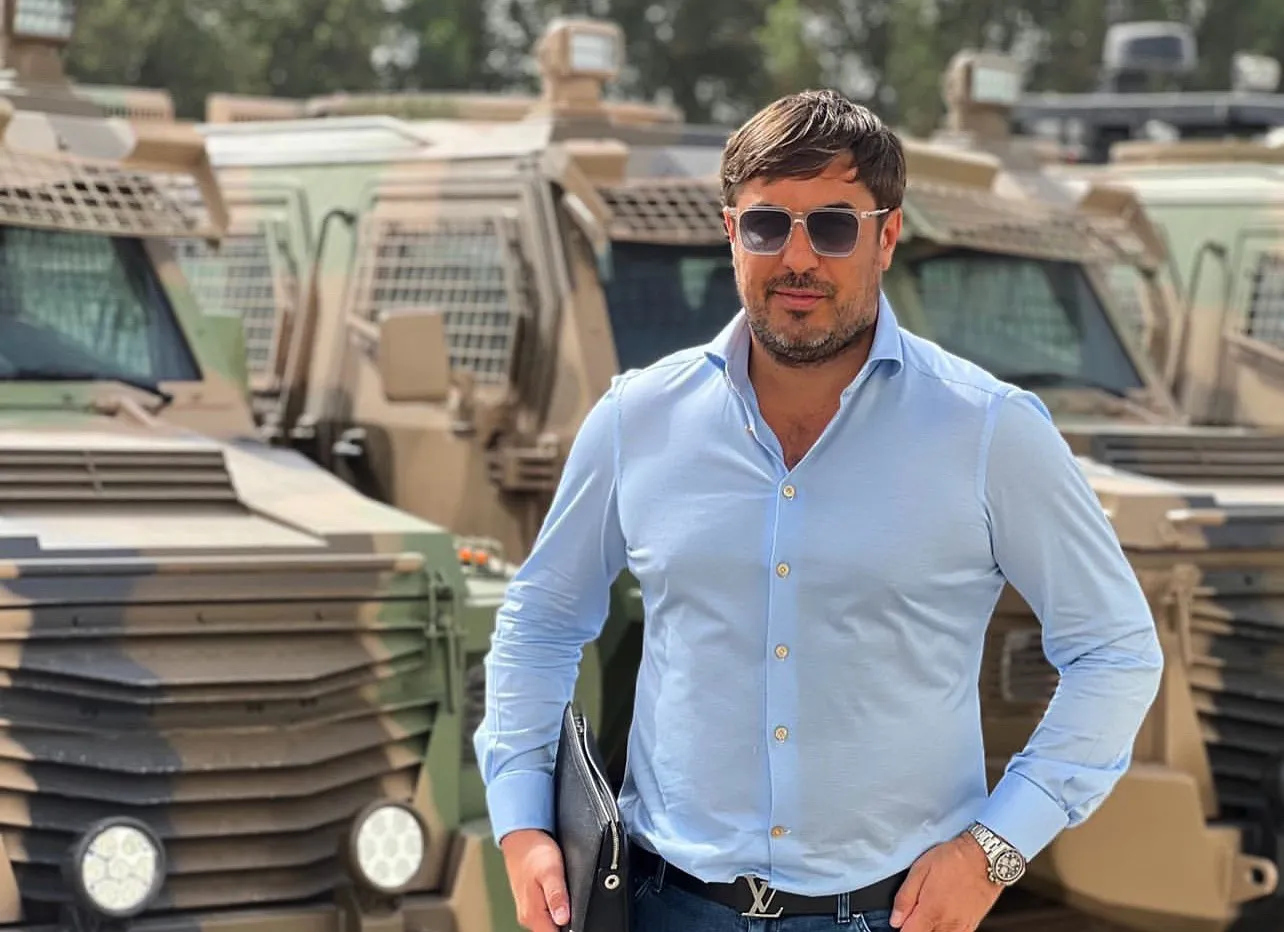
I’ve lived abroad for the past nine years, but I returned to Ukraine during the full-scale invasion—just when most people were fleeing. I realized clearly: if I invest in building companies in the domestic defense industry, it will definitely make a difference on the battlefield. To date, I have invested in two of the five existing manufacturers of Ukrainian armored vehicles. In other words, 40% of our armored vehicle market is funded by my money, and these vehicles are already in action on the front lines.
During the war, we increased our aid to civilians at least tenfold. At the end of 2022, our “United Nation” team visited Saltivka in Kharkiv for the first time, an area that had just emerged from intense shelling. We witnessed a horrific scene: elderly men and women, dressed in two or three jackets, were making their way down from shattered, half-ruined nine- and sixteen-story buildings in the bitter cold. The buildings had no electricity or gas, and none of the nearby infrastructure was functioning. These people were effectively doomed to die. At our own risk, we regularly traveled there just to keep them warm and feed them. At the same time, we were evacuating children from orphanages and young children who had just lost their parents from the frontline zones. Those were terrible times, but we gave it our all.
Around that same time, another, very spiritual decision came about. About seven years ago, I visited Mount Athos for the first time, and I felt ashamed: in this holy place, there are churches representing virtually all Orthodox nations—but none from Ukraine. We made a resolute decision, and now we are building our own Ukrainian center there. This is a step that brings us closer to God and marks our presence in the world’s spiritual history.
On the children of heroes and the most painful question in life
Today, the issue that pains me the most is the children of fallen heroes. Unfortunately, this is often how it goes: a father dies, people talk about it loudly for a month, and then everyone forgets about the family. This is very wrong and cruel. I believe it is the duty of every decent man and every entrepreneur to lend a helping hand to the children whose fathers gave their lives on the battlefield for our independence and for all of us. The hardest question I’ve ever heard from such a child is simply: “Will we never see Dad again?” No amount of money can do anything about that. When it comes to incurable diseases or the loss of loved ones, you realize that money doesn’t solve everything.
Often, even a small amount of help—or help provided at the right time—can radically change the fate of a particular child. What struck me the most and touched my heart at the time was that the pediatric cardiology department simply lacked the equipment needed to treat the hearts of children from low-income families. We went ahead and bought that equipment, giving them a chance at life.
These children need comprehensive support. Financial stability comes first, but serious psychological rehabilitation follows closely behind. We systematically take them to beautiful, safe places where professional educators and psychologists work with them. We try to fill them with vitality once again. I see clear results: the children leave in one state of mind and return as completely different people. Even a short break spent in the great company of peers and with the right specialists brings smiles back to their faces.
At the same time, I never take on more than I can handle, and I never spread myself too thin. This is the main rule of my effectiveness. If I’m organizing a group of 100 children for rehabilitation, I focus exclusively on that project and bring it to perfection. If I’m organizing a Christmas dinner with food baskets for the elderly, I work only on that. You can teach a child compassion only through your own actions: children easily pick up on proper behavior and mimic it.
On government guarantees and the mega-project in Bukovel
After the war, support for military families must become automatic and institutionalized. People will come to understand this on their own when they see the postwar state of society with their own eyes. It is clear that special state social agencies must be established in every region to strictly oversee these processes. The children of our defenders must have rock-solid social guarantees for the future to ensure a comfortable life: completely free education, decent pensions, and regular payments. This must happen organically.
If I had the opportunity to implement one large-scale social project without any resource constraints, I would build a huge, state-of-the-art children’s camp in Bukovel. It would be a large-scale complex in the most beautiful part of the Carpathians, where the children of our military personnel could spend their vacations or weekends on a regular basis, following structured programs, and recharge their energy.
Most importantly, what I want to say to the children of Ukrainian soldiers today is this: always be proud of your parents. They defended our land during an extremely difficult time, and we must appreciate that. In ten years, I want to see Ukraine as a country without war. That is the most important thing. We will rebuild everything else; businesses will create jobs, and children will grow up with a clear understanding that their parents did not die in vain—they fought for a strong and free nation.


