$ 44.75 € 51.57 zł 11.99
+28° Kyiv +28° Warsaw +31° Washington

In the temporarily occupied territories, the Russians have set up torture chambers for Ukrainians in 159 locations
UA.NEWS 04 August 2026 18:24
In the temporarily occupied territories, the Russians have set up torture chambers for Ukrainians in 159 locations

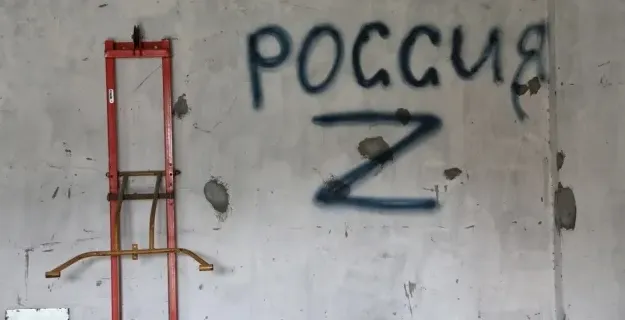
The National Police of Ukraine has identified 159 locations where Ukrainians are being illegally detained in the temporarily occupied territories and in Russia. Investigators have also identified more than 1,000 people believed to be involved in the illegal detention and torture of Ukrainian citizens. According to the police, this involves a system that includes Russian security forces, representatives of the occupation administrations, and Ukrainian collaborators.


 

The National Police of Ukraine continues to investigate the illegal detention and torture of Ukrainians in the occupied territories and in Russia. According to law enforcement officials, 159 detention sites have already been identified through which Ukrainian civilians and military personnel were held. Maksym Tsutsikiridze, acting head of the National Police, stated that, according to Ukrainian investigators, Russia uses the illegal detention and torture of Ukrainians as one of the tools of its policy.

These include various detention facilities, such as basements, torture chambers, filtration camps, pretrial detention centers, and penal colonies. Some of these locations are situated in the temporarily occupied territories of Ukraine, while others are located directly within Russia. “The National Police has identified 159 detention sites—ranging from basements, torture chambers, and filtration camps to pretrial detention centers and penal colonies in the temporarily occupied territories and in Russia. Thousands of civilians and military personnel have passed through this system, and some of them remain in captivity to this day,” Tsutsikiridze noted.

Investigators are reconstructing the victims’ entire journey

Law enforcement officials are not only working on individual cases of torture. They are attempting to reconstruct the entire journey of the victims—from the moment of their capture to the location where they were held prior to their release or exchange. According to Tsutsikiridze, investigators have already analyzed information regarding several thousand civilian hostages who returned from unlawful detention. Approximately 500 people have been interviewed as victims and witnesses.

“We are not only investigating events at the last place of captivity, but also reconstructing the person’s entire journey—from the moment of capture to the facility from which they were released or handed over for exchange,” said the head of the National Police. Investigators are determining exactly who made the decisions regarding a person’s transfer, who escorted and guarded them, who conducted interrogations, and who used violence.

To this end, the victims’ testimonies are being cross-referenced. Investigators are also verifying the information received against digital data, materials from open sources, intelligence reports, and data from international partners.

Over a Thousand Suspects Identified

As part of this investigation, Ukrainian law enforcement officials have already identified over a thousand individuals believed to be involved in the unlawful detention and torture of Ukrainians. Separately, the police are investigating events at the Kalinin Penal Colony in Russia. There, investigators have identified more than 80 suspects. Forty-two of them have already been notified of the charges against them. In total, according to the National Police, 120 people linked to crimes against Ukrainians in the temporarily occupied territories and in Russia have been notified of the charges against them.

Law enforcement officials emphasize that they aim to identify not only those who directly committed acts of violence. The investigation is also seeking individuals who organized the operation of detention facilities, issued orders, and oversaw the unlawful detention of Ukrainians. “It is of fundamental importance for us to identify not only the direct perpetrators but the entire chain of command—from those who tortured, guarded, and escorted people to the leaders who established detention facilities, organized their operations, and issued criminal orders. Among those implicated are employees of Russian law enforcement agencies, representatives of the occupation administrations, and Ukrainian collaborators,” Tsutsikiridze emphasized.

The investigation links one of the Russian officials to Roshchina’s death

One of the results of this work was the issuance of a notice of suspicion to the head of Detention Center No. 3 of the Main Directorate of the Federal Penitentiary Service for the Perm Krai of Russia. According to the Ukrainian investigation, he organized the torture of Ukrainian civilian detainees. Law enforcement officials link these actions to the deaths of Ukrainian journalist Viktoria Roshchina and Yevgeny Matveev, head of the Dniprorudne City Territorial Community.

This investigation involves Ukrainian law enforcement authorities attempting to establish not only the circumstances surrounding these deaths but also the identities of all individuals who may have been involved in unlawful detention, violence, and other crimes.

Police Want to Prove the Systematic Nature of the Crimes

Ukrainian investigators are examining individual cases of unlawful detention and torture within a broader context. According to Tsutsikiridze, the goal is to establish links between detention facilities, their staff, and their leadership. “The goal of the investigations is to legally prove that the unlawful detention, transfer, and torture of Ukrainians are not a collection of isolated crimes, but part of a system organized by Russia,” he added.

Thus, law enforcement officials are gathering evidence along several lines simultaneously: identifying detention sites, identifying victims and suspects, reconstructing the routes along which people were transported, and determining exactly who was behind the organization of this system. According to police, this work should help bring to justice not only those who directly carried out the torture but also those who organized and controlled the illegal detention of Ukrainians. This was reported by the National Police.

The SBU has exposed hackers who created a fake “Reserve+” app to evade mobilization.

A pre-trial investigation is currently underway to identify all participants in the criminal scheme and bring them to justice. The suspects face up to eight years in prison, according to the SBU.

As a reminder, the SBU, the State Bureau of Investigation (DBR), and the National Police have uncovered 11 more schemes to evade mobilization in various regions of Ukraine.


Read us on Telegram and Sends

Download our app