
The NBU is changing the rules for reloading cards at terminals
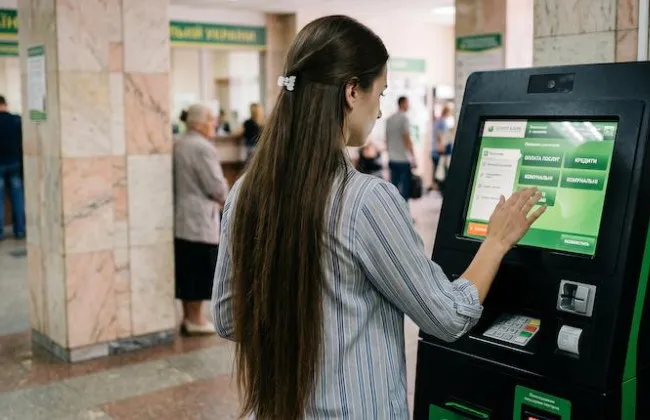
The National Bank of Ukraine is introducing new rules for reloading bank cards via self-service terminals. From now on, each transaction will need to be confirmed via a one-time code sent to a phone. In effect, this means the end of anonymous cash reloads.
The National Bank of Ukraine has approved new rules for payment terminals that significantly change the process of reloading cards with cash, which many people are accustomed to. From now on, such transactions can no longer be completed without user identification via a mobile phone.
According to NBU Resolution No. 67, every cash deposit transaction made through a terminal must be confirmed with a one-time password sent to the payer’s phone. This can be an SMS code or voice confirmation via a phone call. “Only after entering the received code on the terminal screen is the transaction considered confirmed and can be completed,” the new rules state.
In effect, this means that anonymous card top-ups via a terminal will no longer be possible. Regardless of the amount, the user must verify the phone number associated with the transaction. In addition to the confirmation process itself, the requirements for receipts are also changing. They must now include the payer’s full phone number in international format, without hiding any digits or replacing them with symbols. “It is strictly prohibited to hide the payer’s phone number using asterisks or any other characters,” the document states.
Receipts must also contain a complete set of data: payment service details, a unique terminal number, the date and time of the transaction, the commission amount, and the payment purpose. It is specifically emphasized that all data must exactly match the information entered by the user. The regulator also clarified that payment terminal operators may no longer act as the “payer” or “payee” in such transactions to avoid confusion in tracking financial flows.
At the same time, the NBU has provided for exceptions. Certain payments may be made without SMS confirmation—specifically, payments for utilities, taxes, fines, and transportation, as well as mobile top-ups up to a specified limit. Separately, the regulator has permitted simplified transactions for depositing cash into personal accounts, provided that the terminal can identify the card and the user confirms the transaction via a PIN code or a banking app.
The new rules also provide for the introduction of the concept of financial inclusion banks—institutions that will operate under simplified licenses and are intended to expand access to financial services in regions lacking a fully developed banking infrastructure. Information on all transactions, including the phone number and authentication parameters, must be stored in the systems of payment service providers in accordance with the requirements of financial monitoring legislation.
In effect, the NBU is tightening control over cash transactions conducted via terminals, reducing opportunities for anonymous transfers while simultaneously increasing the traceability of financial flows. At the same time, the new rules are already sparking debate regarding the balance between transaction security and the protection of users’ personal data.
The Verkhovna Rada passed a law on the taxation of digital platforms, which the public has already dubbed the “OLX tax.” The bill was approved by 241 members of parliament. The “Servant of the People” faction provided the most votes, while “Batkivshchyna” and “European Solidarity” did not support the bill.


