
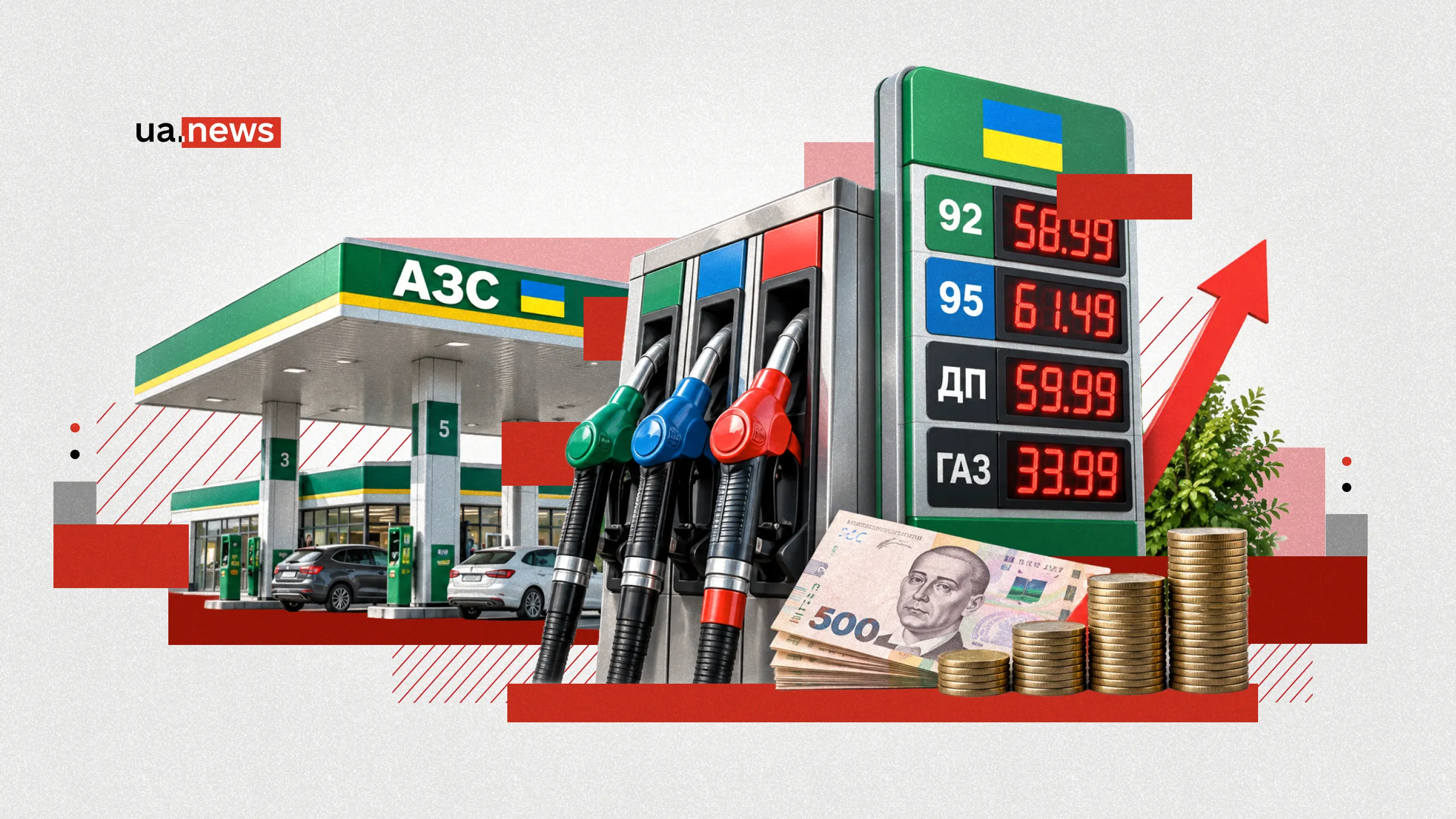
As of September 14, 2026, the Ukrainian fuel market has been in a state of constant turmoil. Prices at gas stations are updated almost daily, and each such update hits the wallets of drivers, businesses, and the entire economy hard. While in early September the average price of A-95 gasoline fluctuated between 83 and 85 UAH per liter, by September 13 it had reached 85.6 UAH, and diesel fuel had crossed the 96.7 UAH mark. This isn’t just another price spike: it’s the result of a complex interplay of domestic and external factors that overlap, creating a cascading effect.
Ukrainian consumers have grown accustomed to rising fuel prices, but recent months have revealed a new situation: Russian drone strikes on gas stations deep in the rear, inflationary pressure reaching 8.1%, and a global oil crisis triggered by the war in Iran and Houthi actions in the Bab el-Mandeb Strait. Each of these factors on its own would be a serious challenge. Together, however, they create a situation in which even analysts’ optimistic forecasts of a price drop by the end of the year seem increasingly less convincing.
Why is fuel getting more expensive in Ukraine right now, what forces are driving this price hike, and is there a limit to it? UA.News political analyst Mykyta Trachuk, along with experts, examined the issue.
The Home Front: Attacks on Gas Stations, Inflation, and a Logistical Collapse
A factor directly affecting prices has been Russia’s targeted campaign to destroy gas stations on Ukrainian territory. Over the past six months, Russian attacks have damaged or destroyed more than 300 gas stations across the country. This is not merely a military tactic but a deliberate strike against civilian infrastructure aimed at paralyzing logistics, creating shortages, and sowing panic.
On September 11, Russian drones struck several gas stations in Kyiv at once, particularly in the Obolon and Dnipro districts. Two people were killed, six others were injured, and one of the gas stations was hit a second time. The geographic scope of the strikes is expanding, and with it, the risk zone for every gas station in Ukraine.
The implications for prices are clear: every gas station destroyed means a loss to the network, a reduction in supply, and higher costs for restoration and insurance. Chains that remain in the market are forced to factor security risks, logistical overhead, and increased security costs into their prices. But there is also a deeper effect: attacks on gas stations erode confidence in the market, forcing consumers to buy fuel “in bulk” or “in jerry cans,” which creates artificial panic demand and further drives prices up.
Inflation is eroding purchasing power
Another very domestic factor is inflation, which accelerated to 8.1% year-over-year in August 2026 (and these are only the official statistics). But the key figure is different: the cost of fuel has risen by 38.7% over the past year. This means that fuel has become one of the main drivers of overall inflation. The National Bank of Ukraine (NBU) directly links this acceleration to the sharp rise in global oil prices in late July. In other words, the external oil shock is being passed on to domestic prices due to Ukraine’s dependence on imported petroleum products.
But there is also a purely domestic dimension. Higher water rates, rising domestic logistics costs, and the hryvnia’s devaluation against the dollar—all of this creates additional pressure. Every stage of the “oil—import—refining—gas station” chain is becoming more expensive, and these costs, as is customary in Ukraine, are, of course, passed on exclusively to the end consumer. Fuel inflation isn’t an abstract figure—it’s the actual amount every driver spends at the gas station.
Finally, let’s not forget about logistics. Ukraine is almost 100% dependent on petroleum product imports. The vast majority of fuel on the market comes from EU countries. Attacks on port infrastructure, damage to railway hubs, and risks to tanker trucks on the roads—all of this lengthens routes, increases delivery times, and drives up costs. After a diesel fuel shortage in the first half of August 2026, the market stabilized thanks to increased imports, but this stabilization came at a high cost. Every disruption in supply leads to a price spike that is difficult to reverse.
An
External Storm: Iran, the Houthis, and the Two Straits Holding the World Hostage
While domestic factors put pressure on prices, external factors shape their very dynamics. The war between the U.S. and Iran has led to unprecedented restrictions on shipping through the Strait of Hormuz—a bottleneck through which, prior to the conflict, approximately one-fifth of global oil and liquefied natural gas supplies passed. In September 2026, only 7–11 ships passed through the strait per day.
This led to a sharp spike in oil prices. As of now, the price of Brent has exceeded $107 per barrel, and WTI has surpassed $101. Back in May 2026, Goldman Sachs raised its forecast for the average annual price of Brent from $77 to $85 per barrel, and for March–April—from $98 to $110, warning of a “shock scenario” at $135 per barrel. These forecasts appear to have been prophetic.
For Ukraine, this means a direct increase in the cost of imported fuel. Every dollar increase in the price of oil is reflected in the hryvnia price at gas stations with a time lag of several weeks. And since the war in Iran shows no signs of ending, this pressure is long-term in nature.
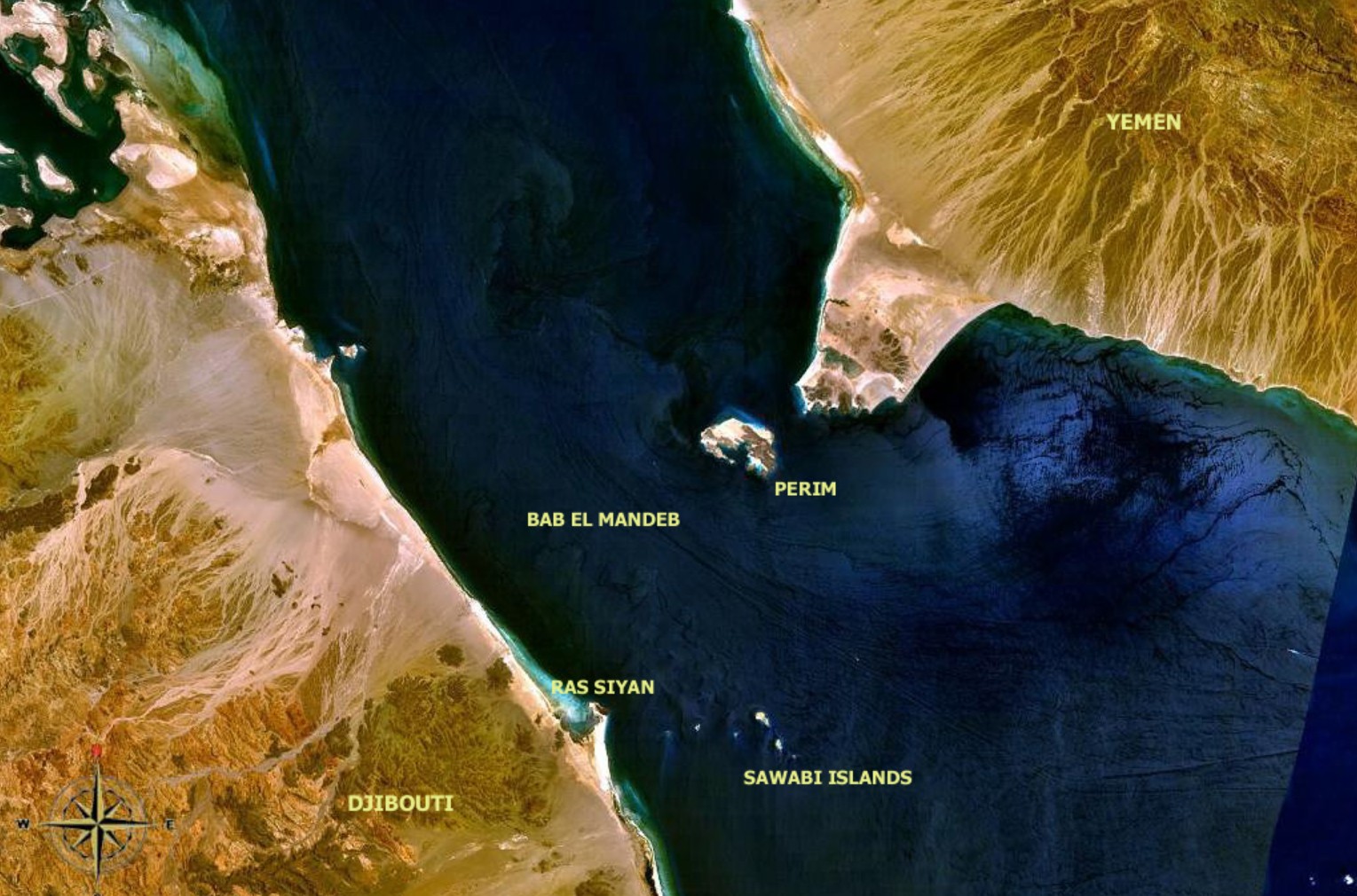
If the Strait of Hormuz is the gateway for oil from the Persian Gulf, then the Bab el-Mandeb Strait is the “corridor” for trade between Asia and Europe via the Red Sea and the Suez Canal. And it was here, in September 2026, that a tectonic shift occurred: the pro-Iranian Houthis seized the strategic island of Perim, which divides the strait into two shipping lanes, thereby taking control of the waterway. Prior to this, they had captured the Yemeni port of Mocha and advanced along the Red Sea coast. This is not merely an unprecedented military victory for Iran’s proxies: it marks the creation of a new mechanism for exerting economic pressure on global trade.
Nearly one-third of global container traffic and a significant portion of oil shipments pass through the Bab el-Mandeb Strait. The Houthis’ capture of key points along the strait creates additional risks for the route through the Suez Canal and forces shipping companies to either pay “tribute” to the Houthis or choose longer and more expensive detours around Africa. For Ukraine, which imports fuel primarily from Europe, this means yet another increase in global logistics costs, which inevitably affects prices at gas stations.
The domino
effect: why everything together is worse than separately
The key problem is that these factors do not exist in isolation. Russian strikes on gas stations are reducing domestic supply. The war in Iran is driving up global oil prices. The Houthis in the Bab el-Mandeb Strait are prolonging shipping times and increasing logistics costs. Inflation in Ukraine is devaluing the hryvnia, making imports even more expensive. This is a “perfect storm,” where each factor amplifies the effects of the others, creating a negative cascade effect. That is precisely why prices are rising not linearly but in spurts, and why forecasts of a price drop seem increasingly unrealistic.
The actual figures at gas stations speak louder than any forecasts. As of September 13, 2026, the average price of A-95 gasoline was about 85.6 UAH per liter, and diesel fuel was 96.7 UAH. The most expensive chains—OKKO, WOG, and SOCAR—offered A-95 for 87.90 UAH, while prices at “BRSM-Nafta” and “Ukrnafta” were lower—80.54 and 82.90 UAH, respectively. Diesel fuel prices occasionally reached 98.90–100 UAH per liter.
The weekly trend is even more striking: on September 11, the average price of A-95 rose by 63 kopecks per day, and that of diesel fuel by 87 kopecks. This means that in just one week, fuel prices rose by 3–5 hryvnias per liter. For the average driver who fills up 40 liters per week, this represents an additional cost of 120–200 hryvnias. For businesses, especially in the transportation and agricultural sectors, this is now a matter of profitability.
One of the most pressing questions is whether Ukraine faces a physical fuel shortage. Currently, experts agree that there is no critical shortage: imports are increasing, and retail networks are adapting to the shocks. Following a diesel fuel shortage in the first half of August 2026, the market stabilized thanks to increased imports. Autogas prices also stabilized after the arrival of cheaper imported supplies.
However, stabilization does not mean a price drop. It simply means that prices are rising slightly more slowly. And if attacks on gas stations continue with the same intensity, and global oil prices remain at $100+ per barrel, Ukraine may face not so much a shortage as a lack of access to fuel for certain categories of consumers—small businesses, farmers, residents of frontline regions, and so on.
Expert
Opinions
Serhiy Kuyun, director of the A-95 consulting group, notes: “Today’s planning horizon is about a week or two, and no more.”
“The outlook and forecasting horizon are one to two weeks. Global prices are at their annual peak—and at a historic high as well. $1,500 per metric ton of fuel is twice as high as it was at the start of the war in Iran. Prices on the domestic market are also rising because we buy everything from abroad. Wholesale prices have already exceeded retail prices, which indicates that prices will continue to rise. 100 UAH per liter of diesel fuel is what we can expect within a week. We can’t plan ahead. “We depend on the global market, and it is impossible to predict its behavior,” the expert noted.
Energy expert and chairman of the Union of Utility Consumers, Oleg Popenko, is also convinced that further price increases are to be expected.
“I don’t see anything positive in this situation. We’re tied to global fuel markets. Fuel sales are also part of tax policy. The government is using the rise in fuel prices to raise taxes in order to boost budget revenues. Those in power have completely botched the budget process. There are no funds. So the government will make up for the deficit by raising fuel prices at gas stations, which will boost revenue. These are quasi-taxes. In our country, fuel prices are effectively quasi-taxes. I see no chance of fuel prices falling. This is a one-way street, and considering foreign markets as well—especially since oil has surpassed $100—all prices will continue to rise,” noted Oleg Popenko.
In summary, the rise in fuel prices in Ukraine is the result not of a single factor, but of a complex set of factors that act simultaneously and reinforce one another. Domestic factors—Russian attacks on gas stations, inflation, and logistical difficulties—are putting pressure on supply and costs. External factors—the war in Iran, the blockade of the Strait of Hormuz, and the Houthis’ seizure of the Bab el-Mandeb Strait—are driving up global oil prices and increasing the cost of global logistics.
Therefore, unfortunately, the coming months do not promise any relief for Ukrainian consumers. Even if global oil prices stabilize, domestic factors—inflation, the devaluation of the hryvnia, and the risk of new attacks—will continue to put pressure on prices. The most likely scenario is a continued gradual rise with periodic spikes caused by news of attacks and escalations in the Middle East.
The only way to alleviate the situation is to diversify supplies, build up strategic reserves, and adapt logistics to wartime conditions. Although, of course, the best solution would be to urgently end all wars that directly affect the market. But these measures require time, coordination, and resources. In the short term, Ukrainians will have to get used to the idea that fuel priced at 85–100 UAH per liter is not a temporary phenomenon, but a new reality shaped by war on two fronts: on the front lines in Ukraine and on the maritime routes of the Middle East.




