
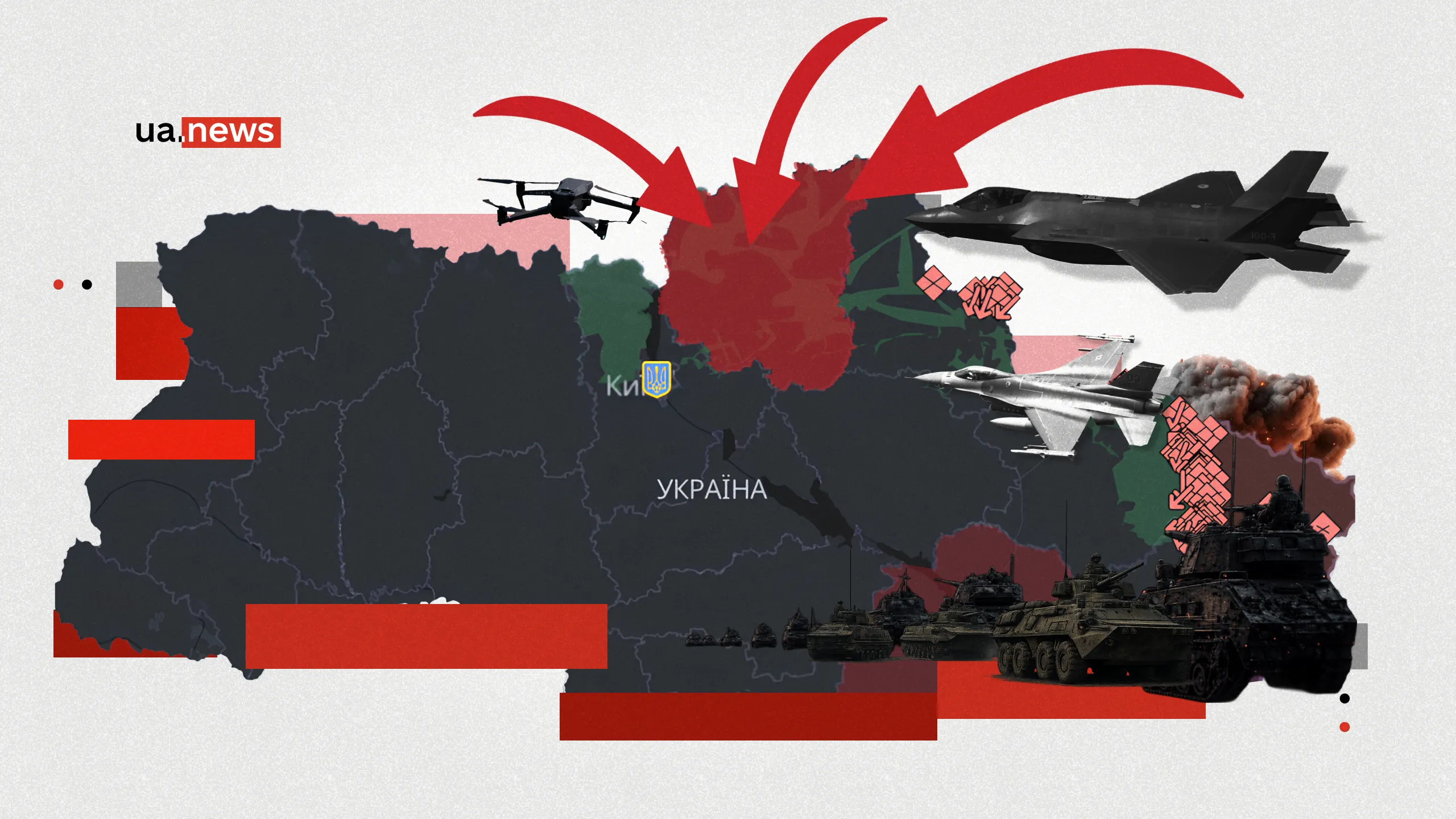
In a recent interview, Commander-in-Chief of the Armed Forces of Ukraine Oleksandr Syrskyi said that Putin had instructed his General Staff to consider several options for a new offensive on Kyiv. One of them is allegedly from Belarusian territory. But Syrskyi himself believes that the Belarusian leadership will not go along with this. As for the second option—a direct strike from Russia through the Chernihiv region—he called it more realistic and added that the Ukrainian army is already preparing for such a scenario.
All of this, of course, sounds quite alarming. But the war has changed. It has long since turned into a contest of capabilities, logistics, and reserves, where no significant maneuver is possible without enormous losses.
Therefore, the key question is not whether Russian command centers will draw red arrows pointing toward Kyiv, but whether the enemy is capable of achieving anything more than just a limited bridgehead that will repeat the fate of Russia’s May 2024 offensive in the Kharkiv region. It is precisely this “Kharkiv case” that has served as a litmus test for Russia’s capabilities along the border, and it is through this that we will attempt to assess how objective the risk to Chernihiv and Kyiv is at present.
What is really behind the commander-in-chief’s statement? Is there truly an objective risk to Chernihiv and Kyiv? UA.News political analyst Mykyta Trachuk, together with experts, examined the issue.
Kharkiv Operation 2024: A Limited Bridgehead as a Death Sentence for Offensive Ambitions
The Russian offensive in May 2024 in the north of the Kharkiv region is mentioned here for a reason. In fact, it is a classic example of how an army that has lost its ability to make deep breakthroughs attempts to accomplish a tactical objective to its own detriment.
Yes, at the time, the Russians managed to breach the border and capture some settlements, but their advance stalled. And it stalled not so much because of the Ukrainian defense itself, but rather due to a physical shortage of troops, drones, air defense systems, and, most importantly, the inability to establish a secure supply line across open terrain that was under fire from all sides.
This bridgehead immediately turned into a “gray zone” where the enemy suffers constant losses, and a breakthrough toward Bohodukhiv—let alone Kharkiv—is not even considered realistic.
The main constraints here are geography and logistics. Advancing from ground zero deep into territory you do not control in the air, relying solely on dirt roads and with your movements completely exposed to enemy UAVs, is a guaranteed meat grinder. The Russian Federation’s 2024 offensive on Kharkiv served as clear proof that even a concentrated, fairly large force is incapable of turning a border breakthrough into an operational success without a qualitative change in the very nature of the war.
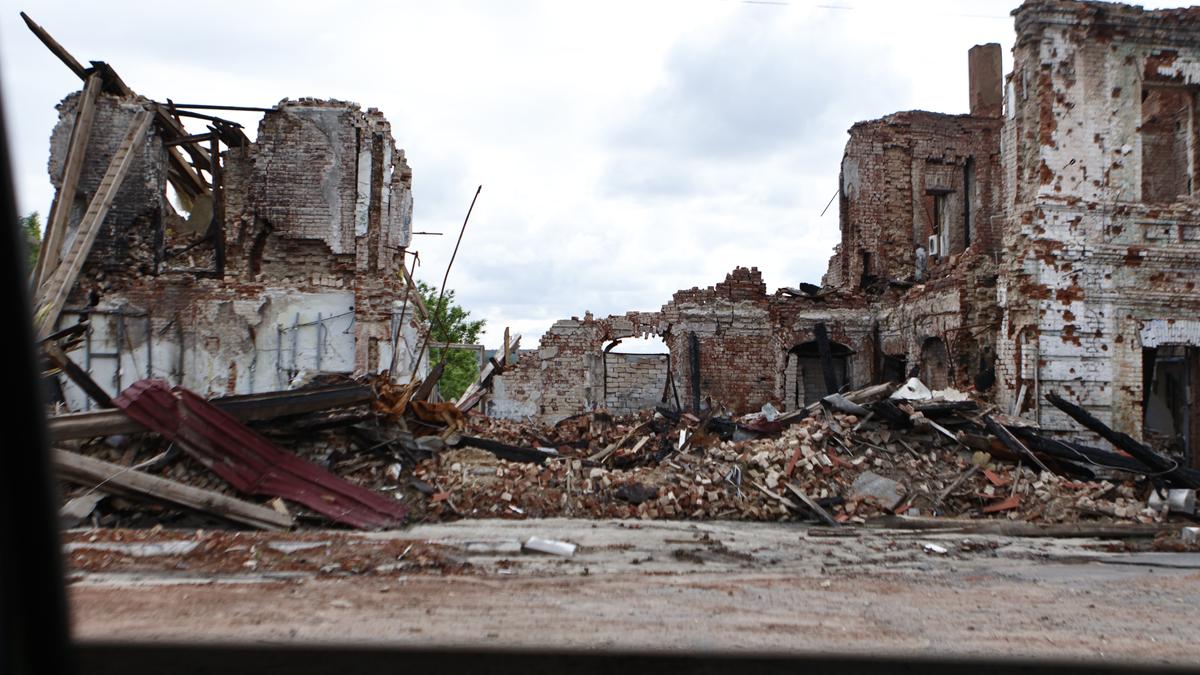
Kyiv Is Back on Russia’s Radar
The Commander-in-Chief of the Armed Forces of Ukraine notes that the true objective of a potential Russian offensive through the Chernihiv region will be the Ukrainian capital. The return of Kyiv to public discourse as a military target makes sense for several reasons.
The first is political. Putin needs a target that will make the West nervous and Ukrainian society feel vulnerable. Although, in reality, as of now, any offensive on Kyiv is objectively impossible, if only due to a lack of manpower. For such an offensive, Russia would have to, at the very least, carry out a mobilization.

The second is military-economic. War is exhausting, and the Russian command is forced to regularly devise new fronts to stretch Ukrainian reserves even further. An attack from the north could force Kyiv to redeploy forces from the Donbas, even if the real goal is not to capture the capital but to weaken defenses along the familiar Sloviansk-Kramatorsk front.
However, it is certainly not possible to compare the current situation with that of February 2022. First, there is no element of surprise anymore, nor will there be. Ukrainian intelligence and Western partners are monitoring any significant troop movements along the border. Second, in February 2022, the Russians advanced on Kyiv in effectively isolated columns, hoping for a rapid collapse of the state. Now, however, if they attempt a breakthrough, they will face an echeloned defense.
Third, even a limited offensive requires a superiority in forces, and Russia has critically few available reserves in this direction. According to the assessments of nearly all experts, the Belarusian force group lacks strike capability, and redeploying combined-arms units from other fronts would require weeks, if not months, of preparation—which is impossible to conceal. Therefore, Syrsky’s words should be viewed not as a warning about some inevitable “major Russian offensive,” but rather as a rational assessment of the worst-case scenario, for which we must also prepare.

The Chernihiv Sector: The Geography of the “Corridor of Death”
In general, from a military-geographical perspective, the Chernihiv region is a veritable trap for an attacking force, unless it holds an absolute advantage.
The Russian border here runs along a line adjacent to rivers, forests, and marshy lowlands, which hinder the movement of heavy equipment at any time of year except deep winter. The main roads leading from the Bryansk Oblast toward Chernihiv are well known and have long been targeted by artillery. The distance from the border to Chernihiv is less than 100 km, but these kilometers are filled with natural and man-made obstacles: the Snov and Desna rivers, a dense network of canals, large forest areas, and so on.
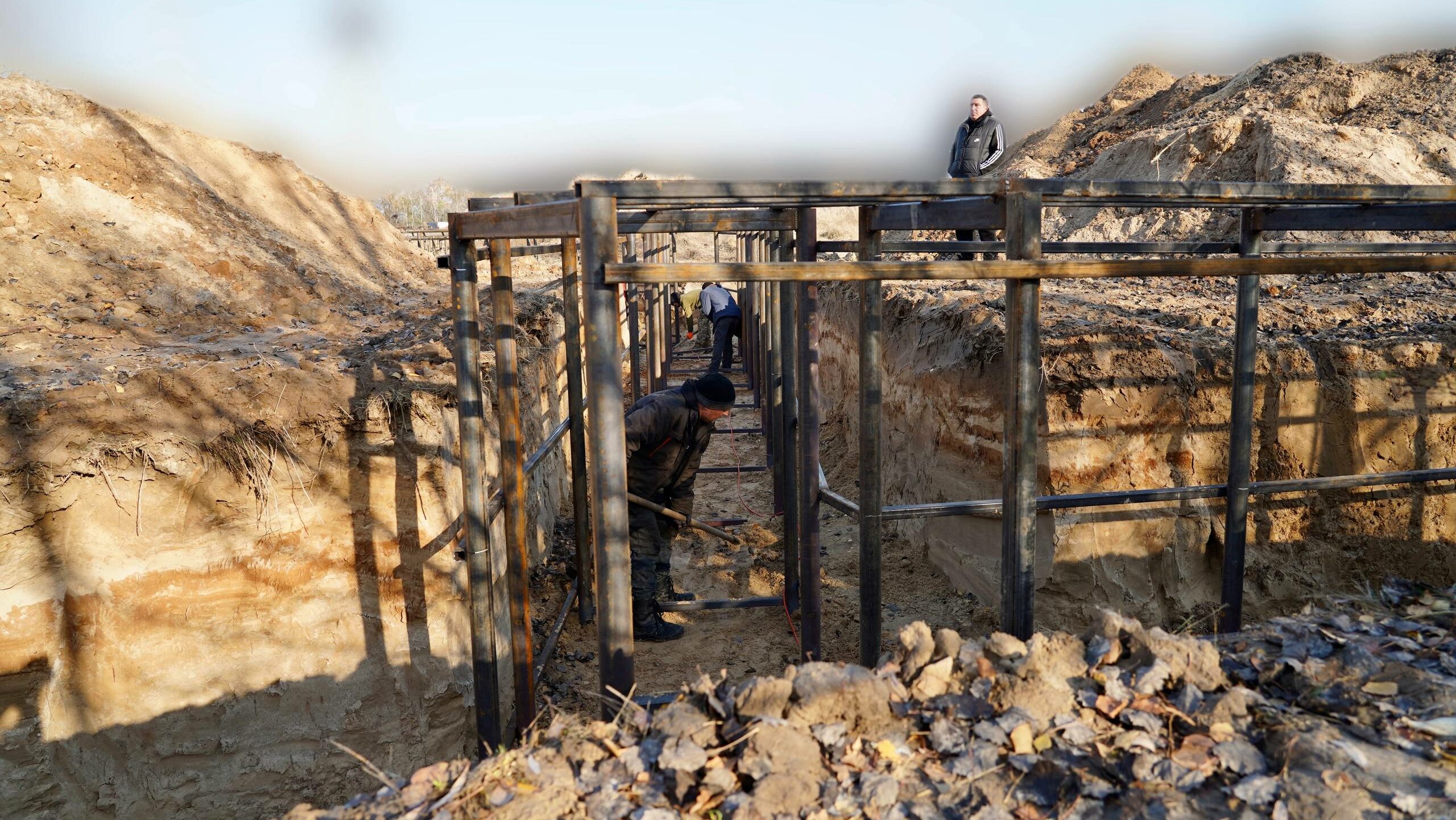
Added to all this is another factor that was absent both in 2022 and even at the start of the Kharkiv campaign: large-scale fortifications. According to military reports, Ukraine’s northern border is now a continuous line of engineering structures, minefields, concrete firing positions, and so on.

Breaking through such defenses head-on is a task that requires enormous resources, which the enemy simply does not have at this time. All of this leads to a logical conclusion: even a hypothetical success by the Russian Armed Forces in the first days of a potential offensive through the Chernihiv region would be limited to a few kilometers (or at most a dozen or two) of territory—after which everything would simply grind to a halt and become bogged down.
Incidentally, in his statement, Syrskyi very clearly distinguished between the Belarusian front and the Russian one. Lukashenko truly does not want to be a direct participant in the war, as this poses a far greater threat to his regime than anything else. However, this does not mean that Belarus is not a military factor at all. Training camps, hospitals, rail transport, the deployment of Russian aircraft, missile systems, and even nuclear weapons—all of this is present and operational there. But a ground invasion from Belarusian territory is, as of now, highly unlikely. Thus, the Belarusian bridgehead remains more of a tool for demonstrating strength and diverting attention.
In this context, the Chernihiv sector appears even more isolated. If an offensive were to launch from the Bryansk region, its left flank would effectively remain unprotected from the Belarusian side, as there would be no coordinated “support strike” from that direction. The Ukrainian command will be able to maneuver its reserves without fear of a simultaneous breakthrough from the Belarusian forests.
This further narrows the operational depth of any potential Russian thrust from the north: without Minsk’s support, it will not be as deadly and terrifying as it could be. And Belarus, for now, is clearly in no hurry to get drawn into a major war with Ukraine.
Expert Opinions
Military expert and Israel Defense Forces reserve officer Igal Levin points out that, in his view, Kyiv is a frontline city with all that entails.
“For some reason, people constantly forget this. They think that what’s happening now is a new ATO or Joint Forces Operation, that the war is somewhere far away in the Donbas, because Kyiv is far from the front lines. No. Kyiv is a frontline city. The entire state border with Russia—and including Belarus—is also the front line. The fact that it’s inactive doesn’t really change anything; it’s inactive for one reason or another. But when you have Russia to the north of Kyiv, not very far away—that means we’re talking about a frontline city. Can a frontline city be in danger? Of course it can. So there’s nothing new here. And Sirsky, the Commander-in-Chief of the Armed Forces of Ukraine, is absolutely right: the threat to Kyiv has always existed and remains. Ever since the Russians were driven out from the outskirts of the capital in the spring of 2022, this threat has persisted. So there’s nothing unique or new in Syrskyi’s statement,” noted Igal Levin.
Political scientist and director of the Ukrainian Institute of Politics Ruslan Bortnik commented on the situation as follows:
“I don’t rule out that sooner or later there will be a ‘reversal’ in this war. That is, Moscow—especially if it manages to capture the entire Donbas and achieve its minimum objectives—will, under the rhetoric of ‘forcing Kyiv to make peace,’ begin redeploying troops toward the Ukrainian capital once again. And a new offensive on Kyiv, unfortunately, is entirely likely if the war continues. No matter what territory Russia captures in the south or east—the war will not end, and the Kremlin will not succeed in forcing Ukraine to surrender in this way. An offensive on Kyiv, however, would be a critical challenge to Ukrainian statehood. And while it remains a possibility, it would only occur if the Russians manage to capture the entire Donbas region, particularly the Sloviansk-Kramatorsk metropolitan area. “They don’t have the resources for that right now, but they may acquire them over time,” Ruslan Bortnik is convinced.
To summarize, is there an objective risk to Chernihiv and Kyiv? Yes, it always exists. But this risk should not be measured by the likelihood of the capture of major regional centers, let alone the capital.
There is a very real threat of a limited border incursion that would pursue several objectives at once: informational, political, and military (to divert reserves). However, the “Kharkiv case” itself clearly demonstrates that even under favorable conditions, the enemy is capable only of establishing a small bridgehead, which quickly turns into a trap for the enemy itself. Russia lacks the resources to turn this bridgehead into a deep breakthrough toward Kyiv. Everything comes down to geography, fortifications, the total transparency of the battlefield, and the inability to establish a sustainable supply line under fire.
Therefore, a repeat of the hypothetical “February 2022” scenario in the Chernihiv region or near Kyiv is currently impossible. Instead of columns advancing unimpeded toward the capital, in the event of a renewed invasion from the north, the Russians would face a corridor of fire and the prospect of getting bogged down in yet another “gray zone,” which would only accelerate the depletion of their already limited offensive resources.


