

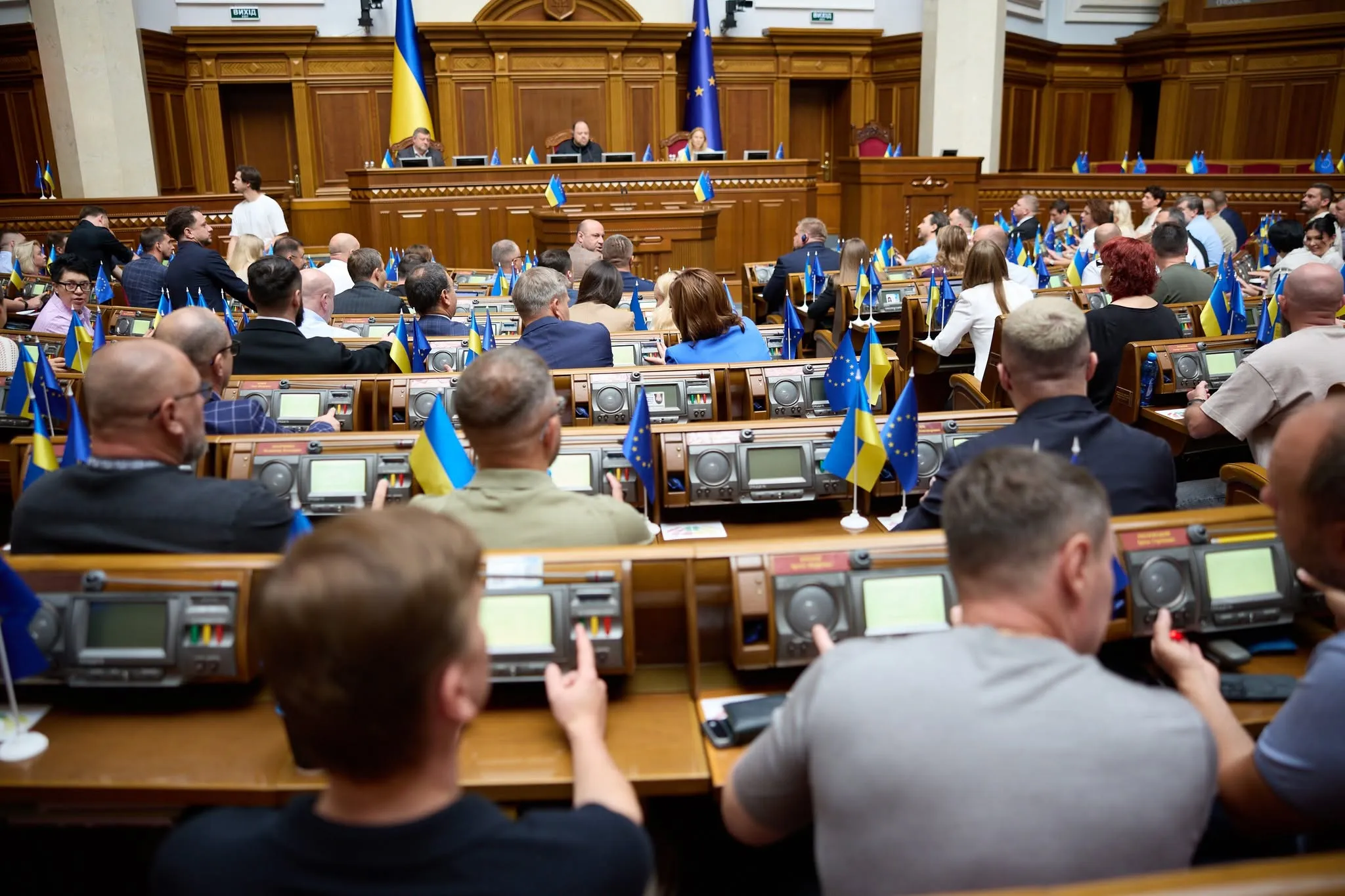
On October 15, the Verkhovna Rada passed a law imposing a value-added tax (VAT) on goods that Ukrainians order from abroad and receive in international packages. Parliament passed this bill only on its third attempt. A total of 273 members of parliament voted in favor of the decision.
This is one of the tax measures Ukraine has committed to implementing for its international partners in order to receive their funding. Specifically, this involves the third IMF tranche of approximately $700 million and a tranche of macro-financial assistance from the European Union totaling 3.7 billion euros. In addition, the government expects that the new regulations will generate approximately 10 billion hryvnia annually for the state budget.
Supporters of the reform believe it will help limit the use of tax breaks in smuggling schemes and create a level playing field for Ukrainian producers. Critics, however, warn that the additional costs will fall on Ukrainians, who have already become poorer during the war, and that difficulties in administering the tax could lead to delivery delays.
How much will prices rise for goods from AliExpress, Temu, and Amazon, and will the state budget receive the expected revenue? Find out in this UA.News article.
New Taxation of International Packages
The new rules will apply to the sale of goods valued at up to €150 that are shipped to Ukraine via international mail. The electronic platform through which the sale takes place is responsible for paying VAT. However, there are exceptions. Free shipments between individuals valued at up to €45, as well as certain goods for the energy and defense sectors, will remain VAT-exempt.
The new rules are expected to take effect no earlier than July 2027. Starting then, purchases on AliExpress, Temu, Amazon, and other foreign marketplaces will be subject to a 20% VAT rate. However, the extent to which prices will actually rise will depend on how sellers and platforms factor this tax into their pricing.
If a marketplace sells goods without VAT, the logistics operator will deliver such packages to the recipient but may collect the corresponding VAT amount and transfer the funds to the government.
“I believe this is an absolutely correct decision, because 80% of these packages were split into small batches so that dishonest dealers could avoid tax burdens. And that is unacceptable,” Prime Minister Serhiy Koretskyi noted two weeks before the law was passed.
He explained that preferential taxation of goods in parcels was harming Ukrainian businesses, particularly the light industry. Domestic manufacturers operate under Russian shelling, use expensive electricity and diesel generators, and pay taxes—all of which increase the cost of Ukrainian products.
In contrast, foreign goods, produced in peaceful conditions and imported tax-free, have a price advantage on the Ukrainian market. Thus, the government views the taxation of international parcels as one way to level the playing field for Ukrainian and foreign goods.

Ukrainians’
Reaction to Rising Prices
Danylo Getmantsev, Chair of the Verkhovna Rada Committee on Finance, Tax, and Customs Policy, introduced bills to impose VAT and customs duties on postal shipments to Ukraine as early as January 2025.
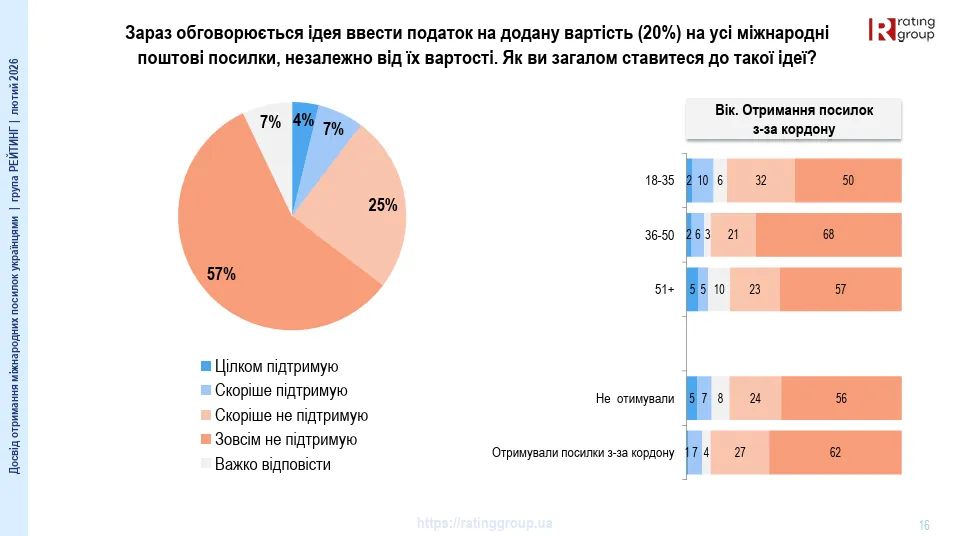
Following this, the Rating Group decided to find out what Ukrainians think about a possible tax increase on these services. The following findings emerged:
· The majority of respondents (82%) do not support the introduction of a 20% VAT on all international packages.
· About half of Ukrainians actively use domestic parcels, while one-third have received international parcels over the past year.
· Two-thirds of Ukrainians note the importance of international packages during the war.
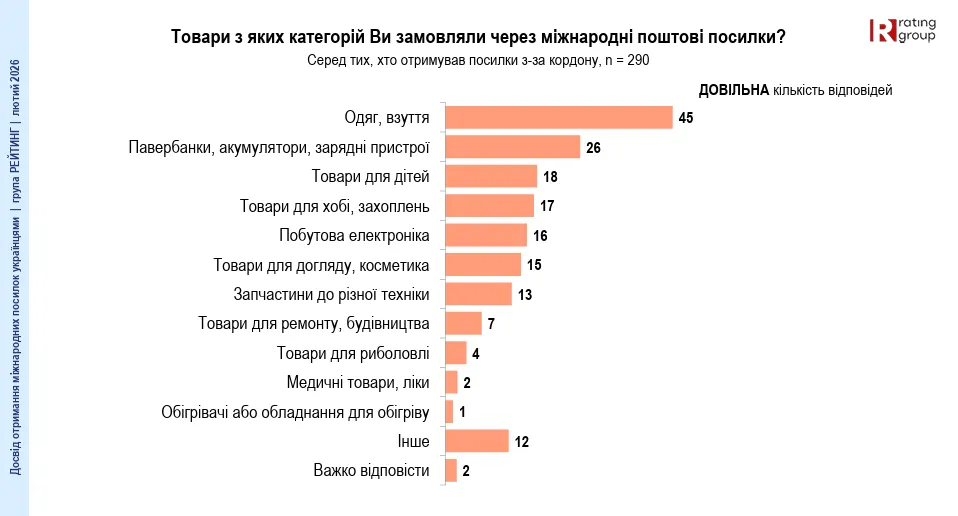
Among those who received goods from abroad, nearly one-third (29%) ordered items that were important for coping with the effects of the energy crisis.
Overall, the most popular items received via international mail are clothing and footwear (45%), as well as power banks, batteries, and chargers (26%).
Debate Over the Law’s
Effectiveness
The Center for Economic Research and Macroforecasting (CASE Ukraine) supports the new taxation of international packages. According to the center’s estimates, about 80% of such shipments consist of goods from China, and approximately 90% of the goods are cosmetics, accessories, clothing, and footwear. A significant portion of these products could be manufactured by Ukrainian companies.
At the same time, Chinese marketplaces threaten the survival of local manufacturers. According to CASE Ukraine’s findings, foreign manufacturers save approximately 20 billion hryvnias thanks to these tax exemptions.
CASE Ukraine expert Yefrem Lashchuk provided a detailed analysis of how tax exemptions for packages valued at up to 150 euros are exploited in shadow economy and smuggling schemes.
“A single individual, receiving just one postal shipment per day, can import goods exempt from any taxes totaling up to 4,500 euros per month (149 euros multiplied by 30 days). Moreover, if a large group of individuals is ‘organized’ (for example, 100 passports) to each receive three shipments per day, the value of goods that will ‘sneak’ into Ukraine’s customs territory each month will reach 1.34 million euros. “This is already a substantial commercial shipment on which no taxes need to be paid,” the expert explained.
Other Ukrainian economists argue that the law runs counter to the interests of Ukrainians. Anatoliy Amelin, executive director of economic programs at the Ukrainian Institute for the Future, explains what ordinary shoppers should expect:
“Last year, Ukrainians received 75.6 million packages from abroad, and 99% of them were VAT-free. Children’s items, power banks, spare parts—all of these will become more expensive. Get ready.
There’s a separate “loophole” for the military. The law promises to exempt defense goods from VAT, ‘including through the refund of VAT already paid.’ In other words, first a volunteer or a drone workshop pays 20% out of their own pocket or from a collection (!). Then they have to prove that the motor is a defense item. Then they wait. The government hasn’t yet approved the list of goods or the refund procedure. Who guarantees that the money will be refunded—and when? No one. How’s that for a trick?...
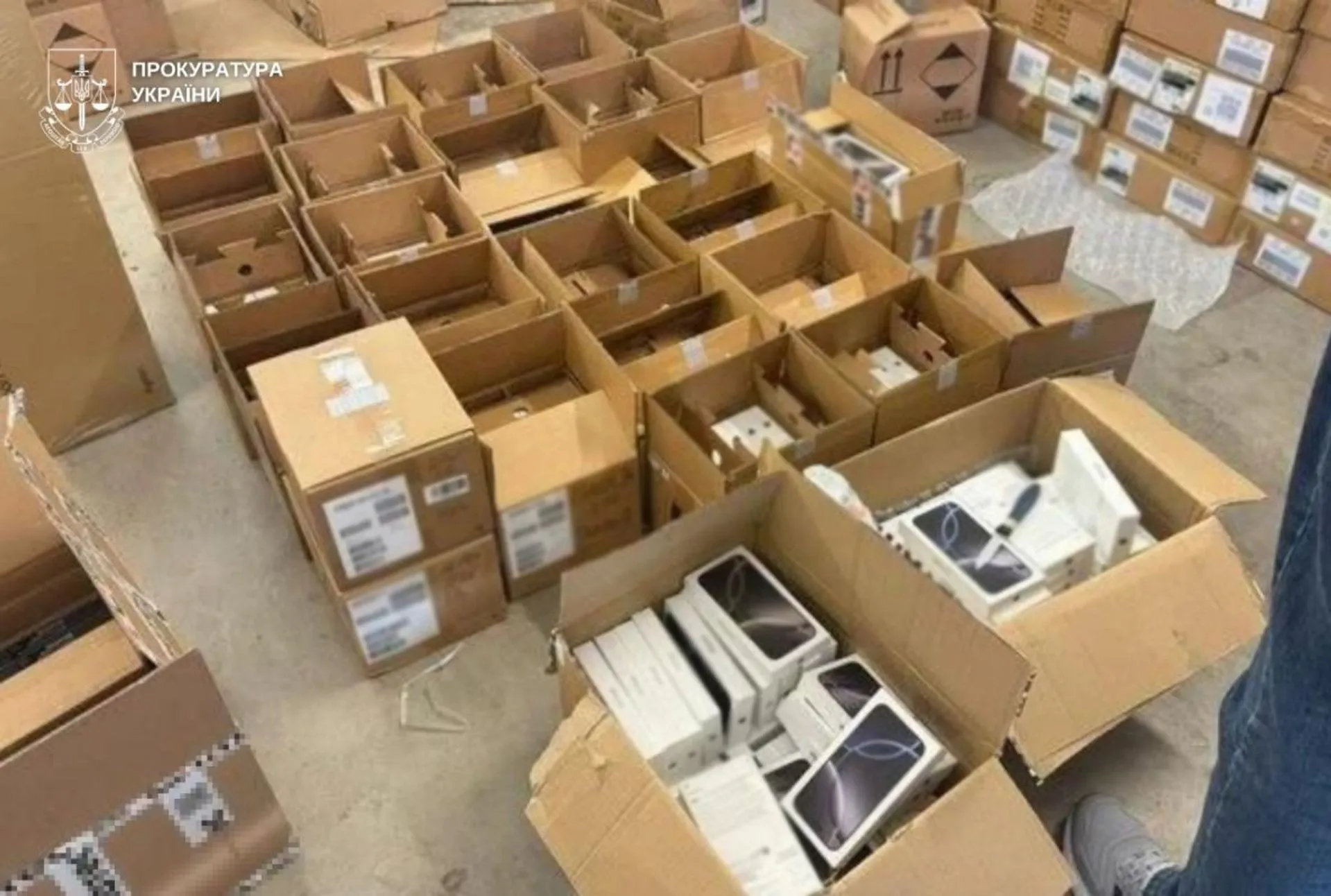
Next, the warehouses. Customs clearance doesn’t happen in a minute. Packages on which no tax was collected on the platform will sit in customs warehouses. Thousands of packages in the exact same locations. A perfect target, right? (!!!) Let me remind you: since the start of the full-scale war, over 400 “Nova Poshta” branches and terminals have been damaged or destroyed.”
Amelin also believes that the budget may not receive the promised approximately 10 billion hryvnias per year.
Amelin believes that the budget may not receive the expected approximately 10 billion hryvnias per year. The government isn’t taking into account that people will buy fewer goods once shipping costs rise. As an example, he cites the European Union, where Chinese online imports fell by half following a similar reform in 2021.
According to Amelin’s estimate, Ukrainians will pay about 22.6 billion hryvnia per year: in taxes, overpayments at stores, and by forgoing purchases. “Retailers will gain 2–3 billion in additional profit margins. What kind of fairness are we talking about?” the economist asks.
“Chat
18” and Smuggling Schemes
The goal is not so much to tax international packages as to make their delivery more difficult. This is the conclusion reached by investigative journalist Yevhen Plinsky. From his own sources, he learned that eighteen CEOs and owners of non-food retail businesses created a joint chat tentatively named “Chat 18,” where the topic of taxing parcels is discussed. It is in this chat group that they plan to promote the importance of introducing VAT on parcels and other strategic goals through the media.
“One of the key ideas, which seems downright cynical, is the de facto admission by members of ‘Chat 18’ that no one expects any significant tax revenue for the budget. The main goal is to create conditions that make the process of receiving and clearing Chinese parcels a complicated and lengthy one for Ukrainians, in order to offset the advantage of price over the convenience of purchasing,” Plinsky noted.
According to him, the retail sector clearly understands that once the regulation is implemented, there will be no agreement with Chinese platforms acting as tax agents. This is impossible to organize, and the Ministry of Finance acknowledges this, albeit not publicly for now.
“But the law will already be in effect. That is precisely why all tax administration will fall on the shoulders of customs and postal services, leading to a backlog of packages in warehouses with corresponding security implications, long lines for value verification, tax calculation, payment, and so on. I won’t go into details. Everyone understands perfectly well how this system works today. It will be the same, but on a much larger scale and on the verge of collapse,” the journalist suggests.
Under these conditions, Ukrainian consumers will have to come to the conclusion on their own that it’s easier to buy the same product on a Ukrainian marketplace at a slightly higher price than to wait for it to arrive from China. At the same time, the law is unlikely to reduce the share of the shadow economy or curb smuggling schemes.
“Schemes at the border in the light industry sector and tax schemes involving illegal tobacco alone are costing the budget 80 billion hryvnias. And these are economically sound and verified figures that more than cover the 70 billion hryvnia shortfall in actual revenue from the State Tax Service and the State Customs Service. But these figures and the scale of the growing shadow economy crisis, with the exception of a few members of parliament, have not prompted any action from parliament,” Plinsky states.




