
“They took photos of me unloading trucks every day”: Shabunin announced his discharge from the Armed Forces of Ukraine
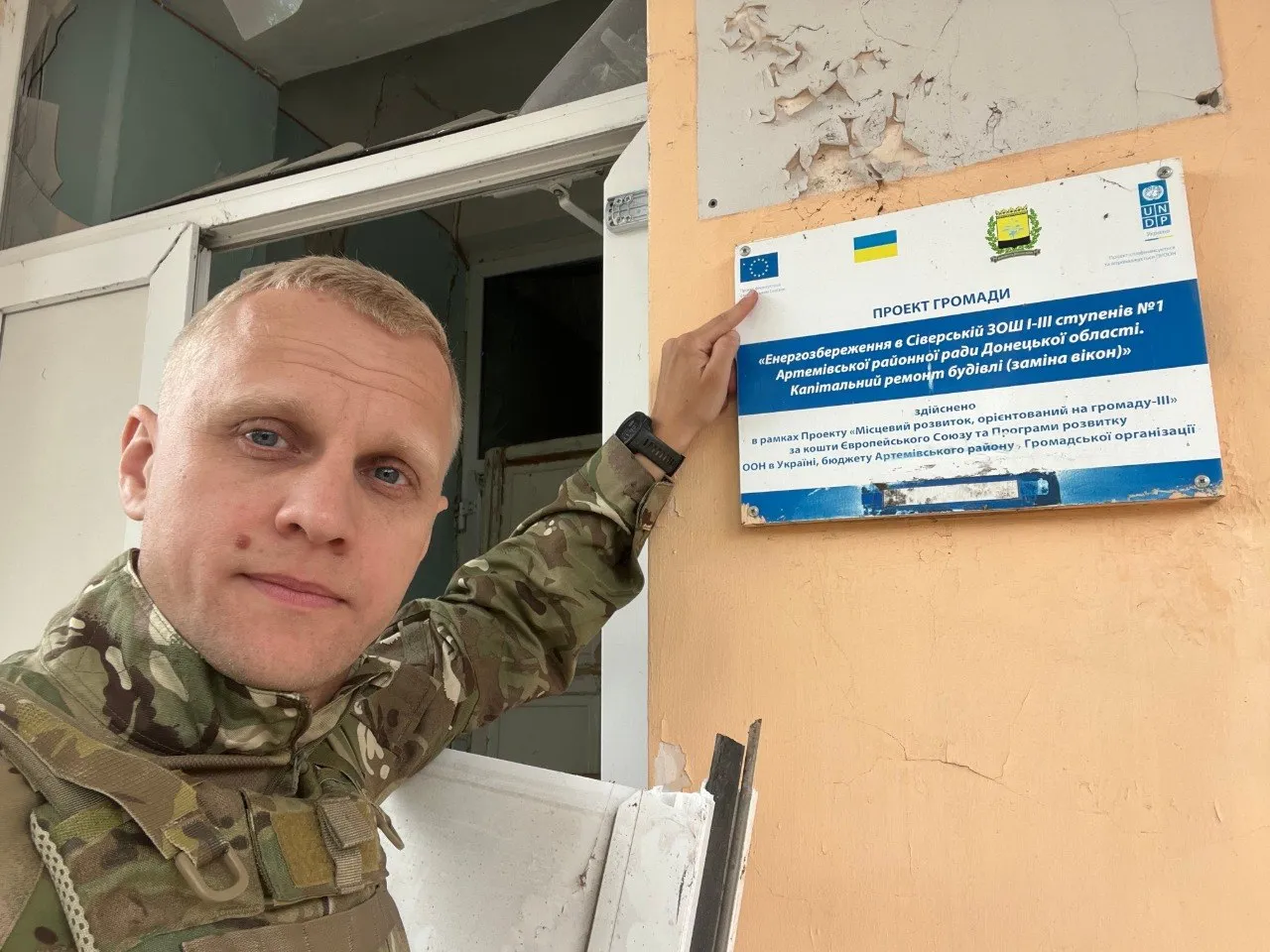
Vitaliy Shabunin, head of the Anti-Corruption Action Center, has officially resigned from the Armed Forces of Ukraine, where he served for over four years starting from the first day of the war. The demobilization order was signed a few days ago due to a serious medical condition—the activist has lost most of his vision, as Vitaliy personally announced on his Telegram channel.
Consequently, the country’s top military leadership and security forces have lost their primary target for daily surveillance, and the military hierarchy has lost its most famous cleaner of military debris.
According to Shabunin, the final phase of his voluntary service resembled a closed-door reality show for the Presidential Administration. As soon as he tried to deploy a drone air defense unit, the high command intervened: the Chief of the General Staff, by personal order, transferred him to another brigade for “important tasks” such as waste collection, while Defense Minister Rustem Umerov categorically blocked the signing of his officer’s contract.
According to Shabunin, his daily life in the army has turned into a circus: the special services and the brigade commander, who was under criminal investigation, photographed the activist unloading trucks with food every day (and sent reports to the Presidential Office), fabricated fake security incidents, barred him from attending court hearings, and even stole his cell phone to extract information. At the same time, the entire chain of command demonstratively ignored dozens of requests to be transferred to the actual front lines.
Feels like a hero
Shabunin is convinced that, despite the fact that the state “rewarded” the volunteer with a criminal case for evading service, he is leaving the Armed Forces of Ukraine with significant achievements. Over four years of service (half of which were spent in the Kharkiv region and the East), he not only rose to the rank of senior sergeant but also saved the key combat IT system DELTA from embezzlement by high-ranking officers, putting the deputy chief of the General Staff on trial.
Currently, the former serviceman is at home, where he plans to undergo vision treatment, spend time with his family, and fully resume his efforts to “crush” corruption schemes in procurement—but this time from the civilian office of the Anti-Corruption Action Center.
Chronology of scandals surrounding Vitaliy Shabunin
Over the years of his public activity, Vitaliy Shabunin has gradually transformed from an anti-corruption activist into one of the most controversial and toxic figures in the Ukrainian civil society sector. His critics have long argued that behind the fight against corruption lie political influence, double standards, and systematic pressure on opponents.
2016–2017: An “anti-corruption activist” with political influence
It was during this period that Shabunin began actively cultivating an image of himself as the chief “arbitrator of integrity” in Ukraine. Through the Anti-Corruption Action Center, he gained significant influence over personnel decisions within the anti-corruption hierarchy and established contacts with Western institutions.
Critics were already accusing him at the time of using the Anti-Corruption Action Center as a political tool—harshly targeting some officials while conspicuously ignoring others.
The scandal over the introduction of e-declarations for civil society activists only intensified the conflict. Shabunin called this “pressure,” while his opponents asked a simple question: why do people who have been monitoring officials for years not want transparency regarding their own incomes and donor funds?
2018: A Fight with a Journalist
One of the first serious blows to his reputation was the incident involving journalist Vsevolod Filimonenk. Near the military registration office, Shabunin struck the journalist, after which he was charged with causing bodily harm.
Despite attempts to explain the incident as a “provocation,” for many this story became a demonstration of double standards: a man who had for years demanded the rule of law for others found himself the subject of a criminal case.
2019–2021: Conflicts with the authorities and the struggle for influence
After Zelenskyy’s team came to power, Shabunin effectively entered a state of constant political war with the government. He regularly intervened in discussions regarding appointments at NABU, the SAPO, and the judicial system.
Critics called this an attempt to maintain control over the anti-corruption infrastructure through media and international pressure. Shabunin himself began to be perceived less and less as a civic activist and more as an irresponsible political player.
2022: Mobilization and Strange Service
After the start of full-scale war, Shabunin announced his mobilization into the Armed Forces of Ukraine. However, questions soon began to arise about exactly where he was serving and what he was doing.
Accusations grew increasingly common in the public sphere that Shabunin’s “front line” existed primarily on Facebook, while his actual service was accompanied by endless business trips, public campaigns, and political activism.
2023–2024: Criminal Proceedings and the Car Scandal
It was then that not only political but also criminal problems began to pile up around Shabunin. The State Bureau of Investigation (SBI) opened proceedings regarding possible evasion of military service, forgery of documents, and misuse of a humanitarian vehicle.
A separate scandal was sparked by the story of an SUV imported for the army’s needs. Investigators looked into allegations that it was used for personal purposes. For many, this became a symbolic story: a man who had spent years lecturing society on integrity found himself at the center of a scandal involving humanitarian property.
February 2025: Conflict Over Commanders
In 2025, the situation escalated even further. After a formal notice of suspicion was served to one of his commanders, Shabunin claimed “political retaliation” by the authorities.
However, critics noted that almost any allegations against him are automatically declared an “attack on the anti-corruption sector,” even when they concern very specific issues regarding service, documents, or the use of resources.
July 2025: DBR Indictment
On July 11, 2025, the State Bureau of Investigation (SBI) officially notified Shabunin of the charges.
The investigation stated that the activist:
- may have evaded full-time service,
- illegally received financial compensation,
- used a vehicle imported for the Armed Forces of Ukraine without legal grounds.
The story became one of the biggest blows to the reputation of the entire network of anti-corruption activists, as it was no longer about political conflicts but about specific allegations by law enforcement.
Shabunin himself, as usual, claimed there was “pressure from Bankova” and persecution for criticizing the government. However, even some of his former supporters noted that over the years, the activist had grown accustomed to operating under a regime of public immunity, where any criticism is automatically dismissed as a conspiracy.
What we have now
Today, an image has formed around Shabunin of a man who has built enormous political and media influence without any electoral accountability.
For some, he remains a symbol of the fight against corruption. For others, he is an example of how anti-corruption activism in Ukraine is turning into a form of political power with its own privileges, immunity, and double standards.


