
Holiday on September 15, 2026 — Day of the Armed Forces of Ukraine’s CBRN Defense Specialists: What Is This Holiday?
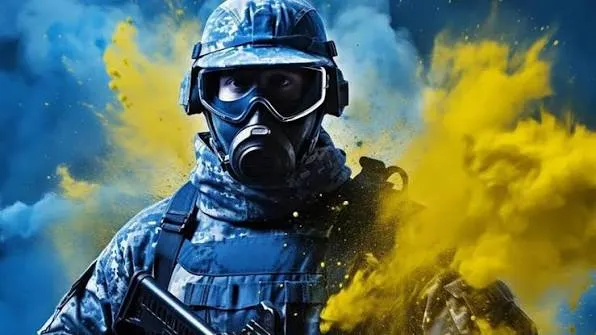
On September 15, Ukraine celebrates the Day of Specialists in Radiological, Chemical, and Biological Defense of the Armed Forces of Ukraine. This is a professional holiday for military personnel who detect and assess radiation, chemical, and biological threats, help protect military personnel and civilians, and respond to hazardous situations. The new date for this professional holiday was established in 2022 by an order of the Commander-in-Chief of the Armed Forces of Ukraine.
The Day of Specialists in Radiological, Chemical, and Biological Defense of the Armed Forces of Ukraine is celebrated annually on September 15. In 2026, the holiday falls on Tuesday, September 15. This is a professional holiday for service members responsible for radiological, chemical, and biological defense in the Ukrainian Armed Forces. The new date was officially established in 2022. In accordance with an order from the Commander-in-Chief of the Armed Forces of Ukraine, the Day of Radiation, Chemical, and Biological Defense Specialists has been observed annually on September 15 in the Ukrainian military ever since. Prior to this, the professional holiday for RCDD specialists fell on a different date.
September 15 was not chosen by chance. It was on September 15, 1992, that the Ukrainian Chemical Forces Directorate was officially formed, reporting to the Chief of the Main Staff and, later, the General Staff. Two years later, the Ukrainian Chemical Forces were given a new name and a significantly broader range of tasks. Therefore, the current date of the professional holiday is linked to an important event in the history of the Ukrainian military during the early years of independence. It commemorates not only the service itself but also the creation of the Ukrainian Armed Forces’ own NBC defense system.
How the CBRN Defense Forces Came to Be in Ukraine
The history of this branch of the Ukrainian military began at the very start of independence. After the collapse of the Soviet Union, Ukraine established its own command structures and armed forces system. During this period, the need arose to organize the work of units responsible for protection against radiological, chemical, and biological threats separately. On September 15, 1992, the Chemical Forces Directorate of Ukraine was established. It became one of the first components of the Ukrainian Army’s future radiological, chemical, and biological (RCB) defense system. Initially, these forces relied heavily on the experience and structures of the chemical forces that had existed during the Soviet era.
An important milestone came on February 14, 1994. On that day, by order of the Ministry of Defense of Ukraine, the chemical forces were renamed the Radiation, Chemical, and Biological Defense Forces. The name reflected a much broader range of tasks. It encompassed not only chemical threats but also radiation and biological safety. February 14 later became the date of the professional holiday. In 2008, the Ministry of Defense established Radiation, Chemical, and Biological Defense Forces Day on that date. However, in 2012, the relevant order was deemed to have expired.
In 2022, the professional holiday was effectively given a new date—September 15. This date marks a return to the historic event of 1992, when the Chemical Troops Directorate of Ukraine was established. Thus, the current Day of Radiological, Chemical, and Biological Defense Specialists is directly linked to the formation of Ukraine’s military structure following the declaration of independence.
What CBRN Protection Specialists Do
The work of these military personnel is much broader than the title might suggest. They monitor the radiation, chemical, and biological environment, detect hazardous substances, and assess the potential consequences of contamination. Their task is to determine the nature of the threat as quickly as possible and assist the command in making decisions regarding the protection of personnel.
CBRN protection specialists can also perform specialized decontamination procedures. This includes, in particular, decontamination, degassing, and disinfection of equipment, gear, and other objects. Simply put, if military equipment or property has been contaminated with hazardous substances, CBRN defense units help make them safer for further use.

Another area of focus is aerosol screening. Using special equipment, military personnel can create smoke screens that make it harder for the enemy to observe and help conceal the movement of units and equipment. This is especially important during combat operations, when concealment can directly affect the safety of military personnel.
CBRN units also participate in responding to accidents and other hazardous situations. The Airborne Assault Forces note that the tasks of such units include warning of radiological, biological, and chemical threats; assessing potential nuclear strikes; aerosol camouflage, and mitigating the consequences of accidents at chemical plants. A separate area of focus involves flamethrower systems. Modern NBC units can carry out not only defensive but also combat missions. The Armed Forces of Ukraine note that flamethrower units employ appropriate weaponry during combat operations and use aerosol screening to provide cover for troops and facilities.
Where do CBRN protection specialists serve?
CBRN protection specialists do not serve in a single, separate unit. Relevant services and units exist across various branches and structures of the Armed Forces of Ukraine. Some units may have specialized CBRN protection units, while others have corresponding support services. The Army has separate CBRN defense units. In the Air Force, relevant services are found within military units, and since the declaration of martial law, CBRN defense units have also been operational.
Such specialists are also needed in units that carry out missions under various conditions. After all, a radiological or chemical threat can arise regardless of which branch of the military is operating in a particular area. Therefore, radiological, chemical, and biological protection is part of the military’s overall security system. In modern warfare, this work has become even more important. Ukraine has nuclear facilities, large industrial enterprises, chemical plants, and other infrastructure, damage to which could create additional risks. That is precisely why the military must be prepared to act not only in the event of the direct use of hazardous substances but also during man-made accidents.
Why This Work Is Especially Important During War
Full-scale war has significantly increased the number of situations in which CBRN specialists may be needed. Damage to industrial facilities, warehouses, energy facilities, or other hazardous sites can pose risks to both military personnel and civilians. A separate concern is the threat of the use of weapons of mass destruction. The Airborne Assault Forces note that Russian strikes on chemical plants and the danger to nuclear facilities pose additional challenges for CBRN defense units. Therefore, they must always be prepared for various scenarios.
At the same time, NBC protection is not limited to responding only after an emergency has already occurred. An important part of the service involves constant monitoring of the situation. This allows for the timely detection of changes and the issuance of warnings about potential dangers. In 2024, one of the military brigades noted that CBRN defense units continuously monitor the radiological, chemical, and biological situation and must be ready to prevent dangerous consequences. As a result, the work of these military personnel often goes unnoticed by the general public. If specialists detect a threat in time and organize defenses properly, people may not even realize how dangerous the situation was.
What Tasks Do CBRN Defense Troops Perform?
Their primary areas of focus include radiation, chemical, and biological reconnaissance. Military personnel determine whether hazardous contamination is present, exactly where it has spread, and how serious the threat is. This information is then relayed to command for further decision-making. Another important area is decontamination. If vehicles, equipment, or other materials have been contaminated, they must be decontaminated. Special agents and equipment are used for this purpose, and military personnel must be thoroughly familiar with the protocols for handling potentially hazardous substances.

CBRN defense also focuses on protecting personnel. Service members are trained to operate in conditions of radiological, chemical, or biological hazards, to use personal protective equipment, and to follow the necessary procedures. People’s lives may depend on the speed and accuracy of these actions. Camouflage is a separate challenge. Aerosol screens can conceal military positions, equipment, and troop movements from enemy observation. In other words, NBC defense specialists simultaneously carry out tasks related to protection, reconnaissance, specialized treatment, and combat support.
What Has Changed Since the Start of Full-Scale War
Since February 24, 2022, the importance of CBRN protection has become even more apparent. Military personnel are forced to operate under the constant threat of missile and drone strikes, fires, the destruction of industrial facilities, and other hazardous situations. Under such conditions, even a conventional attack can pose additional radiological, chemical, or biological risks. The command of the Armed Forces of Ukraine emphasizes that NBC defense units are making a vital contribution to the fight against Russian aggression. In his message congratulating them on their professional day on September 15, 2024, Commander-in-Chief of the Armed Forces of Ukraine Oleksandr Syrskyi specifically highlighted the contribution of these troops to the defense and combat operations of the Armed Forces.
Modern units also draw on experience gained directly during the war. For military personnel, this means constant training and skill refinement. After all, threats evolve, and the methods for detecting and neutralizing them must evolve alongside them. NBC protection is also essential for supporting offensive operations. Aerosol smoke screens provide cover for troops and equipment, and special units can carry out combat missions using flamethrower systems. Therefore, referring to these soldiers merely as “chemical defenders” would be too narrow a definition.
How CBRN Specialists’ Day Is Observed
This is first and foremost a professional day for service members, not a nationwide holiday with large public celebrations. On this day, military units honor these specialists, reflect on the history of their service, and recognize their contribution to the defense of Ukraine. Commanders may present military certificates, awards, and decorations to the troops, as well as express gratitude for their service. Some units publish messages of congratulations and highlight the work of their service members. For example, in 2024, on the occasion of this professional day, the Commander-in-Chief of the Armed Forces of Ukraine issued a special message to CBRN defense specialists.
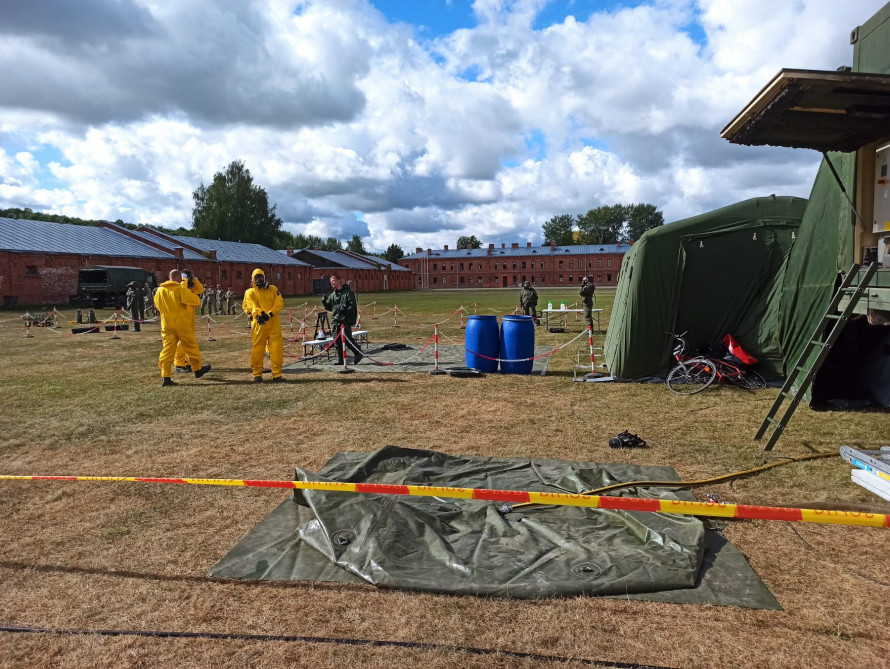
Educational institutions and military lyceums also hold themed events. For instance, the Ivan Bohun Kyiv Military Lyceum organized an online event dedicated to CBRN Specialists’ Day. During such events, cadets and lyceum students learn about the troops’ missions and the importance of this specialty. At the same time, the main tradition of this day is not celebration for the sake of the occasion itself, but respect for the people who perform complex and dangerous work. CBRN defense personnel often work in environments where even the slightest mistake can have serious consequences. Therefore, this professional day is an opportunity to thank them once again for their service.
Interesting Facts About CBRN Defense
The first fact is that the current date of the holiday is linked to the year 1992. It was on September 15, 1992, that the Chemical Troops Directorate was formed in Ukraine. Thirty years later, this date became the basis for a new professional holiday.
Second fact—the troops used to have a different name. In 1994, the Chemical Troops were renamed the Radiation, Chemical, and Biological Defense Forces. This reflected an expansion of their mission, as they were no longer dealing solely with chemical threats.
The third fact is that the professional holiday used to be celebrated on February 14. This date was specifically linked to the Ministry of Defense’s order of February 14, 1994, renaming the chemical troops. In 2008, the holiday was officially set for February 14, but in 2012, the corresponding order was revoked.
Fourth fact—CBRN defense is not limited to individual units. The relevant services and units exist within various branches of the Armed Forces of Ukraine. This is necessary because a radiological, chemical, or biological threat can arise in virtually any combat zone.
Fifth fact—these military personnel are capable of performing tasks beyond just protection. Their duties include aerosol camouflage, and certain units utilize flamethrower systems. In other words, NBC defense combines reconnaissance, protection, specialized decontamination, camouflage, and specific combat missions.
Sixth fact—CBRN specialists are needed even without the use of weapons of mass destruction. They can respond to accidents at chemical plants, man-made disasters, and other emergencies. Therefore, their work is not limited to combat operations alone.
Why They Are Called Specialists of the Invisible Front
The work of CBRN specialists is as difficult to observe as that of infantry or tank units. Their primary mission is often precisely to prevent a threat from turning into a catastrophe. To do this, military personnel constantly monitor the situation, conduct reconnaissance, analyze data, and prepare for various scenarios. This is a specialty that requires not only military endurance but also extensive specialized knowledge. Specialists must be well-versed in radiological, chemical, and biological risks, the operation of specialized equipment, and safety protocols. All of this must be applied quickly, often in combat conditions.
In modern warfare, the importance of this work is only growing. The threats may be invisible, but their consequences are very serious. That is why trained CBRN defense specialists remain a vital part of the Ukrainian Armed Forces. On September 15, 2026, Ukraine will celebrate the Day of Specialists of the Radiation, Chemical, and Biological Defense Forces of the Ukrainian Armed Forces. This date is linked to the history of the establishment of the Ukrainian Chemical Forces Directorate in 1992, and this professional holiday in its current format was officially established in 2022. On this day, we honor the military personnel who deal with radiological, chemical, and biological threats, conduct reconnaissance and decontamination operations, ensure the protection of personnel, and carry out other important tasks for the Defense Forces.


