
Holiday on September 30, 2026 — All-Ukrainian Library Day

On September 30, 2026, Ukraine will celebrate National Library Day. The holiday is dedicated not only to books, but also to the people who preserve knowledge, help readers find the information they need, and transform libraries into modern cultural and educational spaces. Library Day was officially established back in 1998 by presidential decree.
In 2026, the Ukrainian Library Association describes the library as a place of strength and a space of freedom. Amid the war, Ukrainian libraries often take on far more roles than simply lending books: they become places for community gatherings, learning, assistance, and support.
All-Ukrainian Library Day is celebrated annually on September 30. In 2026, it will fall on a Wednesday. This is a professional holiday for library staff and, at the same time, an opportunity to remind everyone of the role libraries play in the life of the country. This goes beyond just paper books. Modern libraries work with digital resources and host training sessions, exhibitions, lectures, presentations, and meetings. They also help people access information and use modern technologies.

Today, libraries are looking less and less like quiet rooms filled only with bookshelves. In many cities, they are open spaces where you can not only borrow a book but also work, study, socialize, attend an event, or use digital services. That’s why Library Day isn’t just for librarians. It’s also a celebration for millions of readers, students, schoolchildren, researchers, and everyone who uses books and information resources.
How the Holiday Came to Be
All-Ukrainian Library Day was established on May 14, 1998, by Presidential Decree No. 471/98. The decree stipulated that the holiday would be celebrated annually on September 30. The text of the decree noted that the decision was made in recognition of libraries’ significant contribution to the development of Ukrainian education, science, and culture. Particular emphasis was placed on the need to strengthen the role of libraries in society.

In other words, the holiday was not created merely to congratulate library staff. Its purpose is to draw attention to the library profession itself and to the importance of books and reading. The decree also called for events designed to highlight the role of books in Ukraine’s social and cultural life. Special mention was made of the need to develop the library sector. Since then, September 30 has become an annual celebration for the entire Ukrainian library community.
The history of libraries in Ukraine goes back much further
The holiday itself emerged at the end of the 20th century, but the history of Ukrainian libraries began much earlier. One of the most famous ancient book collections is the library at St. Sophia Cathedral in Kyiv, which is associated with Prince Yaroslav the Wise. It is mentioned in a chronicle entry from 1037 in *The Tale of Bygone Years*. The source notes that Yaroslav loved books, collected them, and donated them to St. Sophia Cathedral.

The Yaroslav the Wise National Library of Ukraine refers to this collection as the first known library of Kievan Rus’. It was not merely a place for storing books. An educational and literary community formed around St. Sophia Cathedral, where scribes and translators worked. In the centuries that followed, libraries developed at monasteries, educational institutions, churches, universities, and in private collections. The Ostroh Academy and the Kyiv-Mohyla Academy, in particular, played a major role in Ukraine’s book culture. Libraries became places where books were not merely stored but also used to disseminate knowledge. Therefore, the history of libraries can in fact be read as part of the history of Ukrainian education and culture.
What Was the Role of Libraries in the Past?
In the past, books were far less accessible than they are today. They had to be copied by hand, and creating a single copy could take a very long time. Because of this, libraries were true centers of knowledge. It was there that manuscripts, rare texts, chronicles, theological works, and books on various subjects were preserved.

Ancient libraries employed people who transcribed texts, translated them into other languages, and created artistic page designs. In Kyiv during the reign of Yaroslav the Wise, translated literature and book miniatures flourished. With the advent of printing, the situation changed. Books began to be produced more quickly, and their numbers grew. Libraries gradually transformed into educational centers that were more accessible to the public. Today, books are no longer a rarity, but libraries retain another important function—they help people navigate the vast amount of information available.
What Is a Modern Library?
A modern library is much more than just bookshelves. Libraries host new book presentations, author meet-and-greets, lectures, exhibitions, discussions, creative workshops, and educational events. Some libraries have computer labs and provide access to electronic databases and online resources.

Today, a librarian does more than just check out books using a library card. They can help you find the right source, explain how to use the electronic catalog, navigate the information, or select a book based on your interests. For schoolchildren and college students, the library often becomes a place for studying. For researchers, it’s a source of old editions, archival materials, and scholarly publications. And for the community, the library can simply be a place to relax among people, have a conversation, gain new knowledge, or spend time with a child.
Libraries During the War
In recent years, the role of libraries in Ukraine has expanded even further. Due to the full-scale war, many libraries have suffered from shelling, been damaged, or destroyed. Some libraries have had to operate under extremely difficult conditions. At the same time, libraries have not ceased their operations. In some communities, they have become volunteer centers, support spaces for internally displaced people, and venues for educational and cultural events.

Libraries also help Ukrainians abroad stay connected to their culture and language. Ukrainian books are sent to communities abroad, and libraries participate in cultural initiatives. The National Library of Ukraine and other professional organizations point out that during the war, libraries have also become places of remembrance. They preserve books, documents, and materials that help document events and ensure that cultural heritage is not lost. That is why, for many communities today, a library is not just a cultural institution, but a place that helps them stay connected.
Interesting Facts About Ukrainian Libraries
One of the oldest known Ukrainian libraries is associated with St. Sophia Cathedral in Kyiv. It was first mentioned in 1037, meaning that the history of the Ukrainian library tradition spans nearly a thousand years.
The V. I. Vernadsky National Library of Ukraine has one of the largest library collections in the country. According to scientific and educational sources, its collection comprises approximately 15 million items. These include not only books but also manuscripts, early printed books, journals, newspapers, maps, sheet music, and other materials.
Another interesting point is that libraries have long since moved beyond working exclusively with paper. Modern collections may include electronic publications, documents on various media, and digital materials.
According to data from the State Scientific and Technical Library of Ukraine, cited in 2024, there were about 40,000 libraries in Ukraine, employing over 52,000 people. More than 17 million readers used library services.
Specialized libraries play a distinct role. There are scientific, medical, children’s, university, school, and other libraries. Therefore, a library today can take many forms—ranging from a small community space to a large research center.
How All-Ukrainian Library Day Is Celebrated
There is no single mandatory plan for this day. Each library can decide for itself how to celebrate its readers and staff and what events to hold. Typically, book exhibitions, themed displays, presentations, author meet-and-greets, lectures, and creative events are organized for the occasion. Libraries may also hold open houses, offer guided tours, and introduce guests to rare editions.
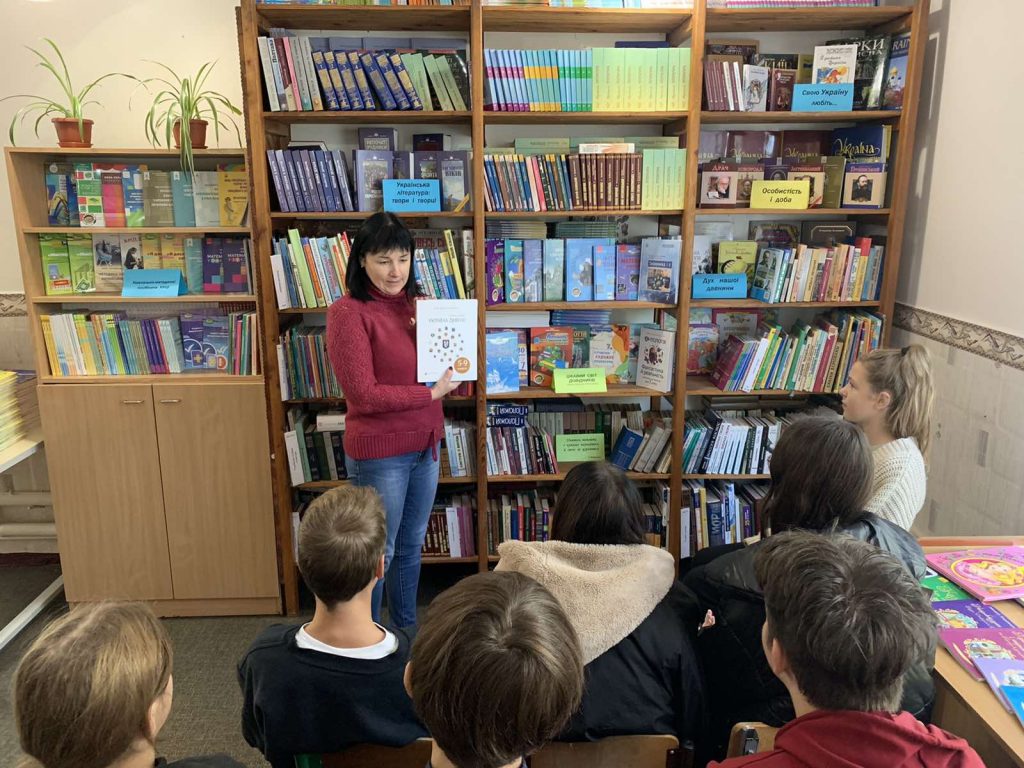
In professional circles, conferences and training events are held. For example, the State Scientific and Technical Library of Ukraine held a webinar on modern approaches to library work in honor of Library Day. The Ukrainian Library Association also prepares special materials for the holiday every year. In 2026, the association unveiled a themed poster with the slogan “The Library—A Place of Strength and a Space for Our Freedom!” and invited libraries to join the “Library Event of the Year” campaign. For readers, the easiest way to celebrate this day is simply to visit a library. You can borrow a new book, revisit a long-forgotten read, sign up for a library card, or support your local library.
Why Libraries Are Still Necessary
Despite smartphones, e-books, and search engines, libraries haven’t disappeared. On the contrary, they are gradually evolving along with society. The internet provides a vast amount of information, but not all of it is high-quality or reliable. A library gives people the opportunity to consult trusted sources, get help from a specialist, and find the information they need without endless searching.
Furthermore, not everyone has equal access to books, technology, or educational resources. Libraries help make knowledge more accessible. They are also places where people can meet in person, rather than just on social media. That is why the modern library is gradually becoming not just a place for books, but a space for education, culture, and social interaction.
How to Thank a Librarian
On September 30, you can simply say “thank you” to a librarian for their work. Even better—stop by your local library, borrow a book, or tell your friends about an interesting event. For those who want to give a thoughtful gift, a new book for the library’s collection, a bookmark, office supplies, or even help organizing an event would be perfect. But the most important thing is to show that people need the library’s work.

National Library Day is an opportunity to remember that behind every book are people who preserve it, find it, catalog it, recommend it, and help others read it. And although libraries are changing along with technology, their primary role remains the same—to preserve knowledge and provide people with access to it.




