
Holiday on October 5, 2926 — Memorial Day of Kharitina: The Story of the Martyr and Traditions
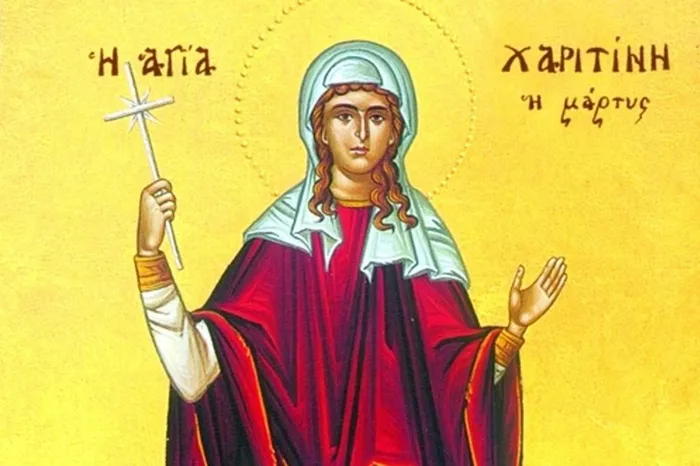
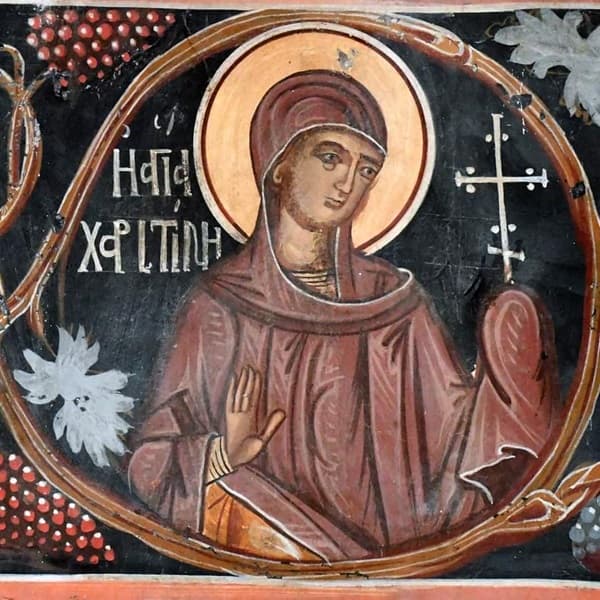
On October 5, 2026, Orthodox Christians commemorate the martyr Charitina of Amisus, who lived in the early 4th century and died for her faith. According to the OCU’s church calendar, this is the day of her commemoration, and October 18 corresponds to this date on the Julian calendar. The saint’s name is linked not only to church history: in folk tradition, this day was called “Charitina’s Day” and was considered a special time for needlework, spinning, and weaving.
According to church tradition, Saint Kharitina lived in the city of Amis in Pontus, on the Black Sea coast. Few precise historical details about her life have survived, so the main source of the story about the saint is her hagiography. It states that Charitina was orphaned at an early age. A wealthy and devout Christian named Claudius took the girl in and raised her as his own daughter.

When Charitina grew up, she decided to devote her life to the Christian faith. According to tradition, she prayed fervently, studied the Holy Scriptures, and lived a secluded life. Claudius supported her choice and even arranged a separate dwelling for her, where she could pray and engage in spiritual pursuits. Charitina did not limit herself to personal prayer—she interacted with people, mentored Christians, and shared her faith with those who did not profess it. According to her hagiography, it was precisely this that drew the attention of pagans to her. Charitina lived during a time of persecution of Christians in the Roman Empire. Traditionally, her martyrdom is associated with the reign of Emperor Diocletian, when the persecution of Christians was particularly brutal. Church tradition dates Charitina’s death to approximately the year 304.
How Charitina Suffered a Martyr’s Death
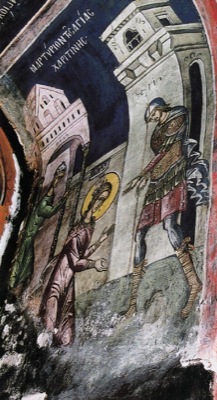
According to her hagiography, Charitina was arrested for her Christian faith and brought to trial. She was demanded to renounce Christ, but the young woman refused. Afterward, she was subjected to brutal torture in an attempt to force her to renounce her faith. The descriptions of these trials vary in detail across different accounts, but the main part of the story remains the same: Charitina did not renounce her beliefs. Church tradition includes an episode in which the martyr was thrown into the sea. Despite this, she survived and eventually returned to shore. This moment in her hagiography holds special symbolic significance. It is associated with spiritual purification and baptism, although this is specifically part of the church tradition and not an established historical fact.

After that, the persecution continued. According to her hagiography, her tormentors wanted to subject Charitina to further humiliation and force her to renounce the Christian faith. The saint turned to God in prayer. According to church tradition, she died while praying, before they could subject her to further violence. Thus, according to the Church’s belief, Charitina received the martyr’s crown. After her death, according to legend, her body was once again thrown into the sea. However, the waves carried her body ashore. Claudius found Charitina and buried her according to Christian rites. That is why, in church tradition, Claudius is remembered as a man who not only saved an orphan in her childhood but also remained by her side until the very end.
When Is Charitina’s Day Celebrated in 2026?
In 2026, according to the calendar of the Orthodox Church of Ukraine, the day of remembrance for the martyr Kharitina falls on Monday, October 5. This date is explicitly stated in the OCU’s official liturgical guidelines for 2026. It also states that on this day, the Venerable Damian, Jeremiah, and Matthew of the Kiev-Pechersk Lavra, the Holy Martyr Dionysius of Alexandria, the Martyr Mamelkhva of Persia, and other saints are commemorated.
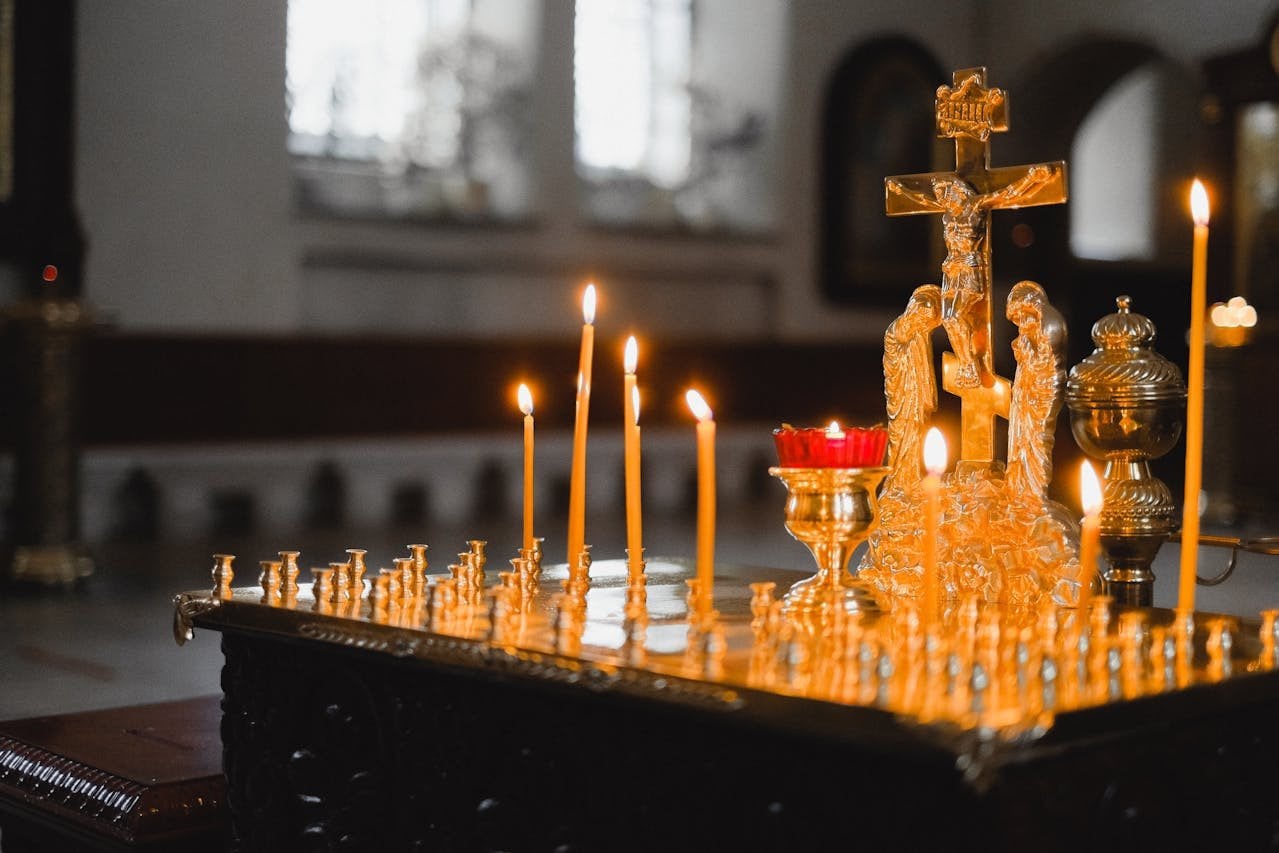
October 18 is the same church date according to the Julian calendar, often referred to as the “old style.” This is why many old sources and folk materials list the date as “October 5 (18).” For the modern Orthodox calendar of the OCU, the primary date is October 5. In the OCU’s liturgical guidelines, the service for the martyr Charitina has separate troparia and kondakia, and her memory is commemorated during the divine services on this day. At the same time, October 5 is not one of the Twelve Great Feasts or major feasts of the church year. Therefore, for the faithful, it is first and foremost a day of prayer and remembrance of the saint’s martyrdom.
Why This Day Was Called “Kharitina Days”
In folk tradition, the day commemorating the saint acquired its own names. In particular, October 18 according to the old calendar was called “Kharitina’s Day”—referring to the first looms—and Kharitina herself was considered the patroness of needlework. These names arose because of the seasonal work that took place around this time. After the main fieldwork was completed, people devoted more attention to household chores, clothing, and preparing for the cold weather.
This period was especially important for women who spun and wove. They would set up their looms, gather their yarn, and begin working on their cloth. They wove with flax, wool, and other natural fibers. The work could be time-consuming, so they often chatted, sang songs, and spent time together while working. These activities were more than just household chores. In a traditional village, the skills of spinning, weaving, sewing, and embroidering were of great practical importance. The family’s clothing for the cold season depended on these skills. A woman’s mastery of needlework was also considered an important part of her preparation for family life.
Traditions and Handicrafts
Spinning and weaving were among Kharityna’s main traditions. Women would sit down to work, prepare their yarn, and begin creating their first pieces of fabric. Girls were also taught to sew, embroider, and mend clothes. In some regions, these evening gatherings turned into a sort of workshop where girls worked together while socializing.

There was a belief that the first thread of a new piece of fabric could protect a child from illness and the evil eye. It could be tied around the wrist as a kind of amulet. Today, such customs should be viewed precisely as part of the folk culture and beliefs of the past, rather than as a church rule. The Orthodox tradition of the day itself is primarily associated with the commemoration of the martyr Kharitina and prayer.

Men also engaged in seasonal work during this period. According to ethnographic accounts, on Kharitina’s Day, people would begin making felt boots and preparing other items for winter. Their work was often accompanied by songs and evening gatherings. Thus, the rhythm of life gradually shifted: after finishing fieldwork, people turned to tasks that could be done at home.
Folk Beliefs and Omens
A number of folk omens were also associated with Kharityna. For example, people paid attention to the weather, the wind, and changes in nature, trying to predict what the winter would be like based on these signs. Like other calendar omens, these observations are part of folk tradition and are not church rules or scientific forecasts. One of the beliefs concerned the repayment of debts. It was believed that a person should settle their debts on this day to avoid financial difficulties in the future. This belief is mentioned in modern ethnographic and popular materials about Kharityna Day.

Another interesting custom was associated with sledding down hills. According to an old belief, the length of the distance a person covered while sledding was supposed to symbolically indicate how well the flax would grow. Such rituals were part of the ancient folk calendar, where farm work was often combined with beliefs about the future harvest.
What Do People Pray to Saint Kharitina For?
On the day commemorating the martyr Kharitina, believers can come to church to pray and remember her heroic life. In their prayers to the saint, they ask for strength in their faith, good health, peace in the family, and the well-being of their loved ones. In folk tradition, Charitina was also associated with women’s work, needlework, and domestic well-being.
The main significance of this day in the Christian tradition lies not in rituals or superstitions. It is an opportunity to remember a person who, according to church tradition, remained faithful to her faith even during times of persecution. That is why the martyr Kharitina is honored as an example of steadfastness and devotion to her convictions.
How Charitina Day Is Observed Today
Today, this day is primarily a religious observance. Believers can attend church services, pray for themselves and their loved ones, light a candle, and remember the martyr Charitina. In churches, her memory is observed according to the liturgical calendar. The OCU, in its guidelines for October 5, 2026, provides specific liturgical texts in honor of the martyr.

Folk traditions associated with weaving and spinning have largely become part of cultural heritage today. They can be seen at ethnographic events, fairs, workshops on traditional crafts, and museum events. For modern people, Kharitina’s feast day can serve as an occasion to recall ancient Ukrainian crafts, which were once an integral part of everyday life. At the same time, one should not confuse church traditions with folk superstitions. The Church honors the holy martyr Kharitina, her faith, and her heroic deeds. Customs such as beginning to weave, wearing the first thread, or predicting the future based on the weather, however, belong to folk culture.
What You Should Know About October 5
The day commemorating the martyr Charitina has ancient origins and is linked to the Christian tradition of honoring holy martyrs. According to church tradition, Charitina lived in Amis at the beginning of the 4th century and died during the persecution of Christians. Her story has been preserved primarily in the Church’s hagiography, so certain details of her life lack independent historical confirmation.

For Ukraine, it is particularly important to take the calendar difference into account. In 2026, according to the OCU calendar, the Day of Remembrance of the Martyr Charitina falls on Monday, October 5. October 18 marks the same commemoration according to the Julian calendar. Thus, October 5 is the day when believers commemorate Charitina as a martyr for the faith, while the folk calendar also preserves the memory of the autumn season of handicrafts. It is precisely this combination of church history and folk customs that has made this day a notable date in the traditional calendar.




