
In Lviv, doctors saved a woman from death due to a rare form of thrombosis

In Lviv, doctors at St. Luke’s Hospital saved the life of a 24-year-old Moldovan woman who, due to a rare disease, could have lost her leg or even died. The cause of her critical condition was hereditary thrombophilia—a genetic predisposition to blood clots—which the woman was previously unaware of.
Last year, the young woman moved from Chisinau to Lviv to work at an IT company.
One morning, she felt pain in her left leg, which subsided by evening. However, the very next day, her condition deteriorated rapidly: her leg began to swell, turn blue, and feel cold to the touch.
Alarmed by the rapid deterioration of her condition, she sought medical attention.
After an examination, the doctors diagnosed the patient with phlebothrombosis and thrombophlebitis of the left lower limb—a complete blockage of the deep and superficial veins in her leg. Such a case is considered extremely rare in young people.
The blood clots completely blocked the venous system responsible for blood drainage from the leg and spread to the iliac veins in the pelvic region. This led to the development of acute compartment syndrome—a dangerous condition in which excessive pressure in the tissues disrupts blood supply to the muscles, leading to their rapid necrosis.
At the time of hospitalization, there was a real threat of leg amputation at the hip joint, as well as a risk of kidney failure, sepsis, and death.
The doctors acted immediately. Just half an hour after she was admitted, the patient was on the operating table.
Surgeons performed a decompressive fasciotomy—a procedure in which the membranes surrounding the muscles are incised to reduce pressure and restore blood flow.
Doctors emphasize that if the young woman had sought treatment even an hour later, amputation would have been unavoidable.
After the surgery, the patient was prescribed anticoagulant therapy to dissolve blood clots, and over the course of two weeks, anesthesiologists stabilized her condition. Subsequently, surgeons performed autodermoplasty and tissue reconstruction using rotational flaps.
During treatment, specialists determined that the cause of the thrombosis was hereditary thrombophilia—a genetic disorder of the blood clotting system that increases the risk of dangerous blood clots forming.
Currently, the patient is feeling well and remains under medical supervision.
“I never in my life thought I’d find myself in this situation. If I had gone to the hospital on the first day when my leg started hurting, this wouldn’t have happened. I can say this: if something hurts, you need to go to the hospital, because we can’t possibly know what’s going on inside our own bodies,” says the patient.
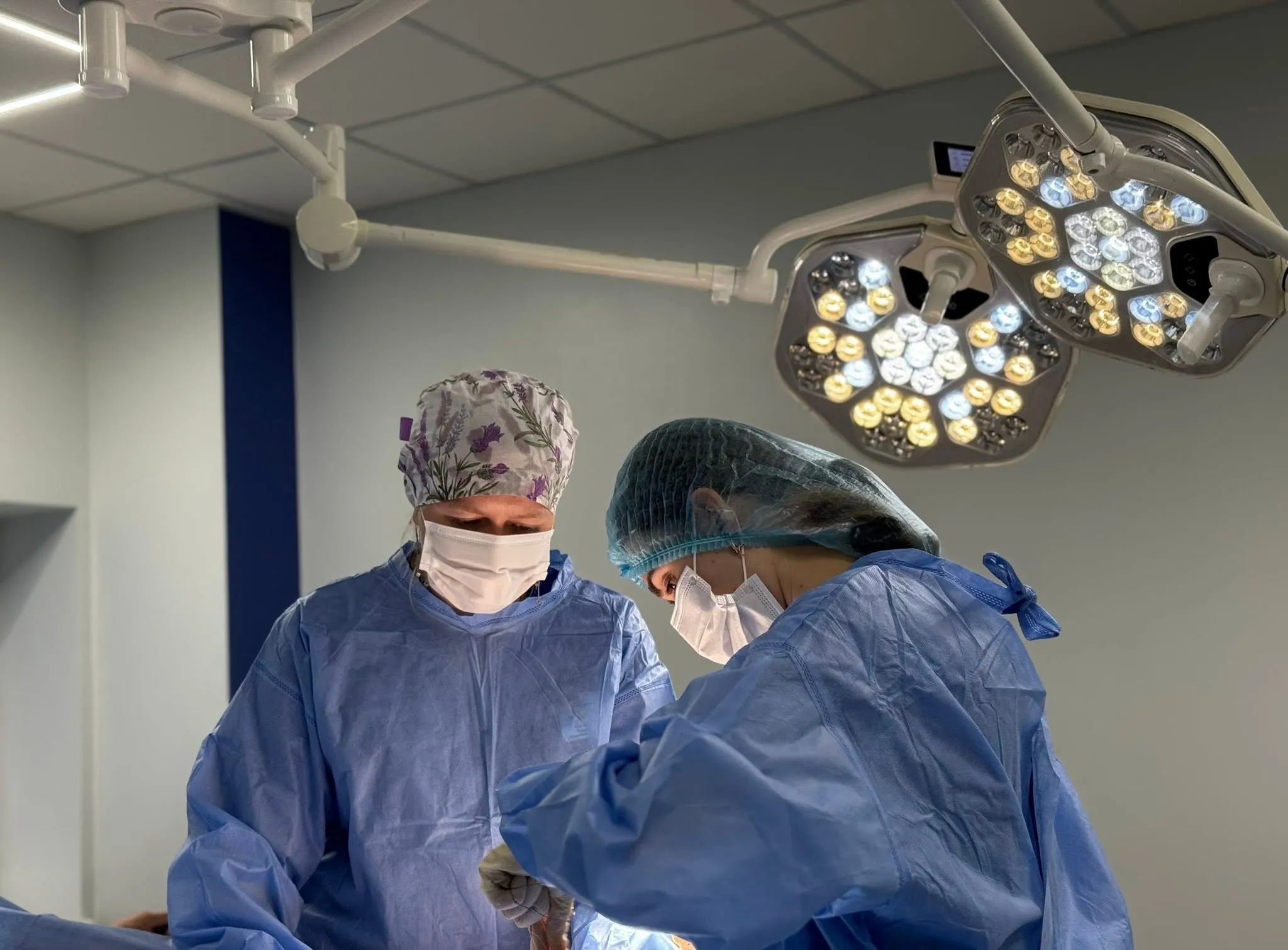
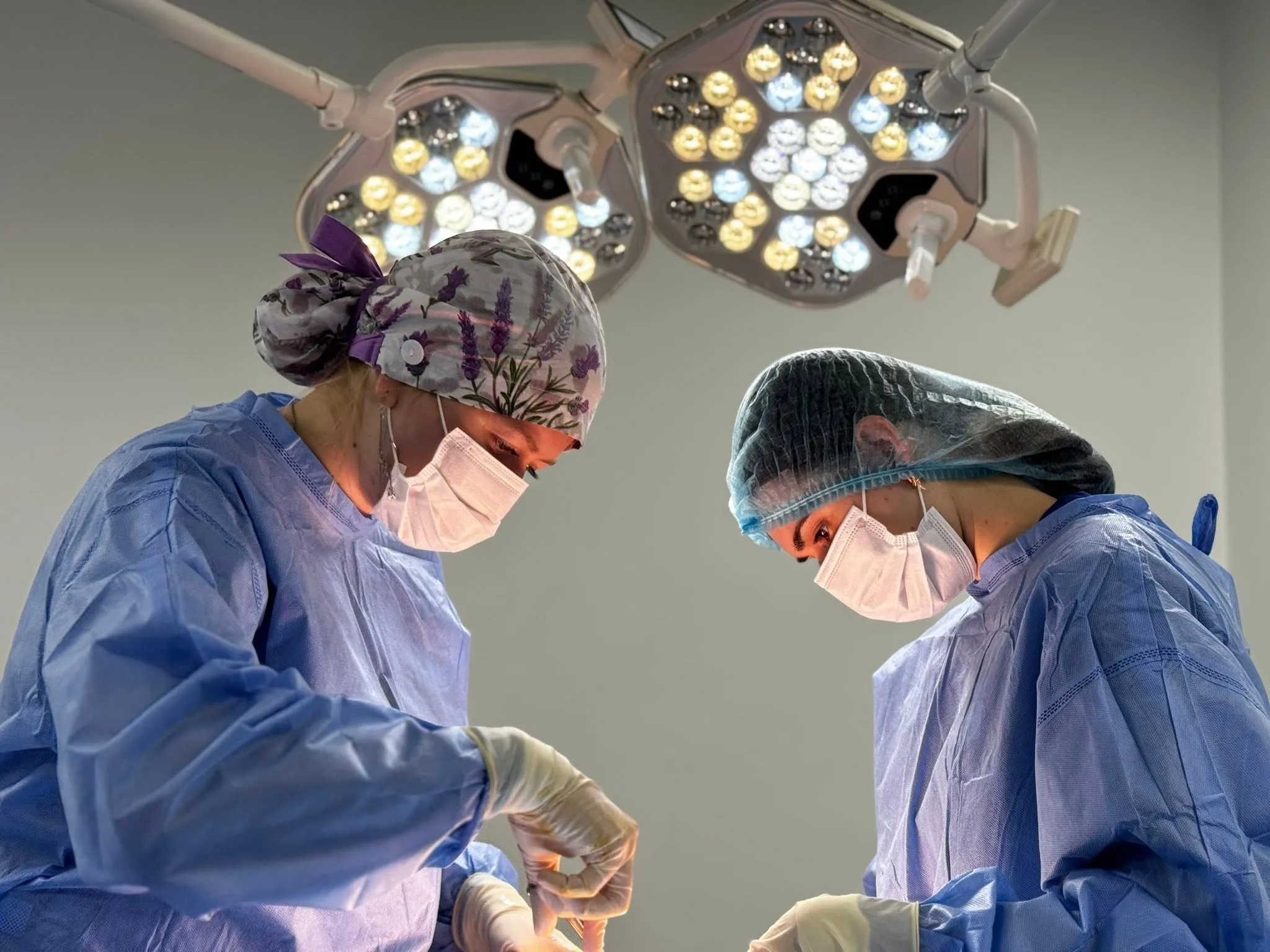
St. Luke’s Hospital is part of Lviv’s First Medical Association.
This was reported by the First Medical Association of Lviv.
Doctors at the Lviv National Medical University Hospital in Lviv saved a 101-year-old patient who suffered an ischemic stroke. The woman was hospitalized in time—within the so-called “therapeutic window” of 4.5 hours from the onset of symptoms, which was crucial for successful treatment.
Earlier, a 28-year-old woman from Volyn nearly died from severe bacterial pneumonia, which destroyed most of her lung. After several days of illness, the woman ended up in the intensive care unit, and her condition became so critical that doctors were searching for her only chance of survival.
In Lviv, doctors at St. Panteleimon Hospital successfully performed a complex surgery on a pregnant woman with breast cancer. The medical team removed the malignant tumor at 31 weeks of pregnancy and were able to save the lives of both the mother and the child. A team of 12 specialists worked in the operating room, prepared for any possible scenario, including an emergency delivery.


