
Ukraine has aligned its sanctions with those of the EU against Russia, Iran, and Sudan
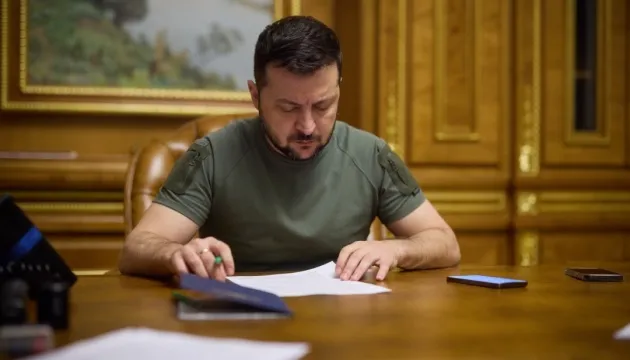
Ukraine has aligned its sanctions with those of the European Union and expanded restrictions against hundreds of individuals and companies from Russia, Iran, Sudan, and other countries that are aiding the aggression. Companies in the defense, energy, and drone technology sectors, as well as certain officials and propagandists, have been targeted. The decision has already taken effect following the president’s signing of the decrees. This was reported by the President’s press service.
President Volodymyr Zelenskyy signed two decrees through which Ukraine effectively aligned its own sanctions with the European Union’s decisions, increasing pressure on Russia and its partners who support the military and economic infrastructure of the aggression, and affecting dozens of companies and individuals from several countries at once.
This refers to a sanctions package covering 120 individuals and organizations, as well as additional restrictions on another 16 Russian citizens and 31 companies from Russia, Belarus, the UAE, Kyrgyzstan, Kazakhstan, Uzbekistan, and the temporarily occupied territories of Ukraine, with the restrictions primarily targeting key sectors of the Russian economy and defense industry.
Those subject to sanctions include heads of strategic enterprises, representatives of military structures, as well as companies that directly or indirectly supply the Russian military-industrial complex, manufacture equipment for drones, communication systems, and software, and operate in the oil, gas, and gold sectors.
Among the specific entities targeted are Atlant Aero LLC, a manufacturer of aerospace products and components for drones, as well as Irz-Zvyazok LLC, which produces communication systems and components for UAVs and missiles used in the war against Ukraine. Separately, sanctions have been imposed on companies from the UAE that supply industrial equipment, chemical products, and aircraft parts, as well as on a Belarusian oil exporter that supports Russia’s energy sector.
The restrictions also apply to 19 Iranian citizens, 7 Sudanese citizens, and 11 Iranian companies involved in programs to produce ballistic missiles and drones used in military conflicts. Separately, three Russians were added to the sanctions list, including prosecutor Lyudmila Balandina, judge Dmitry Gordeev, and propagandist Maria Sittel, who are linked in Ukraine to repression, politically motivated decisions, and the spread of disinformation.
Vladislav Vlasyuk, the President’s Advisor on Sanctions Policy, stated that Ukraine continues to coordinate with the EU and is preparing further packages of pressure, emphasizing that the goal is to intensify the international isolation of Russia and all those who help it wage war. “We continue to coordinate sanctions regimes with the EU and our partners. We expect further intensification of pressure on Russia and all those who help it sustain its aggression,” he noted.
Ukraine has introduced a new package of sanctions against Russian commanders who directed missile strikes on Ukrainian cities, as well as against ships providing military logistics to Russia.
Ukraine rejected the idea of “associated” EU membership without voting rights, which had been discussed in European political circles. Volodymyr Zelenskyy stated that such a format is unfair and does not correspond to Ukraine’s role in European security.
The European Union has moved to the practical stage of preparing Montenegro’s accession treaty. The country continues on its path toward EU integration and has declared its intention to become a member by 2028.
Ukraine hopes that the European Union will open all six negotiation chapters on the country’s accession this year and anticipates the possibility of closing at least one of them by the end of the year.
Ukraine may temporarily forgo some of the benefits of EU membership to accelerate the accession process. Taras Kachka noted that such a step would help the country integrate into the EU more quickly.


