
Up to 1,500 fraudulent call centers are operating in Ukraine—an investigation
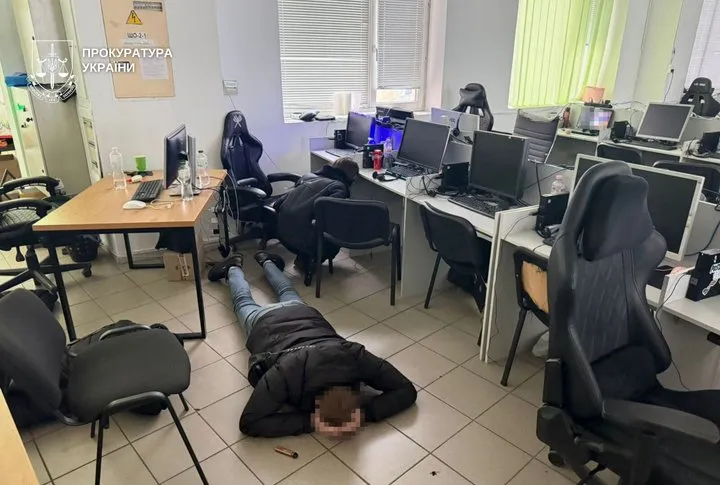
Against the backdrop of searches conducted by NABU and the SAPO at the Office of the Prosecutor General to uncover a scheme to shield fraudulent call centers, a study by GI-TOC and the UN estimates the scale of this industry in Ukraine at 1,000–1,500 operations.
According to an investigation by the Global Initiative Against Transnational Organized Crime (GI-TOC), approximately 60,000 people are employed in this sector in Ukraine, and the average call center generates $1 million in monthly revenue, while large operations earn up to $3 million.
Criminals extort money through schemes involving calls made in the name of banks or the police, the creation of fake investment platforms, hoax messages about a “relative in distress,” or promises to “return lost money.” The “protection” service provided by corrupt law enforcement officials costs an average of $10,000 to $15,000 per month per office. In exchange for this money, officials turn a blind eye to the operations, provide advance warning of upcoming raids, or conduct token inspections without actually shutting down the fraudsters’ operations.
Shutting down individual “offices” remains largely ineffective, as scammers quickly change locations, switch to remote work, and instantly transfer funds into cryptocurrency outside the traditional banking system. In addition, most large networks deliberately target citizens of other countries—particularly the EU, the U.S., and the U.K.—to minimize local backlash and law enforcement pressure within Ukraine.
Kyiv Calling investigation: The scam call center phenomenon in Ukraine.
It was previously reported that the National Anti-Corruption Bureau of Ukraine (NABU) and the Special Anti-Corruption Prosecutor’s Office (SAPO) are conducting a large-scale special operation codenamed “Carthage” at the Office of the Prosecutor General regarding a case of possible “protection” of fraudulent call centers.
Prosecutor General Kravchenko disappeared after the NABU and SAP operation began. According to UP’s sources in political circles, Kravchenko drove into the government quarter, after which no one saw him.
Later, Prosecutor General Ruslan Kravchenko resurfaced and stated that he had no connection whatsoever to covering up illegal call centers and had not issued any instructions to facilitate their operations.
The High Anti-Corruption Court imposed a preventive measure on Serhiy Kropiva, deputy head of the Department of International Cooperation at the Prosecutor General’s Office, in the form of pretrial detention with an alternative bail of 120 million hryvnias, although prosecutors from the Specialized Anti-Corruption Prosecutor’s Office had requested 200 million.


