
Ukraine has opened its first Family Home for children waiting to be adopted

In the Boryspil community of Kyiv Oblast, Ukraine’s first “Family Home” social service was launched for children who have been left without parental care and are awaiting placement with a family.
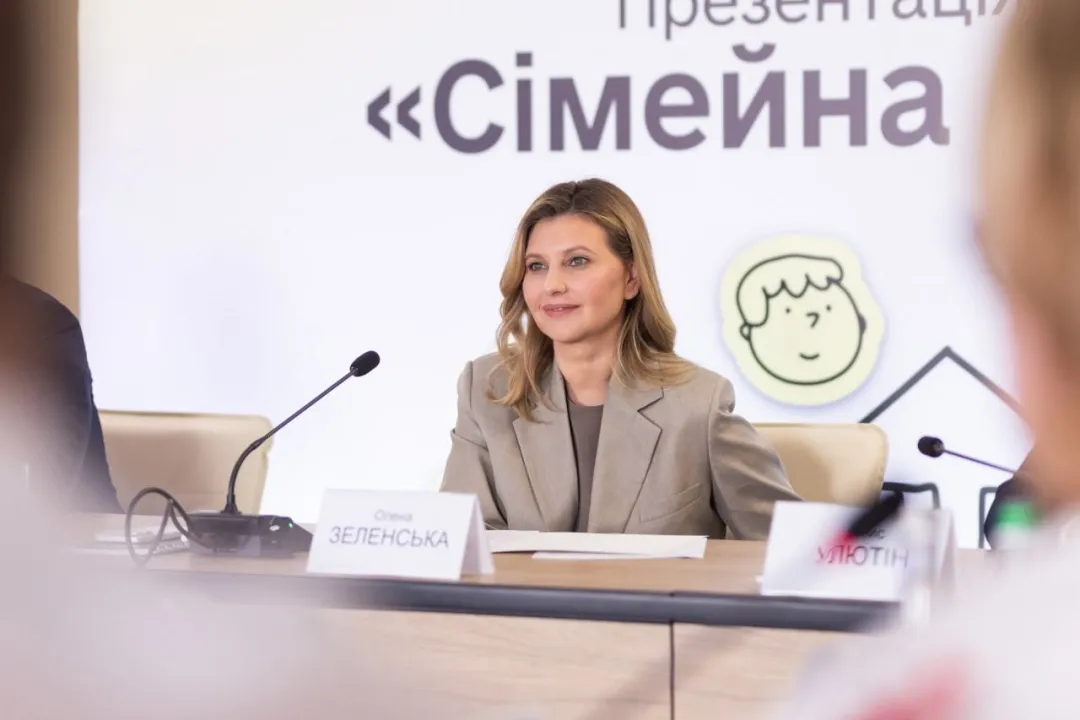
During the opening ceremony, Ukraine’s First Lady Olena Zelenska noted that the home is designed to accommodate eight children, and its first residents are five children.
“Today we are officially opening this home for five children. At the same time, it is designed to accommodate eight. Here, with the support of their caregivers, they will finally be able to experience what is familiar to you and me, but, unfortunately, not to all Ukrainian children. Let me remind you that Ukraine has adopted a European approach to phasing out the institutional care system and is committed to ensuring that every child has a family. Yes, ‘Family Home’ cannot replace a family. The search will continue, and I very much hope that even more of your children will find their parents. But this is precisely a home where every child receives enough attention, where each one has their own space and freedom,” said Zelenska.
According to her, “Family Home” is based on international experience. The first such projects began to be established in Austria after World War II, when many children were left without parental care.
Today, according to the First Lady, this approach is used in more than 130 countries around the world. In particular, Bulgaria and Romania, with EU support, were able to move away from the traditional boarding school system, replacing it with small family homes.
“I’ve seen how this works. And I think we really have the right to try this model. I very much hope that it will take root in Ukraine and work effectively,” Zelenska emphasized.
Timur Tkachenko, head of the Kyiv Regional State Administration, reported that there are already 82 family-type children’s homes and 86 foster families operating in the region, caring for nearly 800 children.
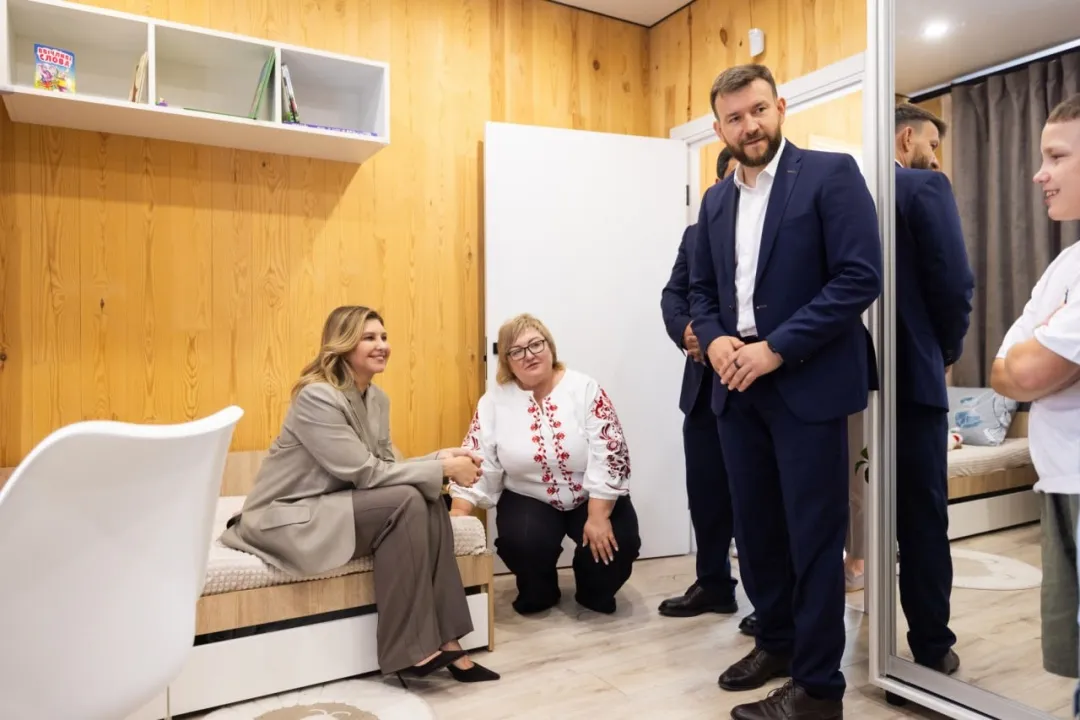
“While a family is being found for a child, ‘Family Home’ provides the necessary comfort and care from permanent adults who will take the child to school, to the doctor, or help with shopping. The region is responsible for ensuring that the home has everything it needs. Today we are providing a specialized vehicle so that children can be taken on time to sports classes or rehabilitation sessions,” said Tkachenko.
In this way, the children will be able to live in conditions as close as possible to those of a normal home, attend school, see doctors, participate in sports clubs, and take part in other activities.
Minister of Social Policy Denys Ulyutin noted that more than 3,000 children are currently waiting for a family while living in institutional facilities. For more than 500 of them, he said, an alternative solution must be found immediately.
It is precisely for such cases that they plan to develop the “Family Home” social service.
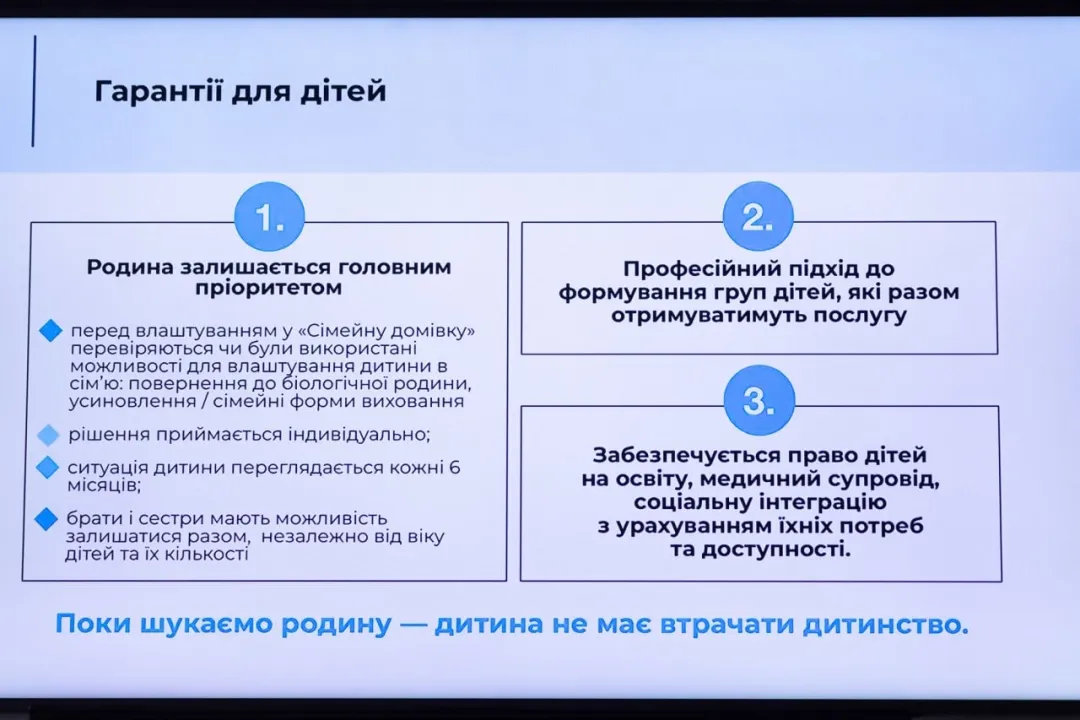
“‘Family Home’ is a bridge to a family-based solution, not a new permanent place of residence for the child. That is the core idea of this project. It is fundamentally important to us not to replicate the institutional model on a smaller scale. Before a child is placed in ‘Family Home,’ all possibilities for their return to their biological family, adoption, or other family-based care arrangements are explored. Each decision is made on a case-by-case basis. “After placement in a ‘Family Home,’ efforts toward future family placement continue, and the child’s situation is reviewed every six months,” Ulyutin emphasized.
According to the minister’s estimate, Ukraine needs about 80 such homes so that children do not remain in institutional isolation while awaiting family placement.
The first residents of the “Family Home” were children from the Boryspil, Velyka Dymerka, Voronky, Vasylkiv, and Myronivka communities in Kyiv Oblast.
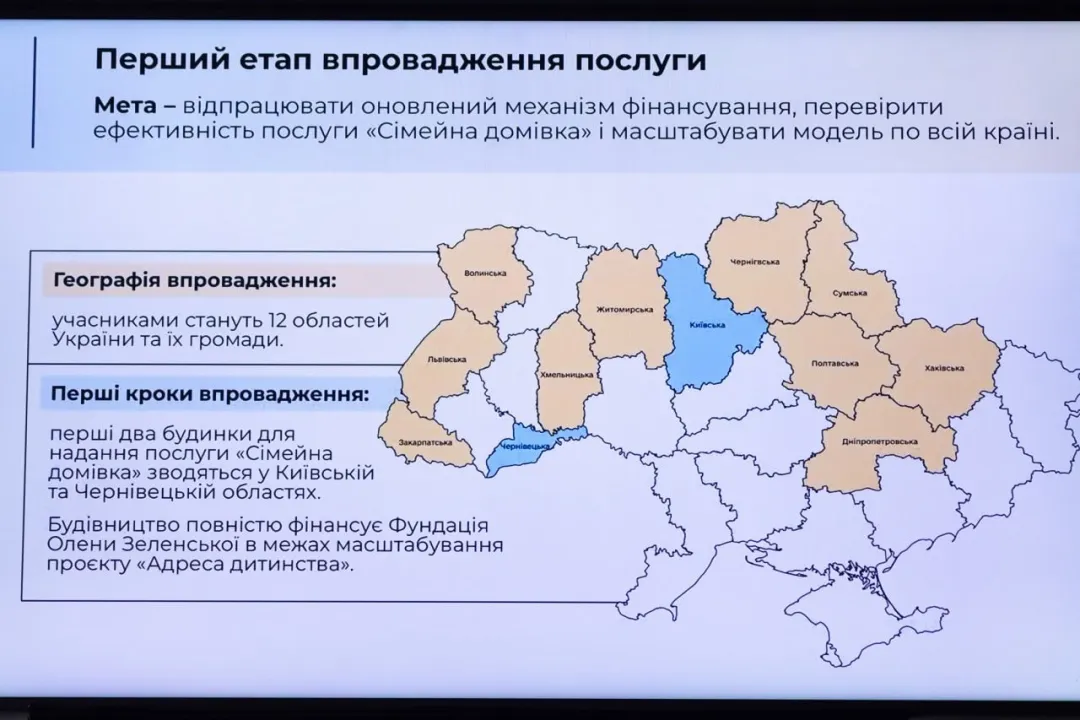
The Boryspil community was the first of the 12 regions involved in the pilot project where the updated social service is being implemented.
The house was built by the Olena Zelenska Foundation as part of the expansion of the “Address of Childhood” project.


