

Today, June 11, 2026, Ukraine is officially celebrating Unmanned Systems Day for the first time. Volodymyr Zelenskyy signed the corresponding decree just the day before, and this step was a logical acknowledgment of the fact that the Unmanned Systems Forces have become one of the key, if not the defining, components of the modern Ukrainian army.
But the path to this recognition was long, winding, and filled with both technological breakthroughs and bitter lessons paid for with blood. To understand why today we speak of drones not as an auxiliary tool but as a separate branch of the military, it is worth going back 10–15 years and tracing how it all began. Read more in this UA.News article.
The Era of the “Bayraktars” and First Steps in the Skies of Donbas
When people today recall the first drones in the Ukrainian army, the Turkish Bayraktar TB2 immediately comes to mind. This is hardly surprising: it was this very aircraft that became a true media star at the start of the full-scale invasion. Songs were written about it, and some (the most creative) parents even named their children Bayraktar.
However, it would be a big mistake to think that the history of Ukrainian drones began in 2022. In fact, its roots go much deeper—back to those happy times when the very word “drone” was associated more with a toy for bloggers and wedding photographers than with a formidable weapon.
The first attempts to use UAVs in the Ukrainian Armed Forces date back to the period following the start of Russian aggression in 2014. At that time, when the Ukrainian army was in a state of deep crisis following decades of chronic underfunding and the sell-off of equipment, there was no talk of any modern unmanned aerial systems. The army fought with what it had, and what it had was mostly a half-rusty Soviet legacy. However, it was precisely then that the first seeds of what would later become a powerful technological movement began to sprout.
In 2014–2015, the first volunteer-operated drones began appearing on the front lines. These were mostly civilian quadcopters that activists purchased with their own funds or with money from donors and handed over to the military. The most common models were the DJI Phantom—the very same “wedding” drones that suddenly found themselves on the front lines and began performing functions far from festive. They were used for aerial reconnaissance, artillery fire correction, detecting enemy positions, and more. They carried no weapons and performed no strike functions, but it was precisely these small plastic devices with cameras that became the “eyes” of the Ukrainian army, which was desperately lacking modern surveillance capabilities.
At the same time, the first designs by Ukrainian engineers began to emerge. As early as 2015, volunteer groups and small private companies began creating drones of their own design. Among the most famous early projects is the “Furia” unmanned aerial system, developed by the Kyiv-based company “Atlon Avia.” “Furia” became one of the first Ukrainian drones officially adopted by the Armed Forces of Ukraine.
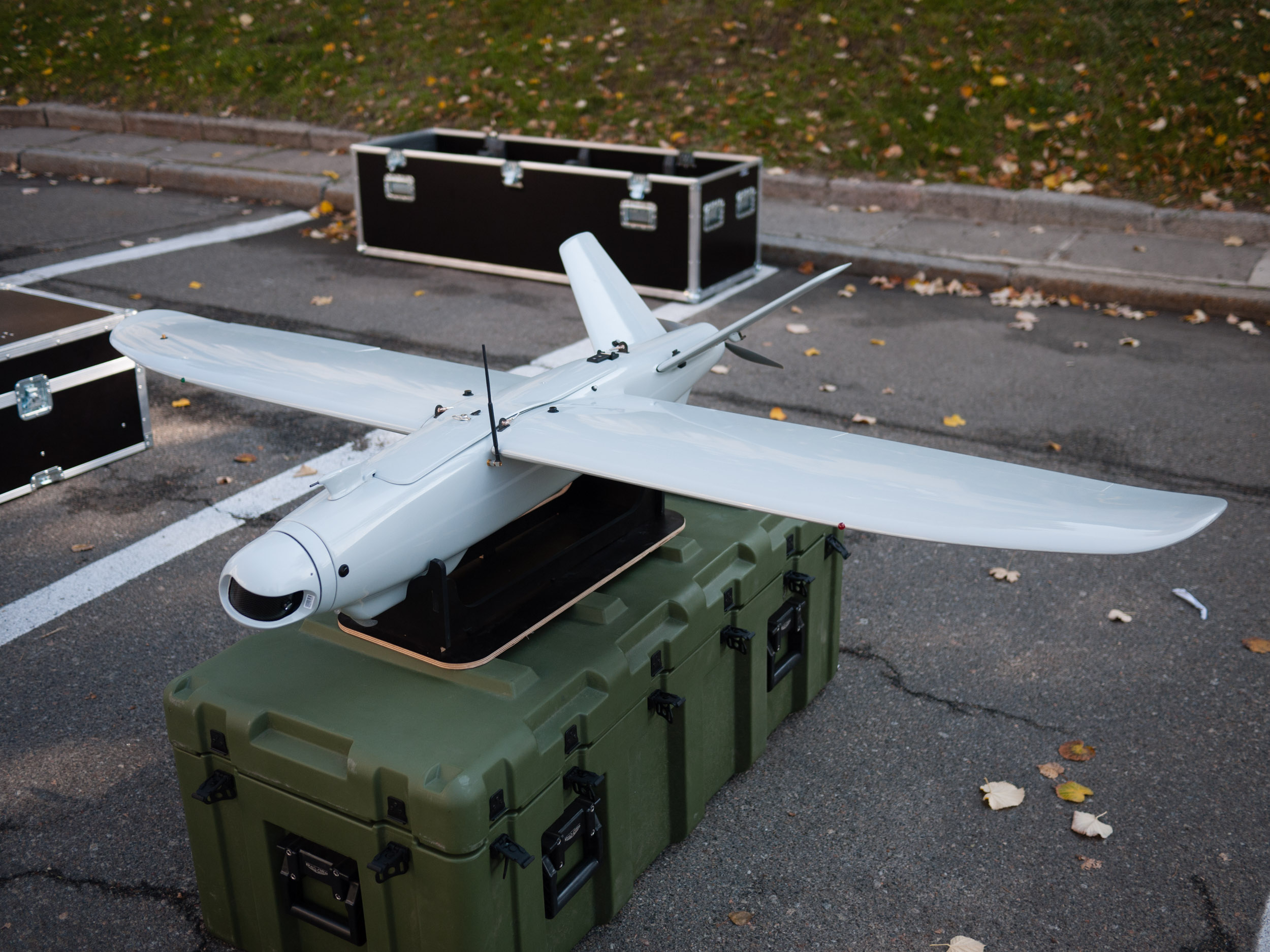
Another landmark project of that period was the “Leleka-100” drone, created by the company DeViRo. This aircraft proved so successful that its variants remain in service to this day. The “Leleka” could fly up to 100 km, had a nearly silent electric motor, and was relatively inexpensive to manufacture. It is precisely these qualities—affordability, simplicity, and efficiency—that would later become defining for the entire Ukrainian drone doctrine.
The Soviet legacy deserves a separate mention. At the start of the war in Donbas, Ukraine had the “Strizh” and “Reis” unmanned aerial systems—still of Soviet design—in service, but they were in poor technical condition and were practically never used. Attempts to revive these systems were made repeatedly, but mostly without success.
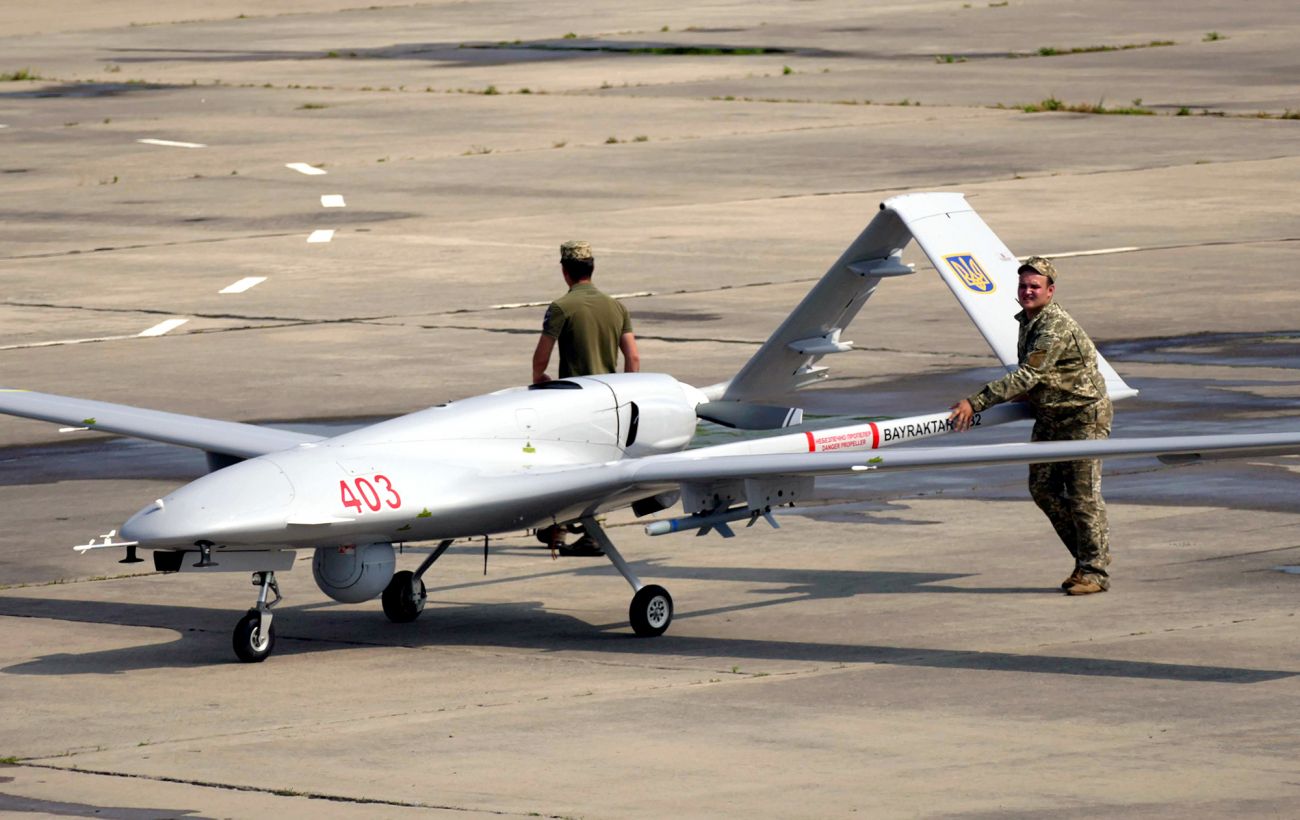
The arrival of the Turkish Bayraktar TB2s marked a true breakthrough in both mindset and tactics. Ukraine acquired its first Bayraktars back in 2019. The drones could carry guided bombs and missiles, remain airborne for over 12 hours, and operate at a distance of up to 150 km from the ground control station. However, as of early 2022, the total number of “Bayraktars” in Ukraine was not even in the hundreds—but in the tens. They were a rare, expensive, and scarce asset. No one could have imagined back then that in just a few years, the situation would change dramatically and drones would become not just a supplement to artillery and aviation, but the main striking force on the battlefield.
The Great War and the FPV Revolution
On February 24, 2022, Russia launched a full-scale invasion, and it was from that moment on that UAV systems began to play an entirely new role. In the first weeks and months of the war, it was the “Bayraktars” that took center stage—they dealt devastating blows to columns of Russian military equipment, and footage of these attacks went viral around the world. But it quickly became clear that there weren’t enough “Bayraktars” to cover the entire front line, which stretched for thousands of kilometers. Moreover, the Russians gradually adapted their air defense systems, and large aircraft-type drones became increasingly vulnerable.
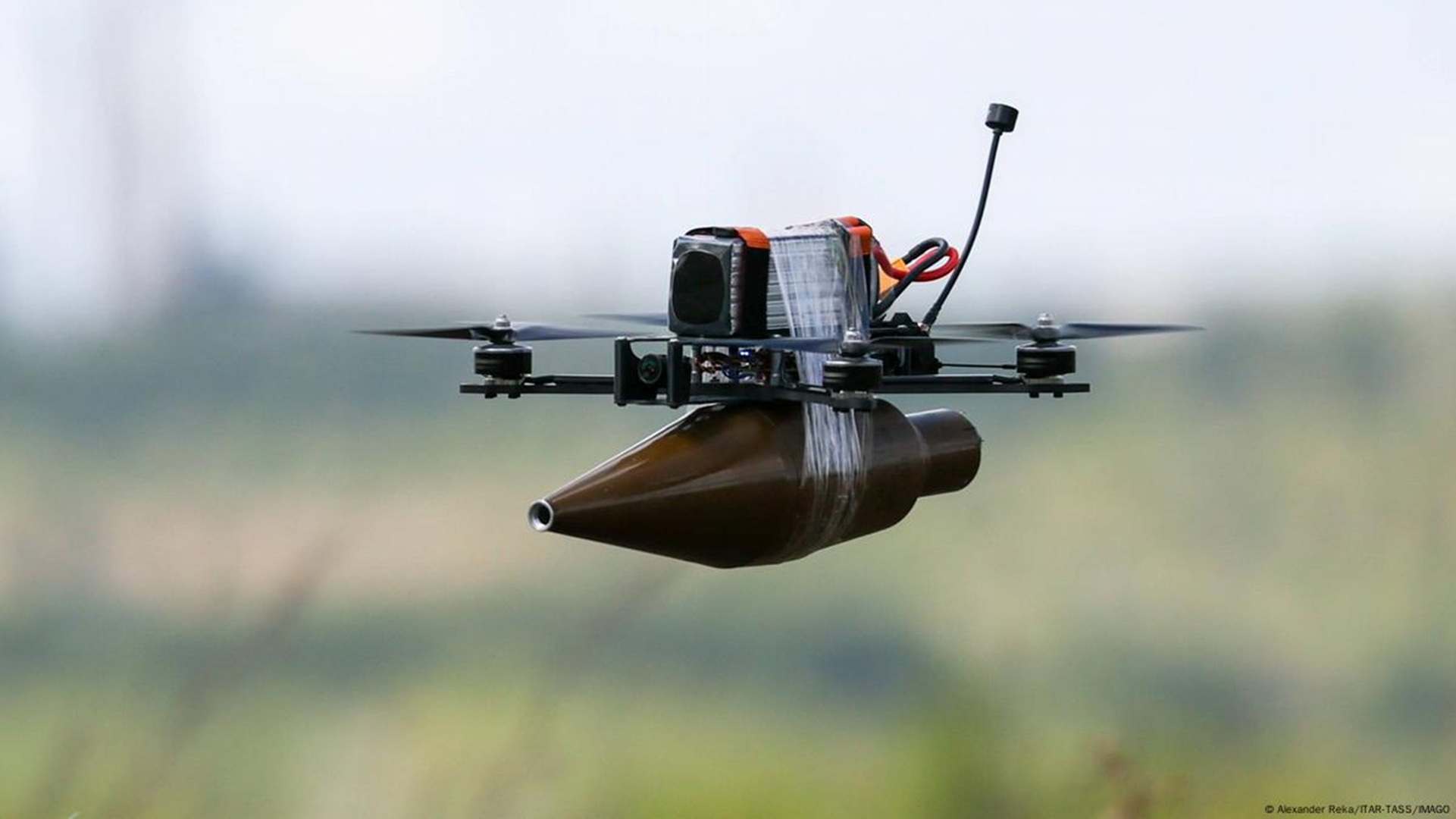
It was then, in the spring and summer of 2022, that a true FPV revolution began. At first, these drones were used exclusively for reconnaissance, but very quickly someone came up with the idea of attaching homemade explosive devices to them—and that changed everything.
The idea was brilliant in its simplicity: a cheap drone costing a few hundred or at most a few thousand dollars could destroy a tank worth millions. FPV drones became the ideal weapon for asymmetric warfare, where cost-effectiveness takes center stage. In 2022, the production of FPV drones in Ukraine resembled more of a garage cooperative. Dozens and hundreds of small workshops across the country assembled drones from Chinese components ordered online. Volunteers, enthusiastic engineers, and simply concerned citizens with soldering irons in hand created what would later be called “grassroots drone building.” At this stage, the state played more of a coordinating role, while the main driving force came from the grassroots. More traditional unmanned systems were also developing in parallel.
By 2023, the scale of drone production and deployment had increased by orders of magnitude. While in 2022 the numbers were in the hundreds and thousands, by 2023 they had reached tens and hundreds of thousands. The Ukrainian defense industry received a powerful boost. New manufacturers, new models, and new technical solutions emerged. Drones became more resistant to electronic warfare (EW) measures, were equipped with better cameras, had greater flight ranges, and carried more powerful munitions, among other improvements. The strike range also grew steadily: first 10 km, then 30, then 50, and eventually over 100.
The evolution of maritime drones deserves special mention. Ukraine was the first in history to begin mass deployment of unmanned surface vessels to strike the enemy fleet. These vessels, loaded with explosives, attacked Russian ships in the Black Sea, forcing the enemy to hide the remnants of its fleet far from the Ukrainian coast.
From volunteer workshops to a separate branch of the military
The realization that unmanned systems had evolved into a distinct and self-sufficient form of armed combat did not come immediately. Throughout 2022–2023, drones were organizationally assigned to various branches of the military—they were used by infantry, artillery, reconnaissance units, special forces, and who knows who else. There was no single command center, no unified doctrine of use, no standardized operator training system, and so on. All of this created chaos and reduced effectiveness.
A logical step was the creation in 2023–2024 of specialized UAV units within various brigades, and later the formation of separate battalions and regiments. This process proceeded in parallel both from the bottom up—the military organized itself into strike drone companies—and from the top down—the Ministry of Defense gradually established a regulatory framework. Finally, in 2024, the creation of the Unmanned Systems Forces as a separate branch of the military was officially announced.
The creation of the UAS allowed for the centralization of operator training, the standardization of technical requirements for drones, the optimization of supply logistics, and, most importantly, the development of a unified doctrine of use. Now, UAVs operate not in isolation but as a unified system, where reconnaissance drones identify targets, strike drones destroy them, and electronic warfare assets shield their own drones from enemy detection.
Today, as of the summer of 2026, the scale of drone deployment is staggering even to those who were at the forefront of this movement. Ukrainian industry produces millions (!) of drones per year. Thousands are used on the front lines every day, and on the days of the most intense fighting—tens of thousands of FPV drones and other unmanned systems. This is no longer a support tool but a primary weapon system, one that rivals artillery in effectiveness and significantly surpasses it in accuracy. However, it must be acknowledged that, unfortunately, the enemy is not lagging behind in this process and is mirroring this growth by expanding its own drone capabilities.
The development of AI has given drones new capabilities. Modern Ukrainian drones are capable of independently identifying targets, navigating around obstacles, and even operating under complete signal suppression—when communication with the operator is lost, the drone continues to perform its mission autonomously. This has been a response to the constant improvement of Russian electronic warfare capabilities. The arms race in the drone sector never stops for a single day: today we create a drone, tomorrow the enemy finds a way to neutralize it, the day after tomorrow we create a new drone that overcomes this defense—and so on in a cycle.
Over the years, Ukraine’s drone industry has evolved from a handful of handmade prototypes into a powerful industry employing tens of thousands of people. Fighter drones have emerged to hunt down enemy drones. Relay drones have emerged to provide communication on the front lines. Mining drones and demining drones have emerged. Unmanned systems have penetrated every sphere of military affairs, and it is now hard to imagine a battlefield without the constant “buzzing” overhead.

In summary, the history of Ukrainian unmanned systems is a story of how critical need gives rise to unexpected innovation. In 2014, Ukraine had almost nothing—dozens of Soviet-era drones on the verge of becoming inoperable, a handful of volunteer-built copters, and a tremendous desire to survive. In 2019–2021, the first “Bayraktars” and the first mass-produced Ukrainian designs appeared—it was a step forward, but still a very cautious one. In 2022–23, a true revolution began: FPV drones changed the very nature of war, making it a war of operators and engineers no less—and perhaps even more—than a war of soldiers and generals. And today, in 2026, we see the result of this evolution: a separate branch of the military, millions of drones produced, tens of thousands of flights every day, swarm tactics, and artificial intelligence on the battlefield.
Unmanned Systems Day, which Ukraine celebrates for the first time on June 11, 2026, is a recognition of the fact that UAVs have become an integral part of the modern army, and the people who work with them—operators, engineers, developers, instructors—fully deserve their own professional holiday.
And although, of course, the very existence of combat drones offers little cause for joy—we are, after all, talking about technology designed for the mass killing of people, and there is nothing good about that in a vacuum—one cannot help but acknowledge: Ukrainian unmanned systems have saved countless lives by taking on the work that people previously had to perform at much greater risk. And it seems this is only the beginning of a major drone revolution in military affairs.


