
Zelensky signed a law on the protection of children's property rights
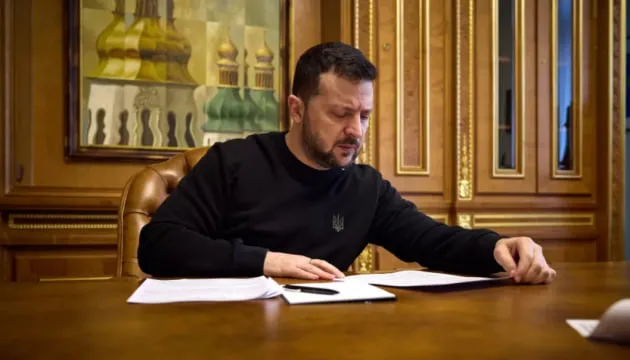
President Volodymyr Zelenskyy has signed a law that improves the procedures for conducting legal transactions on behalf of minors and strengthens the protection of their property rights.
This was reported with reference to legislative initiative No. 12254 on the parliament’s website.
The purpose of the document is to improve the procedure for minors to enter into legal transactions regarding the requirement to obtain the consent of parents (adoptive parents) or a guardian and the permission of the guardianship and custody authority only in cases involving the alienation (rather than acquisition), division, or allocation of real estate, unfinished construction projects, future real estate properties, or other valuable property—including vehicles—owned by a minor.
The law comprehensively revises the rules governing the disposal of children’s property and establishes clearer requirements for parental consent and permits from guardianship authorities.
The main set of changes concerns children’s property. The law clarifies that parents or guardians manage a minor child’s property without special powers of attorney, but are obligated to act exclusively in the child’s best interests and to preserve that property.
At the same time, the list of actions they cannot perform independently is significantly detailed: any transactions involving the child’s real estate, land, vehicles, or other valuable property—such as sale, gift, exchange, contribution to statutory capital, division, or transfer as collateral or mortgage—require permission from the guardianship and custody authority.
It is established that for such serious legal transactions, the consent of the guardianship authority alone is insufficient: if one parent acts, they must obtain the written, notarized consent of the other.
At the same time, a presumption is introduced that in simple cases, one parent acts with the consent of the other, but the other may challenge the transaction in court.
At the same time, the law simplifies procedures where this is in the child’s best interest. If a child acquires property, including real estate, without payment (for example, through a gift or inheritance), permission from the guardianship authority is not required. This rule applies to both young children and minors. For minors, it is clarified that they may enter into such significant legal transactions only with the consent of their parents and with the permission of the guardianship authority.
It is also specified that they may dispose of funds in accounts opened in their name by other persons only with the consent of their parents and the guardianship authority.
An important innovation relates to wartime realities. If one parent is a prisoner of war, missing in action, interned, declared missing, has an unknown place of residence, or has not participated in the child’s life for more than six months, the other parent may enter into necessary legal transactions regarding the child’s property without the former’s consent.
Separately, it is stipulated that orphaned children and children deprived of parental care are entitled to all types of free legal aid, not just certain types.
The law simultaneously strengthens oversight of transactions involving children’s property to prevent abuse and simplifies procedures where a child acquires property free of charge or when one parent is objectively unable to give consent.
The law is expected to simplify the mechanism for minors to acquire ownership of real estate, unfinished construction projects, future real estate properties, and other valuable assets, including vehicles.
Zelenskyy will attend the EU summit in Cyprus today — Politico.
Zelenskyy stated that Russia has changed its plans in the war
Zelenskyy responded to rumors about renaming Donbas to Donneland
