
Zelenskyy Revealed the Format of the Talks in Kyiv
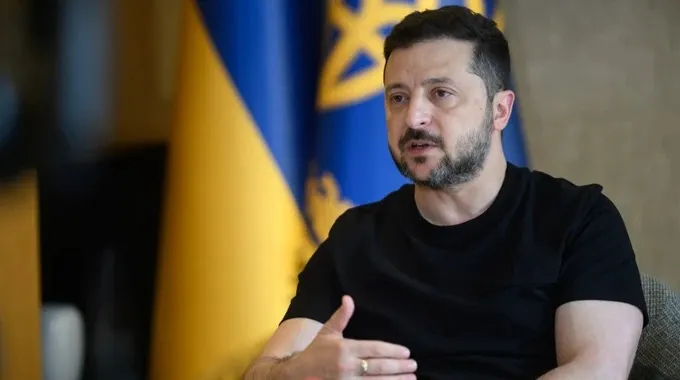
President Volodymyr Zelenskyy explained how the negotiations with U.S. representatives and European partners will proceed. According to him, several separate sessions will be held in Kyiv—first, the Ukrainian side will meet with special envoys from the U.S. president, and then national security advisers from France, the United Kingdom, and Germany will join the talks.
President Volodymyr Zelenskyy described the format of the talks scheduled to take place in Kyiv with the participation of U.S. and European representatives. According to him, the meetings will take place in several stages. First, Zelenskyy and the Ukrainian negotiating team will hold a separate meeting with representatives of the U.S. president.
This will be followed by another round of talks—this time with representatives from European countries. “We expect one session—our discussion—and then another session with the European NSAs,” Zelenskyy said before the meetings began. NSA stands for National Security Advisor. These include representatives from France, the United Kingdom, and Germany.
Thus, Kyiv is planning not just one joint meeting, but several separate negotiation sessions. This will allow the Ukrainian side to discuss issues separately with American representatives and then hold talks in a broader European format. “Several sessions are important,” the president emphasized.
First, talks with Trump’s special envoys
The first meeting will be between the Ukrainian side and U.S. President’s special envoys Steve Witkoff and Jared Kushner. They have already arrived in Kyiv. For Witkoff and Kushner, this is their first visit to Ukraine since the start of Russia’s full-scale invasion. Their visit comes amid active contacts between Kyiv and Washington regarding a possible end to the war.
Earlier, Zelenskyy stated that Ukraine is interested in having the most constructive and substantive dialogue possible with the U.S. side. For Kyiv, it is important not only to discuss a possible cessation of hostilities but also the issue of future security guarantees. Ukrainian authorities have repeatedly emphasized that ending the war must create conditions under which Russia cannot easily launch a new aggression.
The Europeans will then join the talks
The second session will be devoted to discussions with European national security advisors. Representatives from France, the United Kingdom, and Germany are expected to participate. These countries are among Ukraine’s key European partners and are actively involved in discussions regarding future security guarantees.
The format involving the so-called “Euro-Troika” will allow for a separate discussion of the positions of European allies. Topics are likely to include continued support for Ukraine, security guarantees, and possible steps to end the war. At the same time, Zelenskyy has not publicly disclosed the exact agenda for each meeting.
Why This Format Is Important
Several rounds of talks provide an opportunity to discuss issues separately with each party. First, Kyiv will be able to discuss its proposals and position directly with the U.S. Afterward, the Ukrainian side will have the opportunity to coordinate further steps with key European partners. It is important for Ukraine that the negotiation process not be limited solely to agreements between individual countries. Kyiv wants future decisions to take Ukraine’s position into account and have the support of its key allies.
Ahead of the meetings, Zelenskyy also emphasized that Ukraine is ready for constructive work. Earlier, the president stated that the Ukrainian negotiating team had already prepared its position for talks with the U.S. side. Among the main issues are ending the war, security guarantees, and the terms of a future peace.
These issues are now set to be discussed during a series of meetings in Kyiv. The results of the talks may reveal the extent to which the positions of Ukraine, the U.S., and European partners align regarding next steps. At the same time, it is too early to speak of specific agreements—the meetings have yet to take place.


