
Anton Baev identified three problems facing the artillery on the front lines
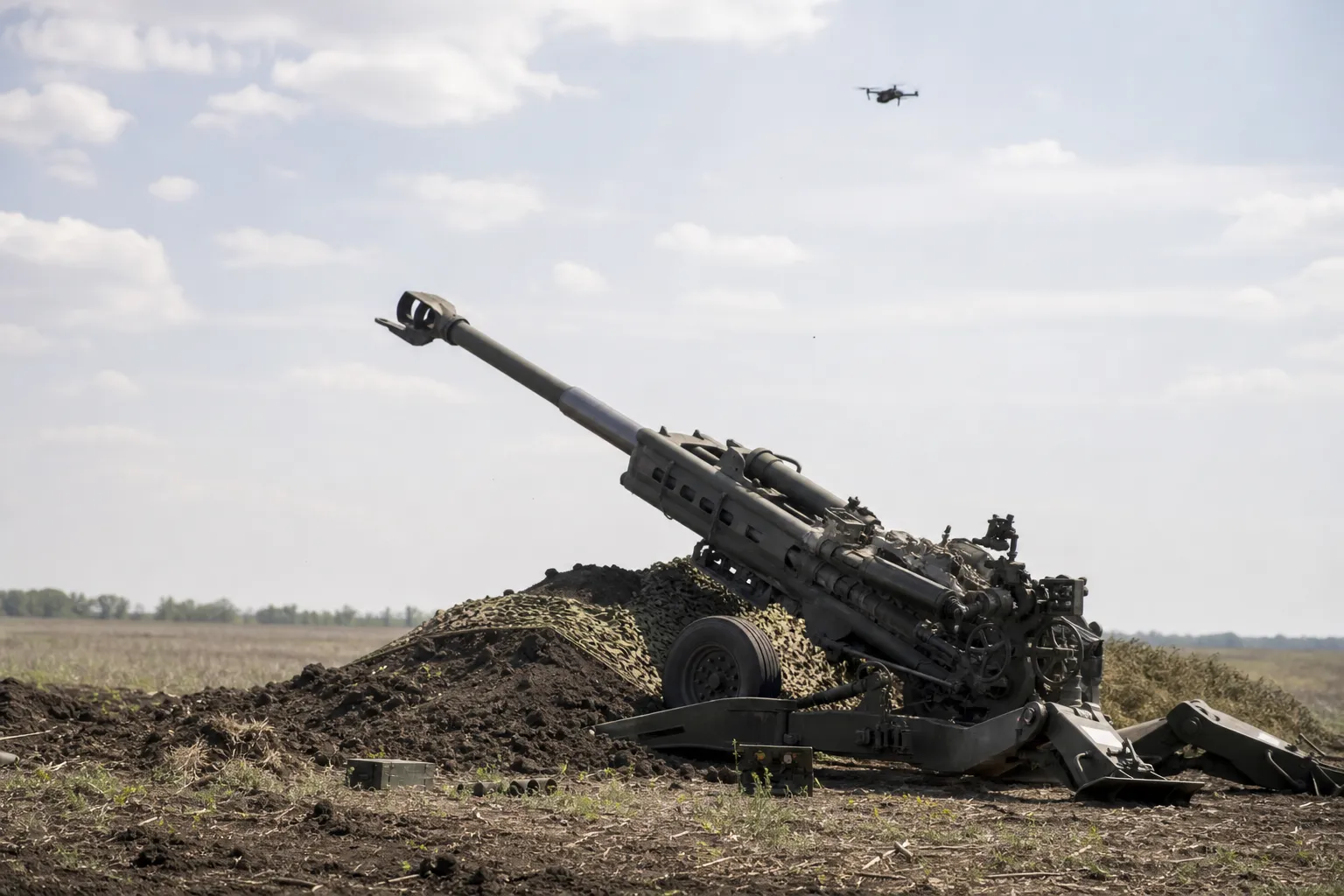
Artillery has not lost its importance in warfare, but it is facing a crisis due to the dispersion of systems, a shortage of ammunition, and the threat of attack drones. This assessment was expressed in a column for “Ukrainska Pravda” by Colonel Anton Baev “Franz,” chief of staff of the 7th Artillery Brigade of the National Guard of Ukraine, part of the National Guard’s 2nd Corps “Charter.”
According to data cited by Baev, in March nearly 34,000 Russian occupiers were killed or seriously wounded by drones, while 1,300 Russian soldiers were eliminated by artillery. He considers it inaccurate to directly compare these figures, since drones strike individual targets, while artillery operates over an area. According to him, artillery suppresses infantry, disrupts the enemy’s coordination, and halts its advance.
Baev identified the first problem with artillery as the scattered deployment of Western systems, which are delivered one or two units at a time instead of forming batteries of four to six vehicles. He cited the unstable supply of long-range ammunition as the second problem, which, in his assessment, makes systematic fire planning impossible.
The military official considers the third problem to be the “no-go zones” that, according to him, the “Lancet” and “Molniya” systems create at a depth of 15–20 km behind enemy lines, and in some cases—up to 50 km. According to Baev’s description, before the artillery moves into position, the “Rokit” drone squadron operates in the area for one or two days to reduce the threat from enemy reconnaissance and strike systems. After that, each gun operates under drone cover.
Baev also emphasized that artillery pieces should be concentrated in a single direction. According to him, five vehicles can fire approximately 100 rounds in a single salvo—such a volume of fire is capable of disrupting enemy defenses or halting an offensive. He believes that 105- and 122-mm calibers should remain at the battalion and brigade levels, while 152- and 155-mm calibers should be used for deep-strike operations. Separately, the colonel called for a transition from the Soviet 152-mm caliber to the 155-mm caliber and for the development, together with partners, of NATO-standard weapon production.


