
Chemicals from burning warehouses have poisoned a river near Moscow
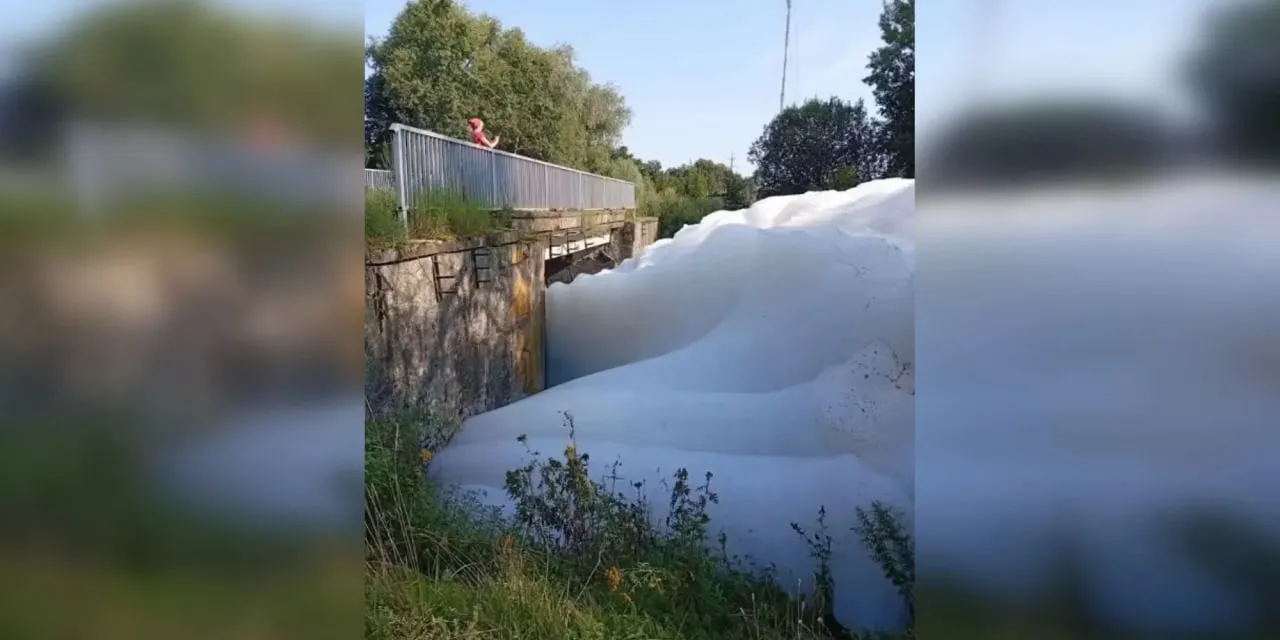
An environmental disaster occurred in the Moscow Region following a massive fire at some warehouses. Hazardous substances leaked into the Gnylusha River, prompting local residents to report a strong odor in the water and a massive fish kill.
In early August, residents of the Bili Stovpy neighborhood and the Krasnoputsky District in the Moscow Region began complaining en masse on social media about dirty water and a strong, unpleasant odor. They are calling on the administration to take urgent action and say that a “real environmental disaster” is unfolding in the area. Since the Moscow Region is quite close to the border with Russia, Ukrainians are concerned that the contaminated Russian water might reach Ukraine. Focus has gathered all the known facts.
Residents of the Moscow region say that after a drone strike on the local “Pivdenna Brama” warehouse complex, household chemicals spilled into the Gnylusha River. This river originates west of Domodedovo Airport and flows into the Siverka River near Karacharovo. The situation worsened when the burning warehouses were doused with firefighting foam, which also ended up in the river.
It should be noted right away that the contaminated water from the Gnylusha River will not reach Ukraine, as it belongs to a different watershed. It flows into the Siverka River, which does not flow into Ukraine but runs through the Moscow Region.
Officials from the Chervonoputsk Administrative District explained that following the storm, “the warehouse complex’s stormwater treatment facilities were unable to handle the extreme volume of surface runoff.”
Reports of river pollution began to surface as early as July 25, but the administration assured the public that “the management of the warehouse complex is taking appropriate measures to address the situation.”
The situation has now worsened. Russians are posting photos of the river, which is completely covered in foam, and of bodies of water filled with dead fish, such as in the village of Stepanchikovo, seven kilometers from “Pivdenna Brama.”
Residents are also complaining that the water is polluted in the Ramenskoye District, which is even closer to Moscow.
“Don’t sweep this disaster under the rug! Please take seriously the complaints from residents of the Ramenskoye and Domodedovo districts regarding the Gnylush River! All residents of the private sectors drink water from wells! This is a real environmental disaster!” the Russians complain.
Local authorities claim they are “taking measures to address the situation.” Fifteen metric tons of dead fish have already been removed and incinerated, but the problem shows no signs of abating.
Residents are advised to temporarily avoid using water from wells and street hydrants. In Stepanchikovo, Provody, Chervonyi Shlyakh, and Zhitnevo, water deliveries have been organized, although residents doubt its quality because it’s drawn from the same area: “They brought water. When asked where it came from and if there were any documents, the response was: ‘The water is from Bilyi Stovpy, and there are no documents.’
Management of the “Pivdenna Brama” industrial park has not commented on the situation. The warehouse complex’s website states that the company pays special attention to ecology and environmental safety.
This is reported by Russian propaganda media.
Russian forces in the Lyman sector are attempting to destroy crossings with drone strikes and aerial bombs.
As of August 4, 2026, the General Staff of the Armed Forces of Ukraine released updated data on Russian troop losses. Over the past day, Ukrainian defenders eliminated 1,240 occupiers.
On July 30, Robert Brovdi (“Madyar”), commander of the Ukrainian Armed Forces’ Unmanned Systems Forces, reported on the latest combat results of Ukrainian units.
The General Staff of the Armed Forces of Ukraine reported the destruction of a Russian export terminal and military facilities.


