
When Will Ukraine Have Interceptor Drones, and Who Will Be Held Accountable for the Failure of Air Defense: Experts' Conclusions
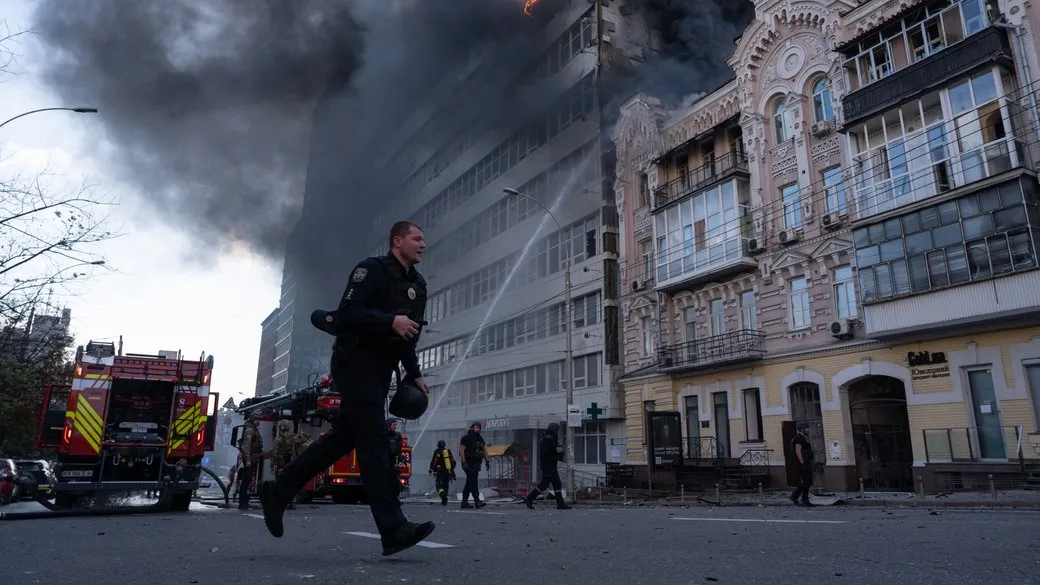
30 September 2026 09:00Russia is terrorizing Ukrainian cities in the rear—especially Kyiv and Odesa—almost around the clock with massive attacks by jet drones. They can circle over cities and regions for hours, targeting logistics facilities, manufacturing plants, gas stations, and data centers, paralyzing the daily lives of city residents.
Medical professionals have already begun to observe symptoms in people similar to post-traumatic stress disorder (PTSD) due to the constant anticipation of an attack and hours-long nighttime air raid alerts.
The problem is that the peak of jet drone attacks is still ahead—Russia is ramping up their production every month. And Ukraine appears to be falling behind in the technological race, although President Volodymyr Zelenskyy has repeatedly stated that a “response” is being prepared.
“Our soldiers have already successfully tested four new jet-powered interceptor drones against Russian jet-powered ‘suicide drones.’ So we are ramping up production,” Zelenskyy assured the audience while addressing the UN General Assembly in New York on September 24.
Why didn’t the Ukrainian command prepare to defend against the new generation of high-speed drones? Under what conditions will Ukraine have its own interceptors? Who should be held responsible for the failure of air defense? And what do military experts have to say about this? Find out in this UA.News report.
Russia is banking on jet-powered drones
The production of high-speed drones had been in the Russians’ plans since April 2023—the creation of a jet-powered drone was officially announced at the “Equipment” exhibition in Moscow. In January 2024, the first combat use of such a “Shahed” drone—at that time still of Iranian manufacture—was recorded. And starting in the summer of 2026, the Russians began launching massive attacks on Ukraine using their own modified jet drones.
“In June there were 350, in July 1,500, in August 2,850, and as of now we also have a large number of UAVs—approximately 1,900 jet drones in September… “In fact, none of the experts had anticipated that Russia would be capable of deploying jet-powered ‘Shaheds’ on such a scale,” commented Yuriy Ignat, head of the communications department at the Ukrainian Air Force Command, regarding the intensity of the attacks.
As of September 21, according to the Air Force, the Russian army had launched approximately 7,700 jet-powered drones at Ukraine. Over the past three months, Russia has increased its use of these UAVs more than fivefold.
The Russians currently have the following jet-powered drones in their arsenal: “Geran-3,” “Geran-4,” and the “Geran-5” and “Banderol” missile drones. Unlike the previous generation, these long-range drones are more expensive but have technical characteristics comparable to those of a cruise missile.
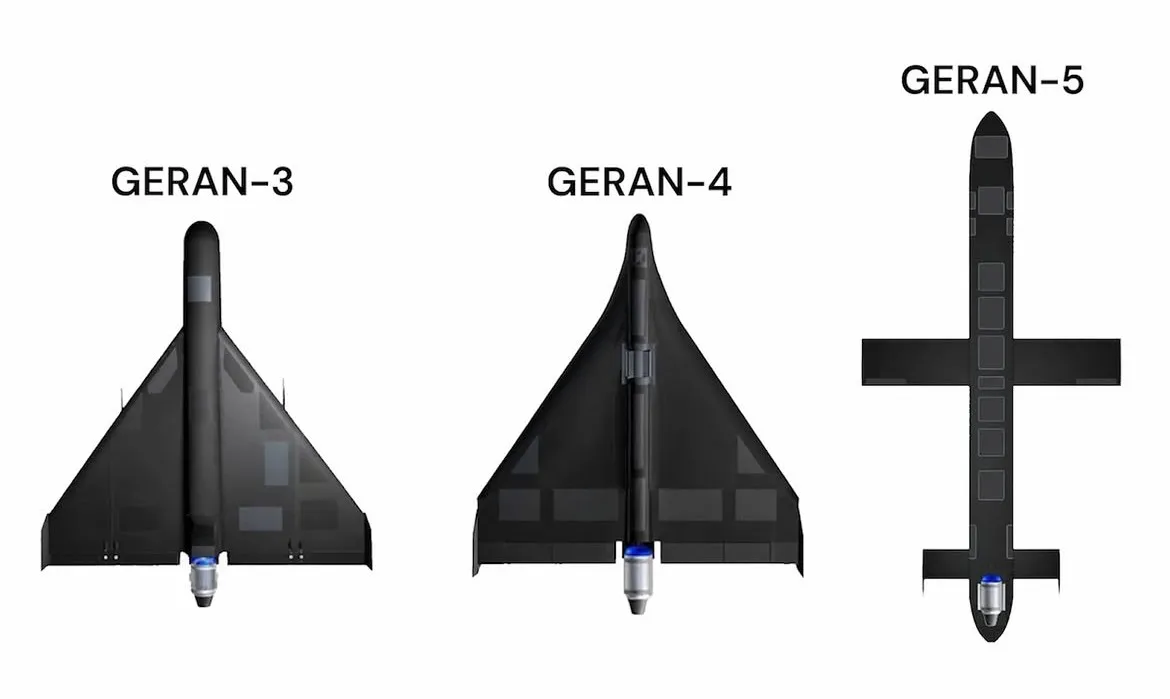
The speed of these drones can reach 400–650 km/h, whereas conventional “Shaheds” reach speeds of about 150–250 km/h. To put this in perspective, these new high-speed drones are capable of crossing Kyiv from one end to the other in about three minutes.
Moscow is willing to pay a premium for terrorism—a single jet engine for such a drone can cost more than 20,000–25,000 dollars. In Iran, the price of certain Chinese engines reaches 70,000 dollars.
For the mass production of jet-powered drones, Russia sources components from Europe, the U.S., and China. Even heightened sanctions have not stopped these shipments—markings on individual parts of downed drones indicate that they were manufactured just a few weeks before launch.
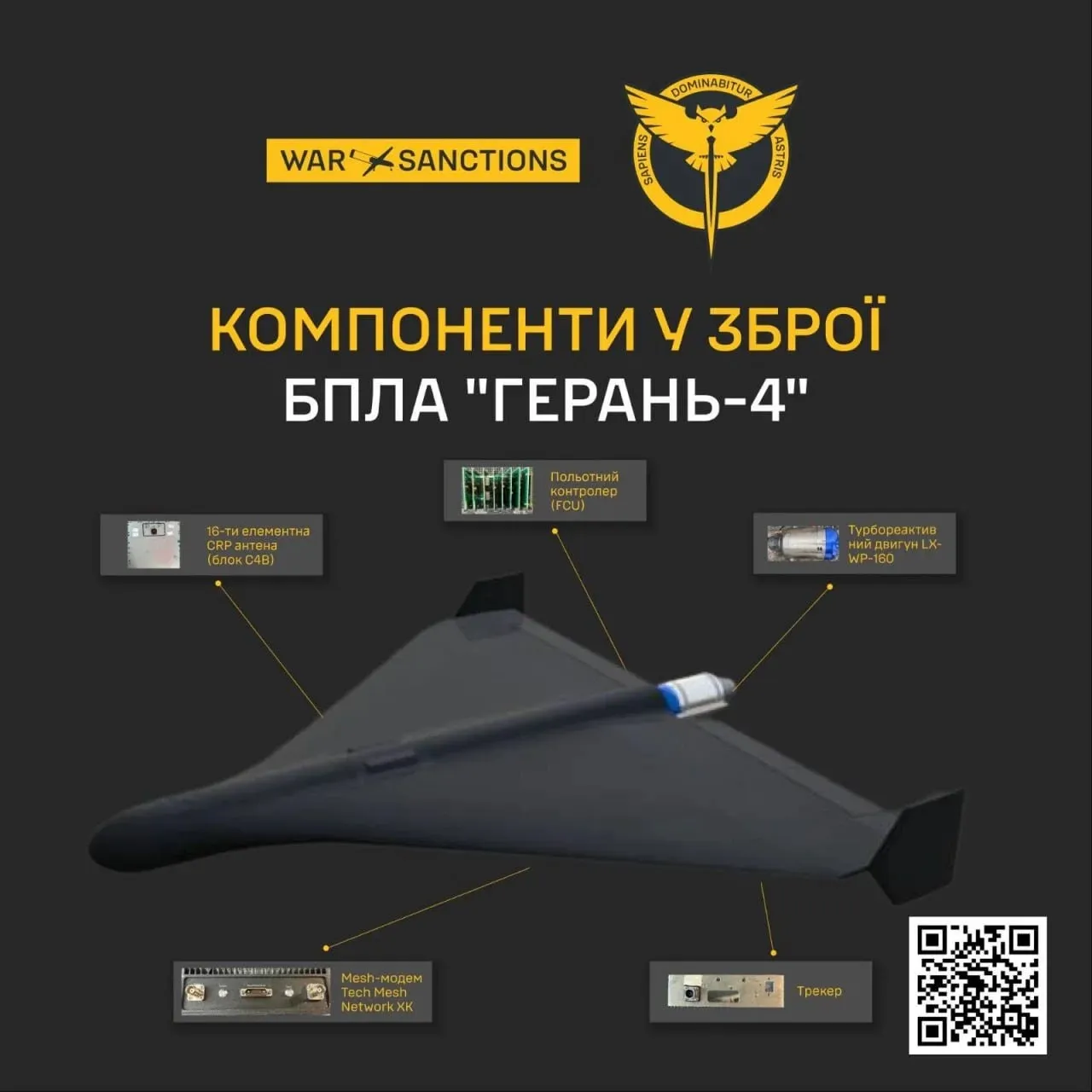
“Semi-Chinese weapons of mass terror”—that’s how the president’s technology advisor, Sergei Beskrestnov (Flash), described the jet-powered “shahids” in an interview. According to him, because these drones fly faster and higher than previous models, Ukrainian interceptor drones and mobile fire groups cannot reach them.
Jet drones must be shot down using short- and medium-range ground-based air defense systems equipped with anti-aircraft guided missiles, as well as tactical aircraft—F-16, Mirage, and MiG-29 fighters. However, the effectiveness is not yet very high: a 60% destruction rate for jet-powered drones compared to 90% for their internal-combustion-engine counterparts.
“We are now testing prototypes not in laboratories as we did before, but in live combat conditions, and they are doing their job,” assured Kyrylo Budanov, head of the Office of the President, in a statement released on September 27. According to him, anti-aircraft drones are already undergoing testing in combat conditions, and the mass interception of jet-powered suicide drones is a matter of a few months.
Overall, there were several statements in September from authorities and manufacturers regarding the combat use of several interceptor prototypes.
Why Ukraine Is Behind Schedule with Interceptor Drones: What Experts Say

Konstantin Kryvolap: China
has once again come to Russia’s rescue
We have many drone-related developments capable of flying at high speeds. But for a drone to hit a target, it must know where the target is, how to attack it, catch up to it, or intercept it. In other words, appropriate detection, guidance, and navigation systems are required, explains aviation expert Konstantin Kryvolap, outlining the challenges facing developers.
“There are two main types of propulsion systems that enable such a drone to fly: electric and jet. Jet propulsion takes the form of a small turbojet engine, which is primarily used by model aircraft enthusiasts. The use of such systems to destroy drones is unprecedented worldwide.
Electric propulsion has its limitations. Even if it reaches a speed of 450–500 km/h, it won’t fly any faster than that. Perhaps engineers will come up with some “trick,” and the drone will be able to accelerate to 600 km/h, but that’s as fast as it will go.
At the same time, the very distinction between where a missile ends and a drone—or a drone-missile—begins is arbitrary and does not reflect reality. Speed isn’t everything. The drone also needs a certain level of “intellectual” capability. It must have a detection, guidance, and navigation system. This could be, for example, infrared guidance: a thermal imaging sensor is installed to help identify the target and adjust its course. The drone must not only see something but also use signals from the infrared camera to determine where to fly.
When Mykhailo Fedorov became Minister of Defense, one of his first significant steps was signing an agreement with Palantir. In fact, it was less of a monetary contract and more of an information exchange: they provide us with certain technological capabilities, and we provide them with information about the behavior of Russian drones in our airspace—how and where they flew, and what tactics they used.
The goal is to use artificial intelligence to train the system to understand where a target is located, what it is, and where it is most likely to fly. On the other hand, this makes it possible to predict various scenarios and determine how the air defense system should operate to shoot down such drones as effectively as possible.
So, there are developments, there are shoot-downs—all of this exists. But previously, they were designed to intercept other jet-powered “suicide drones” that had different characteristics. Now, the speeds are higher. The difference in speed between the “Geran-4” and the “Geran-5” is about 100 km/h.
This time, China once again came to the Russians’ aid, providing them with the technological capabilities to rapidly advance in this area. In fact, they received many components from China—specifically, Mesh modems and turboprop engines from Telefly.
A Mesh modem is a type of networking equipment. Whereas such modems previously operated at a range of approximately 150–180 km—and up to 200 km under ideal conditions—the Chinese models now effectively operate at a range of 300 km.
At first, we were very surprised, especially after the incident when a drone flew into the office of SBU Director Oleksandr Poklad. At the time, we assumed it might have been a set-up—that someone local might have left a backpack containing a mesh modem or something similar. But it turned out to be much simpler. There are repeaters in place, and a single “Shahed” drone flies high above the city. It’s difficult to shoot it down—and we don’t want to shoot it down over the city.
It turned out that Mesh modems operate at distances of up to 300 km and can provide stable connectivity. If there’s a connection—and Sergey “Flash” (the president’s technology advisor) likely confirms this—then both operators controlling these drones are in the same room. Presumably, the “Geran-4” is used as a relay, while the other—essentially a drone missile, whatever you want to call it—is used directly to strike the target. One operator can relay commands to the other: “Turn right—I need to fly closer to get a better view of the target and orient myself for the attack.” In other words, their actions are coordinated. There’s already an experienced team in place there, equipped with the necessary gear and capabilities, and working hard.
The Russians have the capabilities, and they can cause us problems for a long time. They produce dozens of jet-powered drones per day—perhaps around 80—as well as approximately 80–200 conventional piston-engine “Shaheds.” They’re putting a strain on our air defense forces. In fact, right now, air defense units and tactical aviation are forced to shoot down targets that are not typical for them. This is because there is no automated system. Mobile fire groups cannot reach these targets at all.
For now, everything is still a work in progress. Back in January, Mykhailo Fedorov gathered manufacturers and asked if they had interceptor drones; the manufacturers replied that they had everything. Then he said, “Let’s standardize them, adopt them into service, and conduct all the necessary tests.”
But then it turned out that the operator simply couldn’t get the drone to lock onto the target in time, because the interceptor itself either didn’t fly fast enough or couldn’t locate the target. When the manufacturers encountered this problem, they were at a loss. At first, many expected that such targets could be intercepted using electric drones.
The latest list already included more than 60 companies and teams proposing their own solutions. After that, according to Khmara and Zelenskyy, three or four companies moved on to more or less serious testing, and they’re starting to see some results. But “seeing some results” and “having fully succeeded” are two different things.
To shoot down the targets Russia is deploying—and production of which could reach up to 3,000 units—we need at least 9,000–10,000 interceptors per month. If we spread out 9,000–10,000 interceptors over a 24-hour period, we’ll need about 300 operators per day. To run two or three shifts—that’s about 1,000 people who know how to operate and guide these drones. And we also need teams to support the entire system. An operator is just one link in the chain. There’s a large number of personnel who each have their own roles to play.
Therefore, it’s impossible to pull this off in a month, both organizationally and technically. If we address the organizational and technical issues simultaneously and launch mass production, then it might be possible in two or three months.”

Dmitry Snegirev: The Failure of Intelligence and Former Defense Minister Fedorov
Military analyst Dmitry Snegirev criticizes the excuses for the delayed decisions regarding the production of interceptors: “The first reports regarding the possibility of Russia using jet-powered drones appeared a year ago. A year is more than enough time to draw conclusions, assess the threat, and develop appropriate countermeasures.
Moreover, the numbers speak for themselves. In June, Russia launched 380 jet-powered strike drones into Ukrainian territory, and in August—already 2,800. The scaling up of jet-powered strike drone production became possible thanks to the localization of jet engine production in Russia.
This is something worth discussing, rather than ignoring or pretending the situation is unclear. Despite sanctions pressure, Russia managed to import industrial 3D printers and establish jet engine production directly on its own territory. This has made production cheaper and reduced dependence on China.
At the same time, Skibitsky, deputy head of the Main Intelligence Directorate of the Ministry of Defense, speaks of Russia’s dependence on jet engine supplies from China. In my opinion, this indicates serious problems with the Ukrainian intelligence community’s assessment of the situation, as it is supposed to inform and analyze the level of threats for the country’s top political leadership.
Now the key question is: if Russia managed to localize jet engine production in three months despite de facto sanctions pressure, what is preventing Ukraine, with the help of its partners, from doing the same—importing the necessary equipment, including 3D printers, and localizing jet engine production?
The answer, in my opinion, is obvious.
Another question for former Defense Minister Mykhailo Fedorov, who was called an innovator: Why, given an understanding of the challenges facing Ukraine, were appropriate countermeasures not developed in advance, and why was the production of those very jet engines—without which it is impossible to scale up production of the corresponding interceptors—not localized?
Now regarding production costs. If the production cost of the Russian “Geran-5” is about 70,000 dollars, then to destroy it we have to use significantly more expensive weapons. For example, AIM-9 air-to-air missiles cost about $500,000, while AIM-120s cost between $1.5 million and $2 million. So what kind of cost-effectiveness are we talking about here?
Additionally, there is the issue of an insufficient number of anti-aircraft guided missiles (SAMs). Their cost also significantly exceeds that of jet-powered drones. Therefore, I believe the only realistic option for countering them is to scale up the production of interceptor drones, particularly jet-powered ones.
What is the advantage of Russian tactics? First, they exploit the lack of sufficient anti-aircraft guided missiles and air-to-air missiles. Second, they fully understand that a jet-powered drone costs tens of times less than the weapon used to try to shoot it down.
In this way, they are effectively wearing down Ukraine’s air defense system. This also causes enormous economic losses for Ukraine and its partners. This is precisely why we are seeing such intense strikes and a shift in Russian tactics and strategy. They realize that it is becoming increasingly difficult to shoot down these targets using conventional means.
This falls under the Ministry of Defense’s purview—developing appropriate countermeasures and scaling up their production. Therefore, in my opinion, law enforcement agencies should investigate Fedorov’s responsibility for decisions or inaction that, I believe, led to the situation we are currently discussing.
I believe that an information narrative is currently taking shape that addresses certain pressing needs, in particular, an attempt to downplay obvious failures. And these failures, in my opinion, are serious.
For example, Budanov states that production will be scaled up in a few months. This raises the question: where was intelligence earlier? This falls directly within the purview of the Main Intelligence Directorate—gathering operational intelligence regarding the Russian command’s plans. If intelligence does not possess such information, questions arise about its effectiveness.
Right now, we need to develop our own interceptor drones as quickly as possible and scale up production of jet engines within Ukraine or in European countries. It would be preferable to scale this up directly in Ukraine, especially since the necessary capabilities are available.
There is another danger for the Ukrainian side. Russia, recognizing the general trend—in particular, the shortage of anti-aircraft guided missiles and air-to-air missiles—may increase the transfer of jet-powered drones to its partners—the Houthis and Iran. This could divert the United States’ attention and force it to concentrate its resources on defending its own military facilities in the Persian Gulf.
Thus, conditions could arise in which U.S. capabilities would be heavily engaged in the Persian Gulf, and the supply of anti-aircraft guided missiles and interceptor missiles to Ukraine—specifically PAC-3s and air-to-air missiles—could be limited. This is precisely where I see an additional danger.
The main argument right now, as I understand it, is that Europe and the United States must provide Ukraine with the necessary capabilities. But at the same time, Russia is creating conditions under which such deliveries could become more difficult or even impossible. Therefore, the only way out of this situation is to scale up our own production of interceptor drones. And this must be done within an extremely tight timeframe.
There is another problem: the lack of jet-powered interceptor drones has already negatively impacted Ukraine’s international image. Over the past year, Ukraine has positioned itself as a country that has taught the world about modern warfare. This referred, in particular, to “kill zone” technology—the ability to engage both air and ground targets using interceptor drones. Now it turns out that Ukraine is unable to fully defend even its own territory. This complicates the case when making arguments to European countries and the United States.
Previously, the president spoke of Ukraine’s readiness to supply such technologies and enter into international agreements in exchange for PAC-3 systems. Now, in my opinion, this model is much more difficult to implement. Ukraine is once again forced to turn to its partners for help.
This undoubtedly affects both Ukraine’s international image and the rhetoric of senior officials. Positioning itself as a country with cutting-edge technology against the backdrop of current events is becoming much more difficult. Moreover, in my view, the problem concerns not only the Main Intelligence Directorate (GUR) but the entire Ukrainian intelligence community—the Main Intelligence Directorate, the Foreign Intelligence Service, and other agencies.
This involves both providing timely information to the country’s leadership and assessing the prospects for scaling up Russian production. We are now hearing reports that the GUR’s drones are striking targets; the SBU’s drones are also striking targets, and the Foreign Intelligence Service has corresponding developments. But at the same time, the question arises: how do these developments relate to a systematic countermeasure against jet-powered drones? This, in my opinion, is the main and key issue.”

Oleksandr Kovalenko: There Was No Long-Term
Threat Planning
Oleksandr Kovalenko, a military and political analyst with the “Information Resistance” group, reflects on whether the current losses and destruction could have been avoided by preparing in advance for future threats and having defense capabilities relevant specifically to this time period:
“The opportunity to scale back the enemy’s use of the Shahed-136 was missed, and we responded to the threat practically at the peak of future attack volumes, rather than at the initial stage. But that isn’t even the main point.
Was there an opportunity, in parallel with the development of an interceptor drone to counter the mass-produced piston-engine Shahed-136s, to lay the groundwork for a jet-powered variant? Yes, there was, but there was no request for it, since there was no medium- or long-term threat planning. Issues were addressed after the fact or belatedly.
And this example highlights just how far behind we are in terms of planning and proactive measures, even when we are aware of the threats Ukraine may face.”




