
Logistical losses suffered by Russian occupiers rose by a third in May
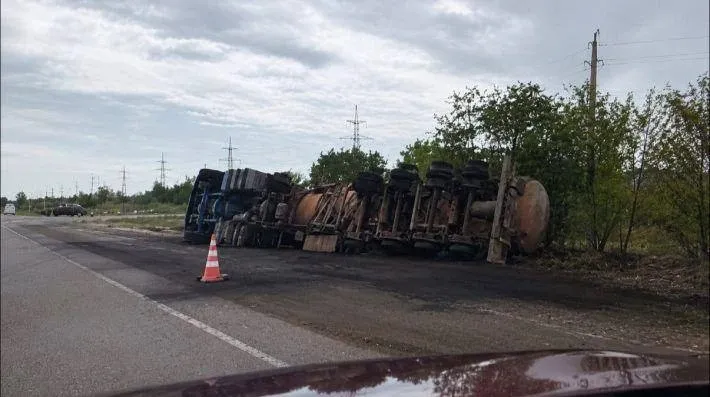
In May, the number of trucks and tankers belonging to the Russian occupation forces that were destroyed increased by approximately 20–30% compared to the previous month.
This was stated by Pavlo Narozhny, founder of the “Reactive Mail” charity and a military expert, during an interview on Ukrainian Radio. He noted that this is only the beginning of a large-scale campaign, and its full results on the front lines will become apparent by the end of June.
The difficult logistical situation for the enemy in southern Ukraine, particularly in the Zaporizhzhia region, is due to the successful use by the Defense Forces of “mid-range strike” assets—drones with a range of 70 to 300 km. In some sectors of the front, this has already led to advances by Ukrainian forces due to the occupiers’ inability to supply their units with fuel and artillery shells in a timely manner. The expert emphasized that provided the planned procurement volumes of drones are met, Ukrainian defenders will be able to completely cut off the enemy’s logistical arteries. Russian attempts to counter this using anti-aircraft missile systems such as the “Pantsir-S1” are economically inefficient, since a single missile for such a system costs 10–20 times more than the kamikaze drone itself.
The bulk of medium-range strikes are carried out by gasoline-powered drones using the Starlink navigation system, which operates reliably in the temporarily occupied territories of Ukraine. In contrast, Russian forces are forced to use a vulnerable chain of relay stations to control their Shahed drones. In this Russian scheme, each drone acts as a signal transmitter for the next one, so the destruction of even a single drone within the chain results in a complete loss of communication for the entire group.
The Ukrainian Armed Forces’ unmanned systems unit announced that it had brought the entrances to the temporarily occupied city of Debaltseve in Donetsk Oblast under fire control and struck a key overpass connecting the city to Alchevsk. According to military officials, the drones’ strikes effectively hampered the movement of the occupiers’ equipment in this area.
Fighters from the unmanned systems battalion of the Third Assault Brigade carried out successful strikes on the occupiers’ logistics routes in the temporarily occupied Luhansk region, reaching the “Izvarine” checkpoint on the border with Russia. During a deep technological raid, Ukrainian pilots struck enemy armored vehicles and ammunition depots.


