
Mine terror by occupying forces in Kakhovka creates dangerous situation for civilians
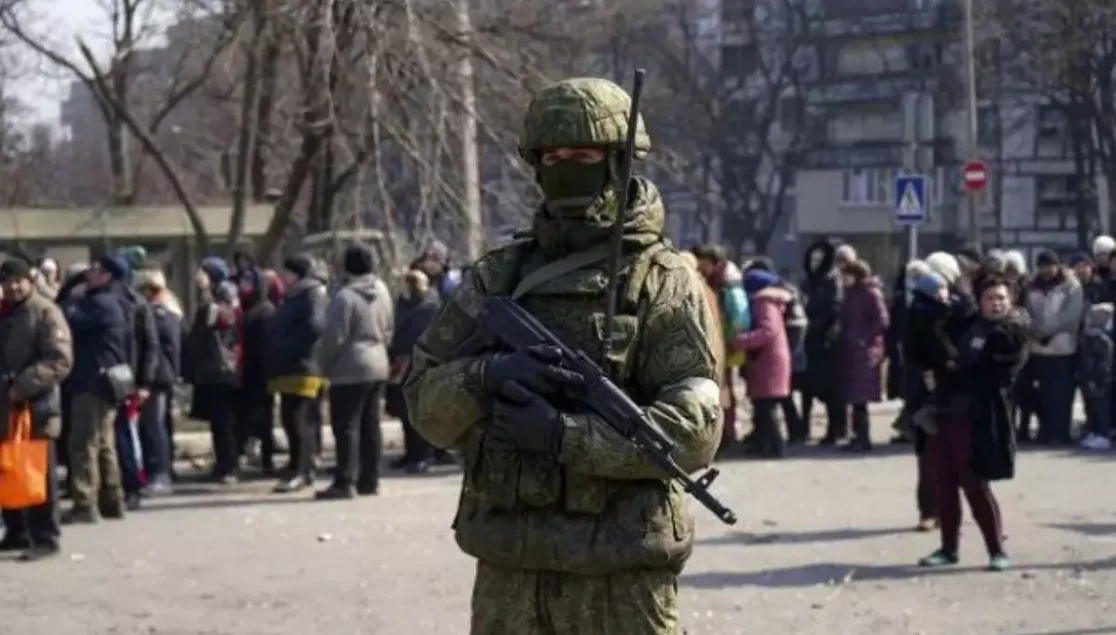
In Kakhovka, in the temporarily occupied part of Kherson region, Russian forces have reportedly been dispersing “petal” anti-personnel mines by drone into residential neighbourhoods, creating significant danger for local residents.
According to local journalist Oleh Baturin, the situation in the city is marked by panic among the occupying forces and the blocking of key roads, which complicates civilians’ access to medical facilities and grocery stores.
Blocked roads are forcing residents to seek alternative routes, increasing the risk of coming under fire. Human rights advocates are urging the population to strictly follow air raid warnings and avoid contact with Russian military personnel. Such actions — including the scattering of mines and road blockages — may constitute serious violations of international humanitarian law.
In addition, daily attacks on Kherson and surrounding communities continue. On 12 February, shelling caused ongoing electricity supply disruptions, while water supply is being maintained through резерв sources. Tensions in the region remain high due to continued military activity and the threats posed to civilians.
On the night of 12 February (from 06:00 p.m, on 11 February), the enemy reportedly launched 24 Iskander-M/S-300 ballistic missiles from the Bryansk region, Voronezh region, and Rostov region, as well as from temporarily occupied Crimea; one Kh-59/69 guided air missile from the airspace over temporarily occupied Donetsk region; and 219 strike UAVs, including Shahed, Gerbera, Italmas and other types of drones. Launches were carried out from the directions of Kursk, Oryol, Millerovo, Bryansk, Primorsko-Akhtarsk, Shatalovo, and Hvardiiske in temporarily occupied Crimea. Approximately 150 of the drones were reportedly Shahed-type UAVs.




