
Russia Wants to Degrade the Quality of Aviation Fuel Following Strikes on Oil Refineries
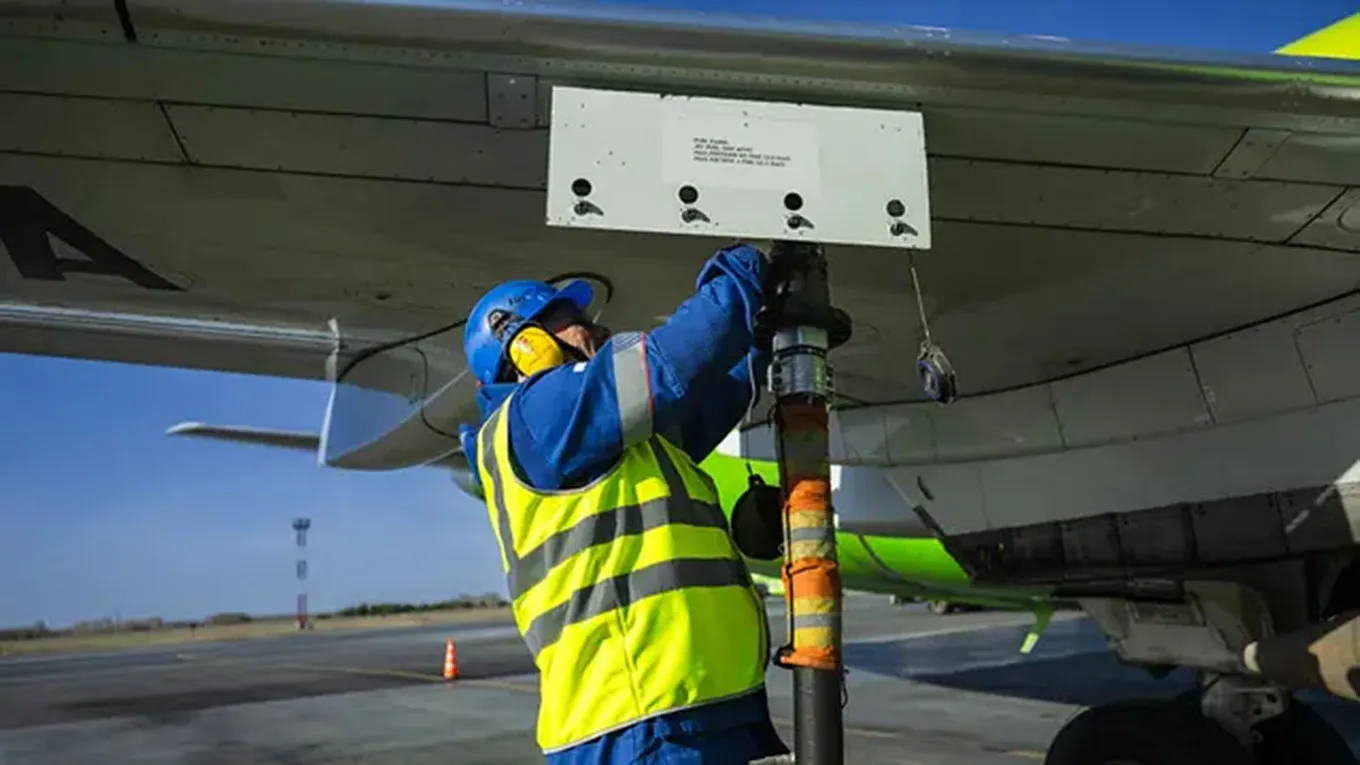
Following Ukrainian drone strikes on Russian oil refineries, Russia plans to relax quality requirements for aviation fuel. In this way, the authorities are attempting to compensate for the shortage of aviation fuel.
At the same time, Russian officials acknowledge that using lower-quality fuel could create difficulties for air travel, especially in northern regions with harsh weather conditions.
According to the publication, the Russian Ministry of Transport has already sent relevant proposals to Rosaviatsia, the Association of Air Transport Operators, and the State Research Institute of Civil Aviation.
The document proposes allowing the production of jet fuel with a pour point of minus 50 degrees instead of the current minus 60. The Russian Ministry of Transport expects that this will increase fuel production by 170,000–250,000 metric tons per month.
However, this fuel cannot be used in regions with extremely low temperatures, particularly in Yakutia and the Chukotka Autonomous Okrug. It is also unsuitable for military aviation. According to a source in the aviation market, at temperatures close to minus 50 degrees, crystals can form in the fuel, making it difficult to feed into the engines.
In addition, Russian authorities are proposing to replace imported anti-wear additives with domestic alternatives and to allow the production of jet fuel from heavy crude oil. Overall, the Russian Ministry of Transport estimates the potential additional production at 1.8 million metric tons per year.
The Russian government is also considering increasing jet fuel production at small and medium-sized refineries and redirecting output from the Novatek-Ust-Luga plant—which currently operates primarily for export—to the domestic market.
At the same time, Russian experts acknowledge that these measures will not quickly eliminate the shortage. According to their estimates, implementing the proposed solutions will take a significant amount of time, and it will not be possible to rapidly ramp up jet fuel production.
These initiatives are being discussed against the backdrop of a fuel crisis in Russia following a series of successful strikes by Ukrainian drones on Russian oil refineries. Earlier, the Russian government was already forced to temporarily allow the production of automotive gasoline that meets lower environmental standards to compensate for the fuel shortage.
This is being reported by Russian propaganda media.
Russian authorities have allowed the sale of Euro-2 gasoline, which they banned 10 years ago.
On the night of August 1, drones attacked several temporarily occupied cities in Ukraine. According to reports from monitoring Telegram channels, fires broke out in Zugres, Berdyansk, Luhansk, Dolzhansk, and Sevastopol following the strikes.
As a reminder, the Russian online marketplace Ozon evacuated employees from its logistics center in Zelenodolsk (Tatarstan) due to the threat of attacks by Ukrainian drones. After the alert was lifted, the warehouse resumed normal operations.
On the morning of July 31, drones attacked a warehouse complex in Zelenodolsk (Tatarstan, Russian Federation), where the logistics facilities of the Ozon and Wildberries marketplaces are located. Following this, a number of Ukrainian sources reported that strikes on Ozon warehouses might continue.


