
Russia is setting up immigration detention centers for Ukrainians from the occupied territories who lack documents
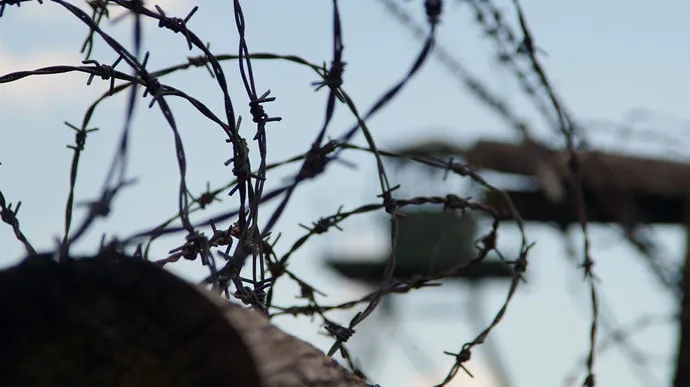
Residents of Ukraine’s temporarily occupied territories who have not received Russian passports or obtained the documents required by the Russian Federation from so-called “foreigners” risk being sent to immigration detention centers. Hundreds or even thousands of Ukrainians may be held in such facilities.
Human rights activists note that Russian authorities are intensifying pressure on residents of the occupied territories, forcing them to apply for Russian citizenship or regularize their status according to Russian rules. The lack of necessary documents can serve as grounds for detention and placement in temporary detention centers for foreign nationals.
According to her, the deadline set by Russia for the so-called “status regularization” for residents of the occupied territories expired on September 10, 2025. After that, the lack of documents required under Russian rules could serve as grounds for detention and placement in a temporary detention center for foreign nationals pending deportation.
There are 75 such facilities in Russia—known as TsVSIGs—which human rights activists refer to as “migration prisons.” In the temporarily occupied territories of the Donetsk, Luhansk, Kherson, and Zaporizhzhia regions, temporary detention centers are also used to hold people for violations of the migration rules imposed by the Russian Federation.
Deported Ukrainians were punished for illegally crossing the Russian border
Lunova explained that after the full-scale invasion began, Russian occupiers transported some of the prisoners from the occupied territories of the Kherson region to Russia. Upon completing their sentences, they were not released but were transferred to migration prisons.
“They were not released from places of detention on Russian territory but ended up in immigration detention centers because they were punished for illegally crossing the Russian border during deportation,” the human rights activist explained.
According to her, former Ukrainian political prisoners, residents of the occupied territories without Russian documents, and Ukrainian citizens who have lived and worked in Russia for a long time also end up in such facilities.
The exact number of Ukrainians in immigration detention centers is unknown.
“There could be hundreds of people, perhaps even thousands. We generally don’t have any statistics on the occupied territories,” noted Lunova.
People cannot leave the facilities and face difficulties accessing medical care
The human rights activist describes conditions in Russian migration centers as prison-like—people cannot leave the facility on their own. At the same time, some detainees have access to phones, which allows them to stay in touch with relatives and seek help from Ukrainian human rights activists.
Medical care remains a separate issue. According to Lunova, people with diabetes, tuberculosis, hepatitis, and other illnesses are not receiving the necessary ongoing treatment. Among the prisoners deported from the Kherson region are people for whom such treatment is vital.
The human rights activist also reported that, according to Russian lawyers, their appeals to the International Committee of the Red Cross regarding the delivery of medications and hygiene supplies have gone unanswered.
“This is a closed facility from which you cannot leave and go wherever you want,” Lunova emphasized.
One way to secure release remains to challenge the detention in court. However, even after that, it is difficult for Ukrainians to return home due to a lack of funds or the absence of a passport. It is impossible to obtain a return permit directly in Russia because there are no Ukrainian consulates there.
Alona Lunova, advocacy director at the ZMINA Human Rights Center, spoke about this to Hromadske Radio.
Putin told Russian military personnel that all of the Kremlin’s goals would allegedly be achieved.
Russia attacked a vehicle carrying humanitarian aid and an ambulance station in the Kharkiv region.
A fire broke out in Zaporizhzhia following a Russian strike on the “Amstor” shopping center.
On the morning of September 23, large-scale fires broke out at civilian facilities in Kyiv as a result of a Russian attack. In particular, the “Shayba” market near the train station, where “Velyka Kyshenya” previously operated, is on fire.
Eight people were injured in Kyiv as a result of the Russian attack on September 23. One of the wounded, who was hospitalized in critical condition, died in the hospital, Mayor Vitali Klitschko reported.
On the night of September 23, Russian forces attacked Ukraine with 161 strike drones of various types. Among them were 82 jet-powered UAVs. As of 8:00 a.m., air defense forces had destroyed or neutralized 119 enemy drones and three additional “Banderole”/“Dan-T” drones.




