
Russia may already be producing about 3,000 jet-powered drones per month – Flash
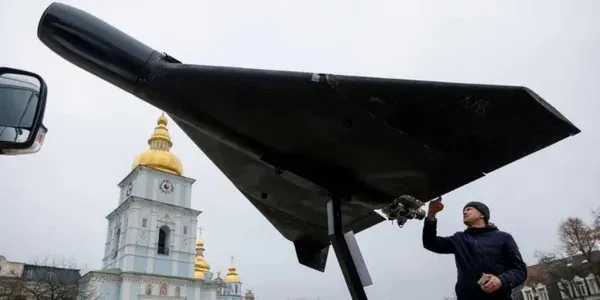
Russia has reached a production capacity of about 3,000 jet-powered drones per month. According to military expert Sergei “Flash” Beskrestnov, Moscow plans to maintain this production pace going forward.
Serhiy “Flash” Beskrestnov, a special advisor to the President of Ukraine on the development of defense technologies, cited this figure on television.
“Last month, according to our statistics, there were 1,500 jet UAV attacks. This month, we’ve already counted 3,000 jet drones. Based on our intelligence data, the Russians have plans to produce 36,000 to 40,000 UAVs per year—that is, more than 3,000 per month. It’s safe to say they’ve already reached that production capacity,” Beskrestnov said.
According to him, Russia will continue to produce both jet-powered and conventional gasoline-powered drones. Jet-powered drones will account for about 60 percent, with the remainder consisting of conventional drones such as the Shahed-136 and “Geran-2.”
At the same time, “Flash” predicts that Russia will increasingly rely on jet-powered drones for attacks on non-frontline areas, as Ukrainian forces are actively deploying interceptors against slower targets.
At the same time, the enemy is actively working to increase the speed of its strike drones.
“The Russians understand that we will develop jet-powered interceptors. It’s only a matter of time,” Beskrestnov noted.
Therefore, Russia is working on other strike capabilities. In particular, this refers to the “Banderole,” which the expert described as a cheap jet-powered cruise missile.
“We see a production forecast for the ‘Banderole’—up to 1,000 per month. In addition, they will produce similar strike missiles called ‘Dan-T,’ ‘Dan-M,’ and ‘Geran-5,’ the presidential adviser said.
He clarified that the new Russian weapons could reach speeds of about 500–650 km/h, as well as have the ability to fly at very low altitudes and maneuver actively, which would complicate the work of Ukrainian air defense forces.
However, Beskrestnov noted that these missiles differ significantly from the “Shahed” drones: they lack online control, which would allow an operator in Russia to monitor the drone’s behavior and the targets it is approaching during flight.
Earlier, Russia attacked a facility in Novhorod-Siverskyi.
As a reminder, one person was killed and eight were wounded in a massive attack on the Kyiv region.
Russia also launched a massive missile attack on Kyiv overnight, resulting in fatalities.


