
Russia is "intercepting" Ukrainian drones and redirecting them toward NATO
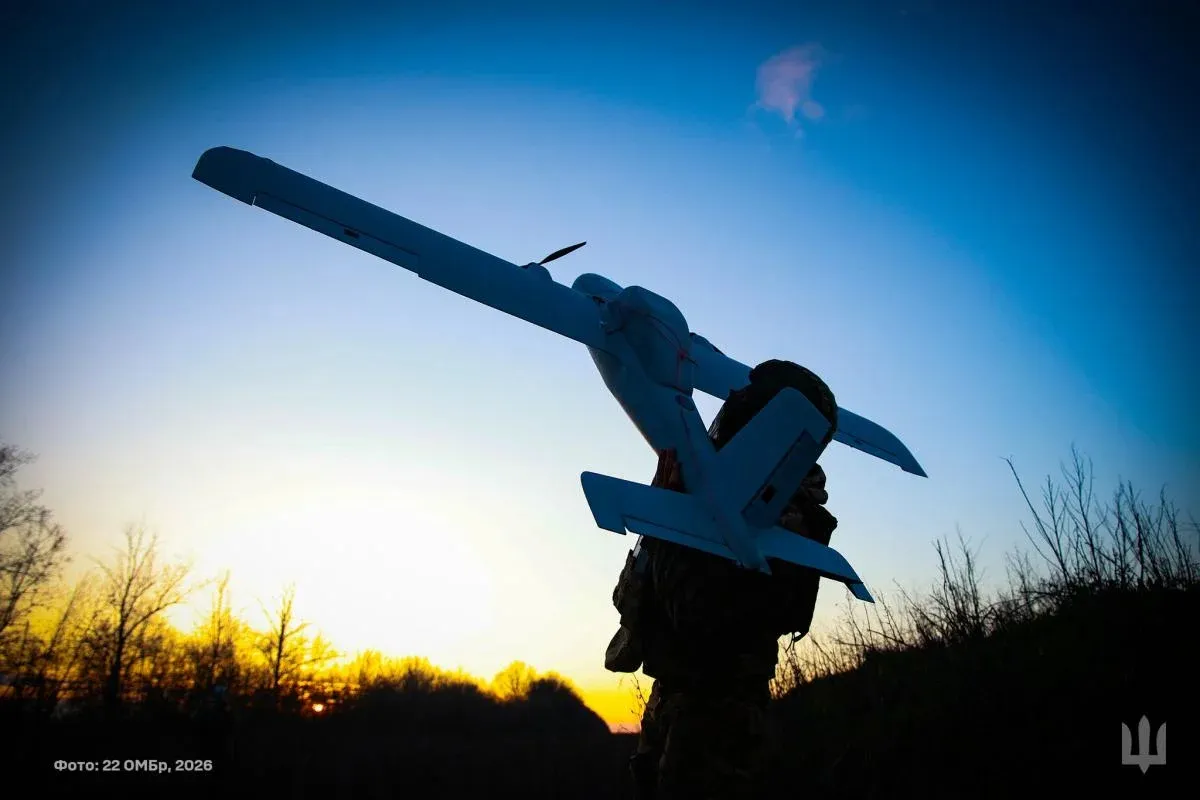
According to The Telegraph, Russia has allegedly learned to intercept and “redirect” Ukrainian drones, forcing them to fly toward NATO countries. Due to massive electronic warfare attacks, the drones lose their bearings and begin to veer off course. This is already causing concern in the Baltic states and Finland, writes The Telegraph.
Russia, according to The Telegraph, is waging a new level of electronic warfare in which Ukrainian drones are not merely jammed but effectively reprogrammed in mid-air, forcing them to change course and move toward NATO territory, which sharply increases risks for the entire region.
According to the publication, Ukrainian drones that have been “hacked” by Russian electronic warfare systems and have lost navigation accuracy due to the spoofing or jamming of GPS signals are being spotted with increasing frequency over Lithuania, Latvia, Estonia, and Finland. “The fact that GPS was blocked over a large area of the Baltic Sea and beyond should have caused a much bigger scandal than it actually did,” said Keir Giles of Chatham House, commenting on the scale of the interference.
Experts explain that Russian tactics are based on classic “jamming” and signal spoofing, where a drone first loses its true coordinates and then “latches onto” a fake signal that appears real to it, causing the navigation system to literally lead it in a different direction.
Journalists note that some of these incidents have already had consequences in the Baltic region—ranging from drones crashing in Estonia to explosions in Latvia, and in some cases, NATO fighter jets were even deployed to respond to uncontrolled drones.
At the same time, experts emphasize that the key problem lies in the vulnerability of GPS, which still operates on open, unencrypted signals, and it is precisely this that allows Russia to create fake coordinates and mislead drones. “Essentially, everything is now susceptible to jamming and spoofing,” said Ramzi Faragher of the Royal Institute of Navigation, explaining that modern electronic warfare systems are capable of interfering with almost any navigation signal.
Experts add that Russia is not only blocking signals but also actively testing more sophisticated methods, including manipulating time in drone systems, which can cause them to malfunction or completely “freeze” in mid-air.
Ukraine, in turn, is forced to adapt to the new conditions and is increasingly using alternative navigation technologies, particularly fiber-optic drones and artificial intelligence systems that rely not on GPS but on imagery of the terrain.
The Telegraph emphasizes that this technological battle is effectively turning the skies over Europe into a space of constant electronic confrontation, where any signal can be intercepted and any system hacked, gradually changing the very nature of modern warfare.
As a reminder, Russia attacked a substation in the Kramatorsk district with an FPV drone.
In the Zolochiv community of the Kharkiv region, a Russian drone attacked the Hryhorii Skovoroda National Literary and Memorial Museum.




