
Russia begins attacking Kharkiv region with AI-powered drones that select their own targets
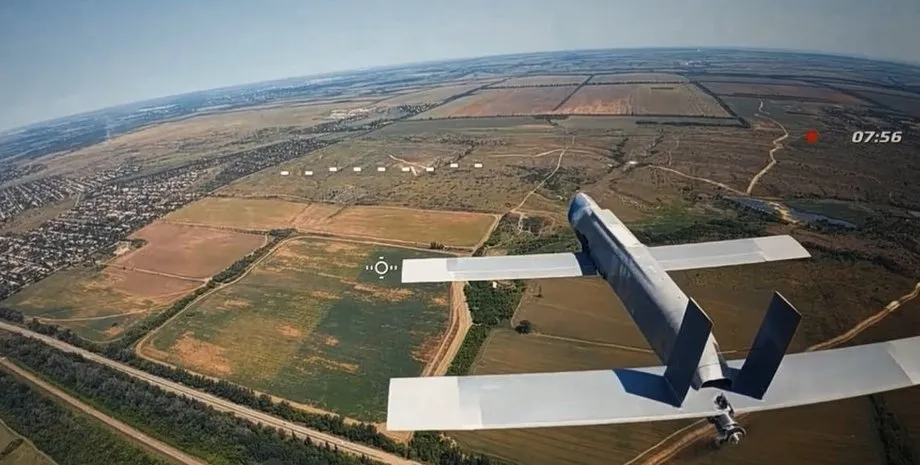
Russian forces have started using new V2U kamikaze drones against industrial facilities in Kharkiv region. These drones are equipped with artificial intelligence that allows them to autonomously select targets.
According to Spartak Borisenko, a representative of the regional prosecutor’s office, the first attacks were recorded in early January 2026, when the enemy used these drones in a test mode to strike enterprises. The main feature of the V2U is its ability to independently compare camera images with stored objects, allowing the UAV to decide on engagement without human input.
The technology allows programming the drone to destroy specific types of vehicles, buildings, or even crowds of people. Once launched from a catapult, the drone does not require continuous human communication, making it resistant to electronic warfare measures. Each UAV carries 3 kg of explosives, and its flight range has recently increased from 60 to 100 kilometers, expanding the potential threat zone to both civilian and military infrastructure in the region.
The main danger of using such systems is their low accuracy, as the AI’s performance depends on video quality and camera resolution. Any mistake in object identification can result in accidental strikes on civilian targets. The prosecutor’s office links the appearance of the V2U to Russia’s intent to scale up the use of advanced technologies to increase the effectiveness of attacks under active air defense and electronic warfare resistance.
On the evening of January 1, 2026, Russian forces struck the Kholodnogirskyi district of Kharkiv using two V2U loitering munitions. On the same day, the occupiers also shelled Kharkiv with KAB bombs, hitting an eco-park. The strike killed exotic birds, and people and animals—including lions—were injured.
